In The Press

Social Impact or Insurance… or Both, Anyone?

08.19.2020
Insurance Industry
blog payment successful

Social Impact, what is it and can we do it?

What is it? A significant, positive change that addresses a pressing social challenge.

Can we do it? Creating social impact is the result of a deliberate set of activities with a goal matching definition above.

The point about the social part of the phrase is that the impact has to be focused on creating change and supporting what we can all agree on to benefit human on the planet. By definition it’s an impact on something we care about.

Today many people want to work for companies create social impact. I get that. On our web site we have (had) a page on social impact and when I put this page up I believed that part of what we did was good things and I wanted to shout about them. Show we had a heart and wasn’t like other insurance companies.

However over the last few months I have been reviewing our efforts about social impact and I got to thinking….

We are an insurance company. Surely everything we do as an industry has a social impact? A conscious insurance company fully focus on its social impact and responsibility, is this the definition of social impact? Isn’t insurance the ultimate social impact service?

Is this true today? Much of the ‘western’ focused insurance effort is fully focused on addressing companies and people that MUST buy insurance to fulfil a contract obligation or to spread risk from their balance sheet or to mitigate risk in buying something. Their audience focus is top earning people or companies. Globally this represents the top 3%, companies in the top 30,000 out of the 100 million or so companies and top 200,000,000 people out of the general population of over 7 billion. This audience represents where a majority of insurance is sold globally by value. If there is social impact it is totally focused on the few not the masses. It’s where the top brokers and insurers are focused. Therefore, they is very little social impact generated by the general insurance industry.

What about the rest of the planet’s people and businesses? They are looking for social impact but they buy very little insurance, this I believe is the opportunity. The opportunity to discover why they don’t buy and then to deliver service and products to them to make insurance relevant and easy for them to participate in and to release the benefits of insurance to them and their community.

This is why I have taken our ‘social impact’ page down. We are social impact. Our message is that our services and products help you and your community in your time of need. We help the community recover quickly when things happen. This is our social impact. Providing a safety net to allow people to recover quickly is our way of providing social impact. Delivering social impact is through the core of our business and buried in our DNA.

MIC Global provides its social impact most visibly through the payment of claims; however, the purchase of the policy is equally important as this is where the community is built. When people take out a policy, they are supporting themselves and the community in equal measure. The act of buying a policy enables the customer to do things with the risk covered for themselves, their business and their family. This could be going on a long trip or taking a loan out to grow or protecting their property. The policy covers the risk and allows progress of the person, business, family and their community. The act of buying the policy builds up a premium pot in MIC, this allows us to pay claims when unfortunate things happen to our customers.

The payment of claims is especially important to us and we try to pay claims very quickly. The way we do this is to make it clear what is needed when the policy is taken out and then we track claims activity every day. On some our programs we even contact customers to make sure they are making claims if we think they should be. Creating social impact is what drives our company – the bigger the impact we make the more successful our products are. The result is positive economic activity and protection of that activity when things happen. The result is that a community grows in wealth and security over time.

Let’s Grow Together

Explore Our Demo

In The Press

Style or Sincerity

05.16.2020
Insurance Industry
blog oscar wilde

“In matters of grave importance, style, not sincerity, is the vital thing.”

Oscar Wilde, The Importance of Being Earnest.

The play is full of contradiction as the characters say one thing and then instantly reverse their stance to say the opposite thing.

This quote seems to sum up the play. Perhaps it sums up many businesses? Say one thing but do another.

Here at MIC Global we endeavour to say and act in the same. We are on a path to affect and look after the lives of many people through insurance.

This may seem an odd path to tread and the Oscar Wilde quote could sit quite nicely on top on the insurance industry – sell a policy and fight the claim. Style and Sincerity.

Integrity in important to us. We know we are the safety net. Our customers are not buying a policy because they expect to use it immediately, they are buying it to support them when the unexpected happens. We need to be there when this happens. We need to deliver in their time of need.

We are simplifying the insurance process though user friendly technology, simplified policies and quick claims processes. A digital insurance company that is connected start to finish.

What is microinsurance? Traditionally this is insurance for the developing world and generally term life, linked to a Micro Loan or a form of Accidental Death. We at MIC Global are extending this vision of microinsurance.

Our vision is insurance for the globe, across a range of products including term life and property and casualty for micro and small businesses and for people and families who have an annual income of less than $30,000 a year.

Micro and Small Businesses range from 1 person up to 50 people. These businesses could be an Uber driver, a small stall holder, a farm and up through to a start-up tech company and on to an established small manufacturing company. Community businesses, family businesses, your business.

Globally our target income bracket for customers will vary country by country. The aim is to always have products that are affordable and relevant to the person or business in that community.

Let’s Grow Together

Explore Our Demo

In The Press

Is the World Under Insured?

02.28.2020
Insurance Industry
blog globe money

We keep hearing about the how the insurance industry is being disrupted through Insurtech tech and other players entering or threatening to enter the market, Google again raising their head in the UK. When I hear this news for other industries – say Netflix/Amazon for TV/film – it is all about growth, new channels, targeting and increased efficiency. However, these stories just do not seem to be part of the conversation in the general insurance arena, except for China that is.

The Insurtech market in China isn’t led by the small start-ups one might expect. There is large digitally savvy incumbents—or large internet companies—commanding the emerging and still-growing market. Certainly, big Chinese insurers such as Ping An Insurance, Taikang Insurance Group, and Sunshine Insurance Group do partner with small innovative companies, but they also aggressively take the lead and drive innovation internally. This is not the western model.

Maybe western insurers think there is enough insurance – the global figures point to that – not much growth – certainly not stellar growth pushing penetration across the world.

The global economy (2018) is circa $90 trillion GDP. Insurance (non-health) is around $3,900 billion or around 4-5% of the economy, with P&C coming in at $1,500 Billion.

These are BIG numbers, but should the industry be proud of them? I think not.

These numbers leave many businesses and people all throughout the world grossly underinsured, particularly in developing countries, these communities need an efficient risk transfer mechanism that is effective and focused on the small enterprise.

Is there any growth?

The overall growth for the past decade (2008 – 2018) was +3.0 % – which for ANY industry in the modern age is very low! Remember we have had the internet for over 20 years, we have had mobile computing for 10 years plus, we have had Insurtech growth for 5 years. This is a low growth rate especially when the vast number of people in the world are simply not insured or under insured. To put this in perspective, and with a focus on the $1,500 billion P&C insurance sector, a majority of this insurance premium, around 40%, is emanating from the US property sector.

What are the reasons for low growth?

In 2016, the weakness of the European market was to blame for poor growth, while in 2017 it was that of the US market. 2018’s dismal performance is due to the -3.4% contraction of the Chinese life insurance market, which has a global market share of 12%.

The effects of this poor growth in the global insurance is that the penetration (gross written premiums as a percentage of GDP) rate has followed a downward trajectory in the past decade, from 6.3 in 2008 to an estimated 5.4 in 2018.

This is odd. On the one hand, global risks are constantly increasing – just think of climate change, demography, cyberattacks or geopolitical shifts. But on the other hand, people and companies worldwide are spending an ever smaller proportion of their incomes on insurance. The result is an ever-widening protection gap, be it with respect to natural catastrophes, cyber risks, healthcare or pension savings.

Does this mean the world is under insured?

Is the main reason for this in an inability of the insurance market to develop, market and and sell products to its customers? I think it is. This is the opportunity for a digital insurance company.

The opportunity is to develop insurance solutions, with straight through processing, which people not only need but that they want at a point-in-time and value because it enables what they are doing in the moment. Do this, and the company would own a space that is woefully underserved today. To develop the ‘iPOD’ of insurance – $1,000 dollars of insurance in your pocket! Do this and you would be working in a space that does not have competition.

MIC Global will be that digital insurance company.

Our vision fully supports our clients’ growth ambitions by limiting the impact of our services on their processes, whilst delivering essential insurance cover for their customers.

At MIC Global we are focused on changing the way business insurance is developed and processed. We are insurance with AI built in with API’s. We are in the forefront of that change; developing policies by the season, job, by the hour, by the day and by the Km, thus fitting our model to that of the platforms and the way small and micro businesses see risk. We are unbundling business policies so that the cover offered fits with peoples and business needs or the actual job or process being undertaken. Making Business Insurance transactional.

Let’s Grow Together

Explore Our Demo

In The Press

Convincing Young People to Work in Insurance

01.07.2020
Insurance Industry
blog convinceyoung

What has Toms Shoes; Warby Parker; The UK Lottery; Dog for Dog AND Insurance companies got in common?

UK National Lottery – people pay money each week on the basis that they may get a big pay-out plus there is the feeling that a portion of money also goes to good causes along the way, both local and national projects such as Sport and the Arts, huge social impact.

Warby Parker – Glasses – Buy a Pair, Give a Pair program. Alleviating the problem of impaired vision is at the heart of what they do and continues to expand. And more recently getting local with their Pupils Project, a program with a number of organizations and local government agencies, like the Department of Education in New York City and the Department of Health in Baltimore, that provides free vision screenings, eye exams, and glasses to schoolchildren. According to the Center for Disease Control and Prevention, vision disability is the single most prevalent disabling condition among children in the U.S.; The Pupils Project model eliminates barriers to access by providing free prescription glasses and meeting children in their classrooms, where vision issues often first come to light.

Toms Shoes – as the original One for One company their community has given away more than 100 million pairs of shoes. This has created a huge impact in the world as well as spawned many other companies to do the same. They are now committed to giving away one third of their net annual profits. This allows global and local issues to be supported and enables more of their community to be involved. Global goes local.

Dog for Dog – is a high-quality dog treat, care and accessory product company with a mission to help dogs in need. Dog for Dog has an online community committed to enhancing the life of our best fur friend via proper nutrition, care and play, and they strive each and every day to deliver the cleanest, most-nutrient rich dog treats to dogs across the country, whether in cosy homes or waiting to be picked up at the local rescue shelter.

It seems that more and more having a heart, servicing social impact and a community sells a product and attracts employees and committed people to work with and for you.

Millennials like community, social impact and good causes but are now seen to be moving past their initial save the world global ambitions to focusing on local real issues that they can support and make a real difference. This is also reflected in the companies highlighted above – early on it was one BIG issue and now they are moving on to local projects and ideas to support social impact.

At a fundamental human level, millennials are showing that they’ve had enough with abstract goods. They want a sense of wholeness in their lives, wholeness built from healthy relationships, responsibility, belonging, an identifiable role. There’s an inherent personalism involved in choosing the local – it demands real conversations in real-time, real meals around real tables, and real problem-solving and sacrifice, less hash-tagging and virtue signalling.

And now we switch back to that question – What has Toms Shoes; Warby Parker; The UK Lottery; Dog for Dog AND Insurance got in common?

Nothing much I hear you say. Totally abstract product. Big corporates fixed on profits for their shareholders. Nothing community about it. Always in the news for poor customer service and not paying on their obligations. Global and not local. Zero social impact. But is this true?

What is the underlying principal of insurance?

If you Google this it comes up with the basic 6 or 7 principles of Insurance, these principles all underline the abstract nature of insurance and fully proves there is no heart in an insurance product.

However, I am digging deeper here…

The principle I am searching for is that of Community. And this is found at the very start of ‘insurance’.

Insurance dates back to prehistory. People sold goods in their own villages or gathering places or travelled to nearby villages and towns. Two main form of trade existed – ‘barter’ and currencies’. Forms of Insurance was also developed in these economies too ‘mutual’ and ‘community’. Both are forms of these groups of people getting together to help when one or more of the communities falls on hard times.

Mutual would be if one family’s house gets destroyed, the neighbours are committed to helping rebuild it.

Community would be where public granaries store grain to indemnify against famines.

This is a natural and good spirited development and one that is fully replicated in Insurance of today – except that the heart has been lost and certainly the companies fail to expresses this in their core messages. Its all about the company, not the community.

Today, when you buy an insurance policy for your car, you are not really expecting to call upon it that year or in fact any time soon. Or if you buy Holiday insurance you are not thinking your holiday will be a disaster. It’s just in case. The idea is that your ‘premium’ goes towards others who do have an accident or a loss. The Community of car drivers and holiday makers are in effect clubbing together to pay-out in the event of one (or a few) of the community having an accident or suffering a loss. The insurance company is just holding the money.

Except that is not how it is sold or shown in adverts – there is no idea of community or of the business model behind insurance. Today its sold as a law (legally you need insurance to drive) or prudent or fear (home insurance) or must have (business contract necessity).

The sense that the insurance company is the custodian of the community in times of need is not something that you see in many (any) of the adverts or as part of their websites.

Mostly these adverts are enjoyable (or annoying) 30 second slots of brand recognition between the cable news. Or the company web site is a confusion of corporate and product company speak. They present the Company as helping not the community and this presented in a huge legal policy of what forms a claim etc, which is confusing and boring just as they promise in their TV adverts.

Insurance really is the ultimate community program and one that all millennials and new business gurus should be all over. Instead the insurance industry is dominated by #okboomers and struggles to attract young talent to drive their businesses forward.

Thousands of policies are sold and only a few result in a claim – this is the community model. The claims should be the thing that is promoted as a positive. The insurance companies call these LOSSES as though it’s a big negative. Expressed in their loss ratios and combined ratios. In fact, the claims and claims process should be the central celebration in the insurance industry.

Back in the early days of communities mutually coming together to rebuild a farmhouse destroyed in a fire, imagine the sense of good will and community sprit that would have been there on that day when the home is re-built and the family restored. What insurance company brings that level of sprit to their policy holders?

This is lost in the modern world of insurance. Claims are often outsourced to a third party administrator and the measures of customer satisfaction struggle to get off the bottom run compared to other industries.

Insurance companies are also seen as profit grabbing and money-making machines, yet their actual underwriting performance is often poor. This is expressed in their Combined Ratio – losses and loss adjustment expenses as a percent of earned premiums.

This chart shows that the actual performance of the industry is really poor – of the 19 years on the chart only 8 year showed an underwriting profits.

This should all point to a huge community sprit – they don’t even profit from the products they sell!! (OK, I do know they profit and they have very inefficient models but this is another story and an opportunity).

On customers – most of the brands we see on TV are well below where they could be. JD Powers survey puts most of the companies and categories in their lowest segment once you move away from the top 4 or 5 companies.

So, again back to the question, what do the companies have in common? Quite a lot on paper and nothing in practice or perception I think.

Is this the central failing in the industry – the inability to get away from the legals and to bring out the community spirit? Is this the opportunity that has been missed in the insurtech boom? Is this the central reason why young people don’t want to join the insurance industry?


Let’s Grow Together

Explore Our Demo

In The Press

Insurance Penetration

08.05.2019
Insurance Industry Natural Hazards
blog cycloneidai

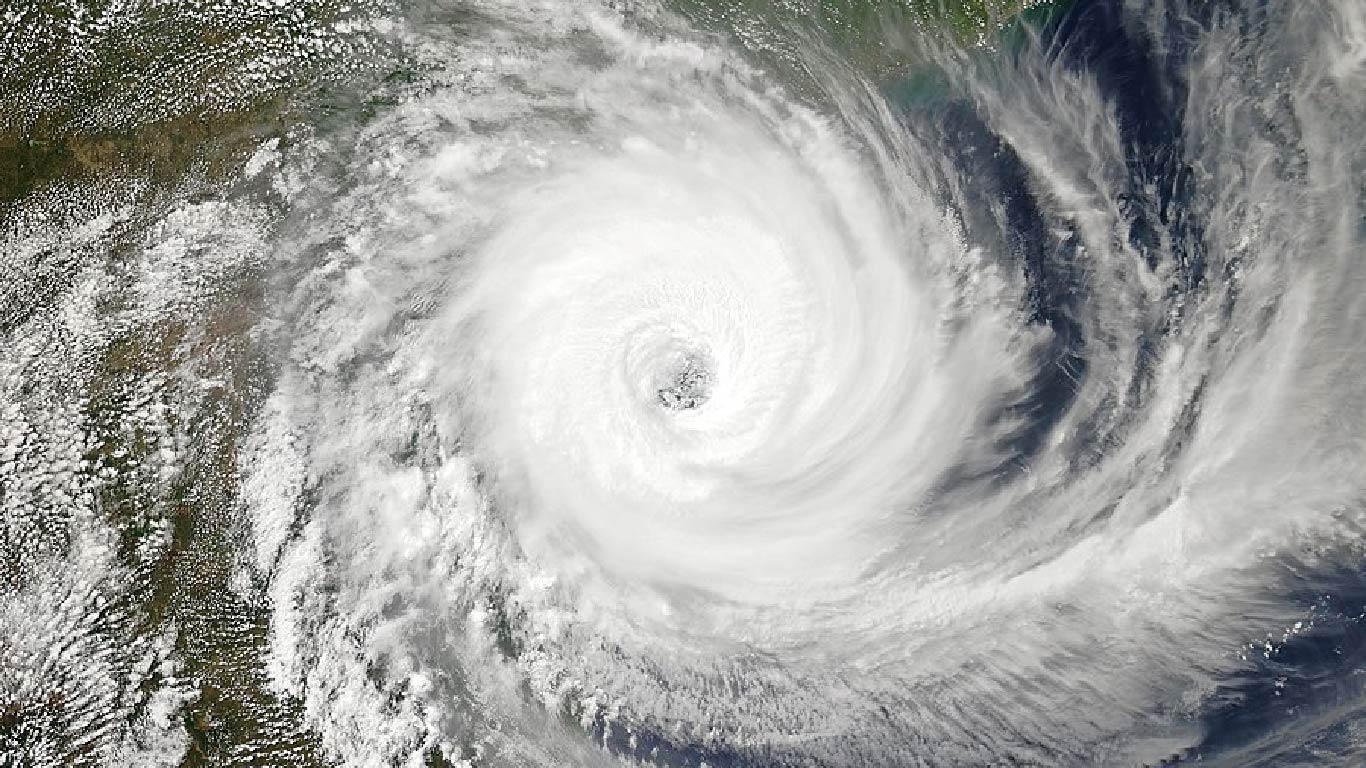
Why is insurance penetration important? The recent intense Tropical Cyclone Idai, one of the worst tropical cyclones on record to affect Africa and the Southern Hemisphere, is a good case to look at.

This storm was long-lived and caused catastrophic damage in Mozambique, Zimbabwe, South Africa and Malawi, leaving more than 1,200 people dead and thousands more missing.

Cyclone Idai made landfall in Mozambique March 14 and 15, 2019 as a Category 2 storm. Then, a few weeks after, Cyclone Kenneth came ashore in northern Mozambique April 25, 2019, with hurricane-force winds and heavy rains. The storm arrived only six weeks after Cyclone Idai devastated a broad area of the country about 600 miles south of Cyclone Kenneth’s impact zone

The basic facts of the Cyclone Idai are:

  • Highest wind speed: 127 mph
  • Date: March 4, 2019 – March 21, 2019
  • Dates: Mar 4, 2019 – Mar 21, 2019
  • Damage: ≥ $2 billion (2019 USD); The cyclone caused overall losses in Mozambique and neighboring countries of $2 billion. The loss in Mozambique is equivalent to about one-tenth of the country’s gross domestic product.

However almost nothing was insured, so very few of the people affected were able to obtain prompt financial assistance for the loss of their belongings property and life.

Insurance provides a critical safety net for households, preventing them from falling into poverty by avoiding the damaging costs of emergencies such as the ones being felt from the above cyclones.

Specifically the new low cost microinsurance schemes are designed to grow insurance programs and are aimed at helping low-income people avoiding difficult, often devastating risk coping measures following such issues. This can be putting children to work, eating less food, or selling productive assets. All these have long terms impact on peoples growth.

Increasing insurance penetration promotes access to vital services, including health and agricultural services, and can promote healthier and more productive decisions.

How is insurance penetration measured? Penetration rate indicates the level of development of insurance sector in a country. Penetration rate is measured as the ratio of premium underwritten in a particular year to the GDP.

Looking at the overall figures for insurance penetration. In Emerging Asia, property insurance penetration is very low at just 1.1% – only slightly above the figures for sub-Saharan Africa. In India, the Philippines and Indonesia, insurance penetration is a feeble 0.5–0.6%. Compared to Asia’s developed countries with an average insurance penetration level of 2.4% – which is similar to western Europe – the US shows an insurance penetration of 3.3%.

These low levels of insurance penetration are particularly problematic in African and Asian countries, as many of them are exceedingly prone to natural catastrophes.

Apart from the humanitarian tragedies with high numbers of casualties, property losses after natural catastrophes invariably cause serious economic setbacks.

Studies have proven that high insurance penetration significantly reduces or even balances out these negative effects. The positive economic effect of risk transfer is thus particularly strong in emerging economies.

Social programs and technology is here now to support the delivery of microinsurance and new insurance programs to these countries. We are developing parametric solutions and programmes to support this backed up with AI and Machine Learning tech.

Let’s Grow Together

Explore Our Demo

In The Press

Pre-money Valuations

08.03.2019
Insurance Industry
blog value

I was at an investor pitch meeting the other day and was asked about our valuation. How to justify a X multiple of our revenue. Truth is we are just starting to get revenue from some parts of the business, we have booked revenue from one area, but these is so much more potential. At the time I did not have a good answer. I was thinking its not about revenue at this point. This time next year it will be, but today the pipes are just turning on. So now I have given it some thought and would have a better answer.

I thought I would pass on my thoughts and also thank John Ason’s web site for being very helpful, professional and clear.

Getting pre money valuations

The valuation is probably the most difficult and even emotional aspect for us, the founders of a company. We have invested a lot of money and time already. So, on the one hand, we want the highest possible pre money valuations as proof of the concept, our investment and reward for our hard work. And then on the other hand, we also know high pre-money valuations can kill any possibility of getting funding. This was running through my mind when I was asked the question in our pitch meeting!

For pre-revenue elements of the company there is no simple way to mathematically derive a present money value, today we only have revenue from parts of our business currently. We are working hard on revenue across all elements and we are close to this point now, this is as at Aug 2019.

So how does an early stage investor arrive at pre money valuations that works for them?

A suggestion is to first, analyse our revenue projections, we can send these to you. This will provide you, the investor, with some insight into the direction of the business and business model and maybe some fun and tears. I would say we are in a very exciting area, there are very few digital insurers trying to solve for being global with high volume low value policies. Automation of insurance is highly efficient.

Second, is for you to construct your own private revenue projections; you can research our markets and sectors and review our model and likely revenue from similar companies. This can include “ancillary” businesses or using other revenue models. To invest in an insurtech I believe you need to know a bit about the sector. It’s highly regulated. If these revenue projections provide you with a 10 bagger (i.e. 10 times the investment) then we should be a candidate for consideration of an investment. We believe we hit this model.

Trying to calculate a value for a start-up is difficult to impossible, so asking about a multiple and me saying we are at a 10 times or 20 times or 40 times revenue multiple at todays revenue is not the right question or answer at this stage. This process attempts to manage the risk of investing along with the goals and wants of the founders. Bringing together a good partnership.

First, we the company, must demonstrate that we have potential of at least a ten bagger. Second, a standard non-emotional formula is applied based on amount of funding obtained to derive the ownership. We can work with investors on this model, I think any startup and investor can.

Thanks for reading – I hope this was helpful – I feel better able to answer this question now at least!

What is a 10 Bagger?

A 10 bagger is a stock or company that increases in value by at least 10 times its purchase price, or by at least 900%. The term 10 bagger was coined by legendary fund manager Peter Lynch in his best-selling book, “One Up on Wall Street.”

Any company that appreciates ten-fold from the date an investor initially purchased it can be referred to as a 10 bagger. Although such investments are a rarity on Wall Street, more are found from early stage start-ups and early revenue companies.

Let’s Grow Together

Explore Our Demo

In The Press

Lessons from Amazon

06.15.2019
Insurance Industry
blog amazon

In the USA and China an increasing number of tech companies are bringing more in house. Is this the lesson for Insurance? Insource not Outsource?

Is this a lesson for Insurance companies?

Amazon  has recently been building up more and more capability to deliver bring to an end, maybe forcing the end, of their FEDEX Express contract.

What does this mean for each of them in the USA?

In the short term, Amazon will have to lean on some of its other logistics partners to fill the void left by FedEx’s departure. FedEx delivered 3% of Amazon packages last year, accounting for about 200,000 Amazon boxes a day, according to figures cited by Business Insider.

In the long term, Amazon isn’t going to rely on legacy logistics firms, it’s going to threaten them. Amazon has been aggressively building out its own logistics unit.

This has already helped that Amazon ships more of its own products — Amazon delivered about one-quarter (26%) of the orders placed on its site last year, up from nearly zero five years ago, according to estimates from Wolfe Research cited by The Wall Street Journal.

As the company continues advancing into the logistics space via investments and new services, it will begin to threaten legacy firms for market share. Amazon even went as far as declaring itself a transportation and logistics company in its 2018 annual report.

For FedEx – not much change in the short term but longer term it could see its core business undermined as Amazon builds a Logistics service in the same way it built AWS.

Why you may ask – basically its more data and more control and more flexibility in the LONG TERM to use Tech – think here of autonomous truck…. If left with outsourced companies, Amazon would not have the data, skills and capabilities to build their own service. Bringing it inhouse means it can now automate at its OWN pace and transition the business very effectively. And this is kinda what it did with AWS – built up a core business for itself and then resold it to everyone else.

Lessons from Amazon for Insurance? What can the an insurance company do?

  • Bring core services in house.
  • Automate those core services
  • Roll out across entire business
  • License to smaller companies

This means getting on to the innovation path, investing internally, investing in IP, investing in new process all with the aim of automation and productivity.

Let’s Grow Together

Explore Our Demo

In The Press

Community Insurance

05.29.2019
Insurance Industry
blog communityinsurance

Millennials and Generation Z (GenZ) all have one thing in common – they don’t like the idea of buying insurance. Wait…; maybe this is across all generations? Plus, there are the labels – lazy, entitled, self-centred, disloyal and spoiled, but again is this not all generations at this young age?

Let’s not focus on this, let’s take a closer look at this new (ish) group of young adults, what shines out for me is that they are turning to borrowing, sharing, renting and hiring rather than buying. They want the ‘experience’ not the hassle of ownership. They want the ease. Cake & Arrow have been studying this group and their insights are interesting, not just for insurance but for all of commerce.

Millennials have grown up with a fully functioning computer in their hand and this drives everything.

While not all Millennials/GenZ are alike, there is one term defining their generation most might agree upon – the convenience generation. From on-demand taxi services, to on-demand food delivery and on-demand entertainment, these adults have opted for new levels of convenience unlike any other generation before them. Millennials and GenZ are choosing the convenience of Boxed and Amazon Prime over the prices of Costco and Sam’s Club.

How is this insurance industry responding? We see terms like “digital transformation,” “personalization,” and “on-demand,” these are the chosen jargon of the industry, used in industry events, panels, webinars, and reports across the world in an attempt to set clear objectives and guidelines for companies that want to stay relevant. What’s more, these terms have been portrayed by others as promising opportunities for those willing to embrace the journey.

But is this true? Do we really know that this is what drives a millennial insurance shopper? Or is that just the convenience of the ability to deliver on this in the context of what a company was doing anyway? Let’s make it digital??? This is the easy option, it’s got to mean something. Having a fancy front end, is this enough?

I believe that digital is a step in the journey but it not the end of the journey or even the point of the journey. The journey to me is much more than this, it is about making a difference and bringing out the true qualities of the industry, the fundamental reason for insurance and the difference it can make to those who take it out. These qualities are hidden and pushed way back in the dim past of the industry and the companies that form the industry. It’s the WHY of the industry, yet this seems lost.

For MIC Global, we are going to bring out this WHY. People talk about Peer to Peer insurance, but isn’t this what insurance is anyway? Why do people want insurance, why is it such a good thing? is the only reason you buy insurance is because you are forced to? Let’s look at a bit of the origins of insurance to find out the why it came around in the first place….

The first methods of transferring or distributing risk in a monetary economy, were practiced by Chinese and Babylonian traders in the 3rd and 2nd millennia BC. Chinese merchants traveling treacherous river rapids would redistribute their wares across many vessels to limit the loss due to any single vessel’s capsizing. The Babylonians developed a system and practiced by early Mediterranean sailing merchants. If a merchant received a loan to fund his shipment, he would pay the lender an additional sum in exchange for the lender’s guarantee to cancel the loan should the shipment be stolen or lost at sea.

It’s about looking at activities, groups and risks and providing cover for them should something go wrong. The whole point of community insurance is to build a community and allow large groups of the members to pay a little (insurance policy) towards the losses (claims) of the few.

This is the thing that seems lost today, users don’t see their part in the community giving benefits to the few. Todays insurance industry has drained all the feeling and warmth from their products. They forget the people paying for the few who claim. They forget to highlight how the easy payments of claims really benefit the ones who have suffered.

Microinsurance is all about the claim. Building in transparency to all customers. Not just the claims but the policies – allowing the communities that are built around our policies to see the claims and see how their money has helped support the community.

GenZ and Millennials want to be part of communities and helping support others and bring sense in to their lives. To grow and be relevant to these generations insurance needs to update itself and be more than digital, it needs to get back to its early existence and be part of the community, for the community.

Let’s Grow Together

Explore Our Demo

In The Press

Just in Time?

04.09.2019
Insurance Industry
blog lorry

The USA federal Government under the Trump Presidency shows how countries actions can impose change and disruption for businesses. Not only their threats but actual actions mean companies need to plan and have back up plans particularly if they are part of or rely on an international supply chain, such as with just in time production. Political risk is a real issue.

With campaign promises to build a wall between the Mexico-United States border and continued threats to close Ports of Entry and to impose tariffs on foreign goods, organisations must now evaluate the damage that such events could have on their supply chain.

The efforts that the USA are going to deal with migration has created hours-long waits at the borders. The president’s tougher immigration policy is causing problems not just for immigrants but also has the potential to disrupt cross border trade.

As an example, approximately $177 billion of U.S. exports and $246 billion worth of imports make their way across the Mexico-United States border each year by truck, based on data from the U.S. Bureau of Transportation Statistics. Mexico is the third largest trading partner for the U.S. behind Canada and China. The automotive industry makes up a large portion of that trade. The U.S. also receives more than 40 percent of its fruit and vegetable imports from Mexico, according to a 2017 analysis from the U.S. Department of Agriculture.

With estimated wait times increasing to cross the border, the financial effect on companies is proving to be very damaging.

“The longer these delays get, the bigger the economic impact can be because businesses have to make monumental decisions.”

Gary Becker, Chief EconomistWashington D.C., based consulting firm Catalyst Partners

When the produce being transported is fruit and vegetables, any disruption in the supply chain can lead to substantial losses because they are perishable goods. In these situations how can businesses know what decisions to make and how to deal with these issues?

Our solution is to use detailed tracking of such perishable goods and other delicate products. We have a developed a tracker in partnership with an IoT company that can provide greater visibility into supply chain operations and allow users to make pro-active decisions relating to the condition of consignments.

When alerts of exceptional events are trigged – such as a shipment location, time at location, being dropped, opened, tilted or in this case, exposed to temperature or humidity outside of defined parameters, the user will be informed via our analytics portal. This auditable data can aid in resolving disputes as it allows everyone to identify the facts behind late and damaged goods.

In some cases, truckers may turn off their engines to save fuel meaning that the power supply to refrigerators will be turned off. Fruit and vegetables will soon expire if exposed to high temperatures for extended periods of time. In situations such as this, our users will be alerted in real-time of the rise in temperature which will give them the option to get in touch with the appropriate party to inform them of the risk being placed on the goods being transported.

Our solution puts shippers in control by enabling them to see what’s really happening and trending within their delivery network. Customer service will also be dramatically improved by enabling shippers and logistics suppliers to identify where delays and issues are happening and report back to customers.

The automotive supply chain is also heavily affected by these border crossings. Car parts tend to be manufactured in one country and then need to be shipped abroad to be matched with other parts. If delays become a common occurrence, organisations will need to start holding larger reserves of parts so they have enough products to keep their factories running. This will then undermine the benefits, and effect decision makers in the supply chain.

For businesses heavily dependent on goods arriving at the right place at the right time, reacting to supply chain failures can be just as important as preventing them. Our tracking solution is enabling those using just in time deliveries, specifically in the automotive sector, to react and be pro-active about failures in real time.

Tracking is part of the answer. Real time data and allows better decision making.

Let’s Grow Together

Explore Our Demo

In The Press

Blockchain or Hashgraph?

03.29.2019
Insurance Industry
blog blockchain hashgraph

So, there we were, in a planning meeting, thinking about how to implement a parametric insurance product, how to fully secure and automate it….and then someone mentioned Hashgraph! What?????

Just as I was getting tired of hearing “blockchain this…” and “Lemonade that…” we now have “Hashgraph”….

What is Hashgraph? Why was it so important to mention and for insurance?

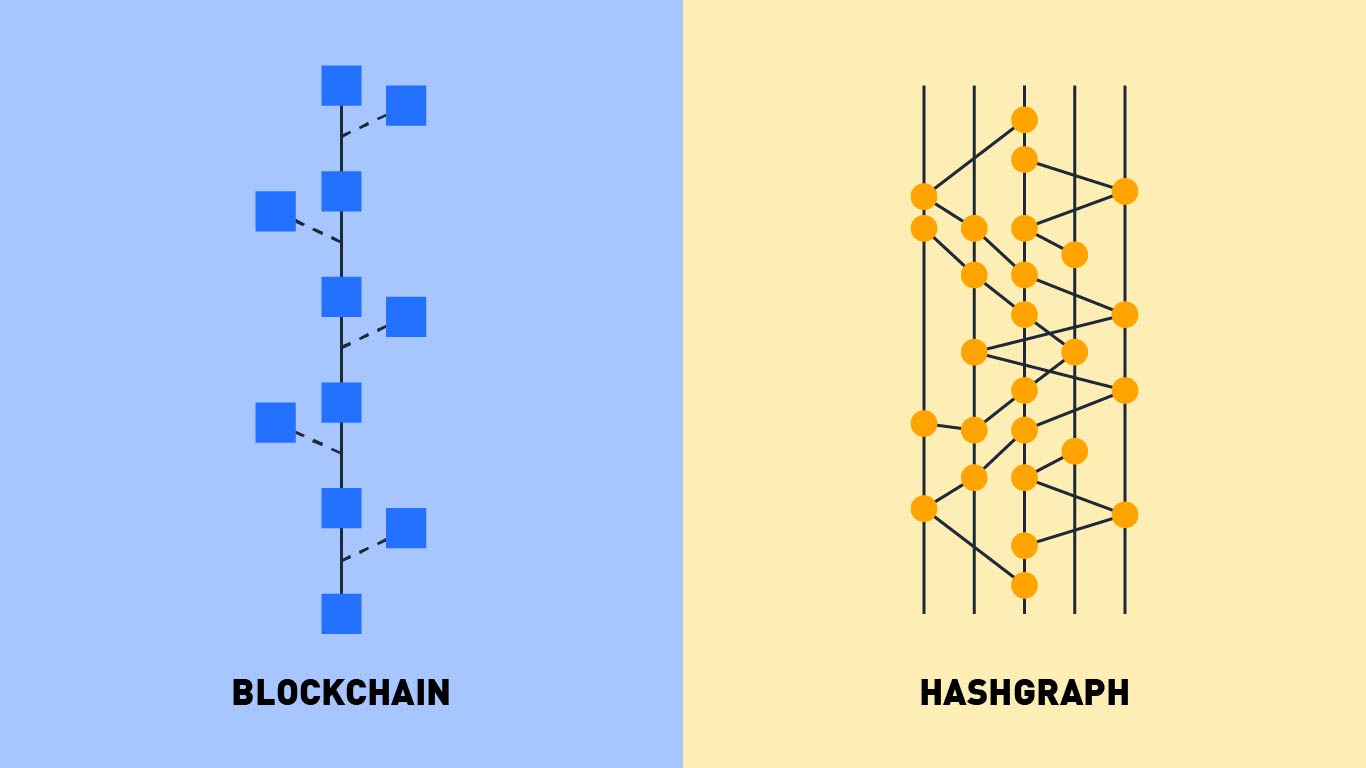
Distributed ledger space is a huge talking point for insurance – smart contracts, security, cost reduction, trust – it all points to a move on to this tech. BUT blockchains come with limitations by design and are, by their nature, slow. By allowing the ‘community’ to come to agreement and throw away the blocks they don’t agree on speed suffers. In today’s world SPEED is king and this is a huge barrier.

Even in the slow paced world of insurance, how many applications are there that can just do 5 transactions per second? None, I think. Hence blockchains have been all talk, to-date.

Many large companies across sectors are increasingly testing blockchain PoCs, but full adoption is constrained by core limitations such as transaction speed.

The hashgraph algorithm, invented by Leemon Baird, the co-founder and CTO of Swirlds, is a consensus mechanism based on a virtual voting algorithm combined with the gossip protocol to achieve consensus quickly, fairly, efficiently, and securely.

YAY – QUICKLY – speed could be solved, and we can adopt.

Hashgraph is an alternative to blockchain which is a first generation tech with severe constraints in terms of speed, fairness, cost, and security,” explained Mance Harmon, Co-founder of Swirlds and Hedera.”

For the layman what is Hashgraph? Well if you know what blockchain is (a distributed ledger technology) all about then this is relatively simple – Put simply it’s like Blockchain, but Hashgraph is without the limitations.

Under test, Hashgraph has performed well. Since time is a trade-off between throughput, latency, number of computers, and geographic distribution, the tests demonstrate these trade-offs very well without adding in another trade-off. For example, the results show 30 computers can achieve 50k transactions a second across 8 global regions in 3 seconds, or merely 1.5 seconds across 2k miles, or 0.75 seconds in a single region. This is great news and it could be time to open up PoC’s to this new tech.

These speeds mean that processors such as Visa can think of building it into their current network and transaction speeds.

The Hedera Hashgraph platform is architected to address the market of distributed applications. The vision provides an initial three sets of services as the platform evolves:

  1. Cryptocurrency as a service for support for native micropayments.
  2. Micro-storage in the form of a distributed file service that apps can use.
  3. Contracts.

Great – how do we play and pay? It works through a platform coin — when you make an API call to one of these three services, a micro-payment is made to the company.

The Hedera platform’s existing technical framework is capable of anti-money laundering and know your customer compliance which sits well for insurance. Regulatory compliance combined with enhanced security and speed could signal a time to start.

With a secure, fast, public ledger, the future could include micropayments and massive-scale distributed p2p insurance and other new models could be developed. Match distributed ledger technology and AI and the future is bright!

So, what to do now? We are looking at this tech to architecture our insurance models. We have been waiting until now owing to the fundamental issues in existing blockchain processes.

Let’s Grow Together

Explore Our Demo