In The Press

Just in Time?

04.09.2019
Insurance Industry
blog lorry

The USA federal Government under the Trump Presidency shows how countries actions can impose change and disruption for businesses. Not only their threats but actual actions mean companies need to plan and have back up plans particularly if they are part of or rely on an international supply chain, such as with just in time production. Political risk is a real issue.

With campaign promises to build a wall between the Mexico-United States border and continued threats to close Ports of Entry and to impose tariffs on foreign goods, organisations must now evaluate the damage that such events could have on their supply chain.

The efforts that the USA are going to deal with migration has created hours-long waits at the borders. The president’s tougher immigration policy is causing problems not just for immigrants but also has the potential to disrupt cross border trade.

As an example, approximately $177 billion of U.S. exports and $246 billion worth of imports make their way across the Mexico-United States border each year by truck, based on data from the U.S. Bureau of Transportation Statistics. Mexico is the third largest trading partner for the U.S. behind Canada and China. The automotive industry makes up a large portion of that trade. The U.S. also receives more than 40 percent of its fruit and vegetable imports from Mexico, according to a 2017 analysis from the U.S. Department of Agriculture.

With estimated wait times increasing to cross the border, the financial effect on companies is proving to be very damaging.

“The longer these delays get, the bigger the economic impact can be because businesses have to make monumental decisions.”

Gary Becker, Chief EconomistWashington D.C., based consulting firm Catalyst Partners

When the produce being transported is fruit and vegetables, any disruption in the supply chain can lead to substantial losses because they are perishable goods. In these situations how can businesses know what decisions to make and how to deal with these issues?

Our solution is to use detailed tracking of such perishable goods and other delicate products. We have a developed a tracker in partnership with an IoT company that can provide greater visibility into supply chain operations and allow users to make pro-active decisions relating to the condition of consignments.

When alerts of exceptional events are trigged – such as a shipment location, time at location, being dropped, opened, tilted or in this case, exposed to temperature or humidity outside of defined parameters, the user will be informed via our analytics portal. This auditable data can aid in resolving disputes as it allows everyone to identify the facts behind late and damaged goods.

In some cases, truckers may turn off their engines to save fuel meaning that the power supply to refrigerators will be turned off. Fruit and vegetables will soon expire if exposed to high temperatures for extended periods of time. In situations such as this, our users will be alerted in real-time of the rise in temperature which will give them the option to get in touch with the appropriate party to inform them of the risk being placed on the goods being transported.

Our solution puts shippers in control by enabling them to see what’s really happening and trending within their delivery network. Customer service will also be dramatically improved by enabling shippers and logistics suppliers to identify where delays and issues are happening and report back to customers.

The automotive supply chain is also heavily affected by these border crossings. Car parts tend to be manufactured in one country and then need to be shipped abroad to be matched with other parts. If delays become a common occurrence, organisations will need to start holding larger reserves of parts so they have enough products to keep their factories running. This will then undermine the benefits, and effect decision makers in the supply chain.

For businesses heavily dependent on goods arriving at the right place at the right time, reacting to supply chain failures can be just as important as preventing them. Our tracking solution is enabling those using just in time deliveries, specifically in the automotive sector, to react and be pro-active about failures in real time.

Tracking is part of the answer. Real time data and allows better decision making.

Let’s Grow Together

Explore Our Demo

In The Press

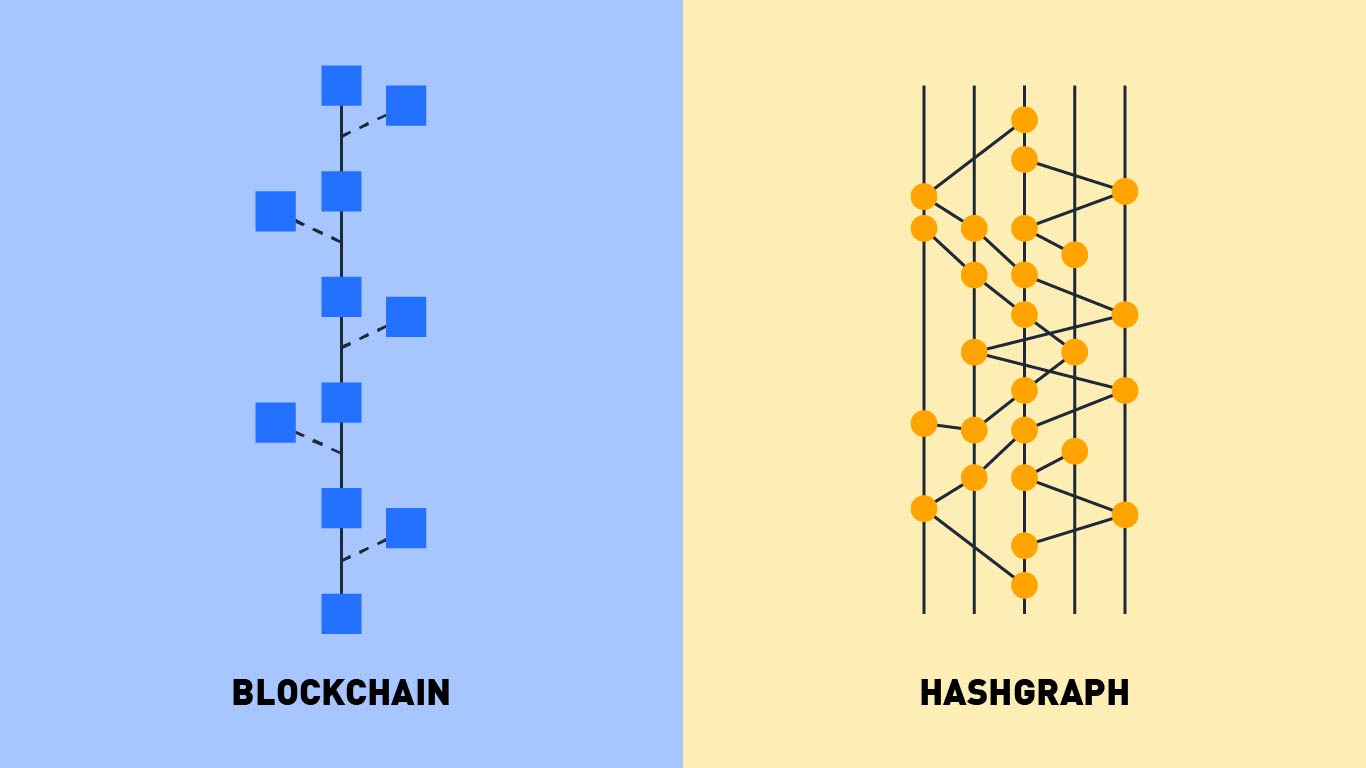
Blockchain or Hashgraph?

03.29.2019
Insurance Industry
blog blockchain hashgraph

So, there we were, in a planning meeting, thinking about how to implement a parametric insurance product, how to fully secure and automate it….and then someone mentioned Hashgraph! What?????

Just as I was getting tired of hearing “blockchain this…” and “Lemonade that…” we now have “Hashgraph”….

What is Hashgraph? Why was it so important to mention and for insurance?

Distributed ledger space is a huge talking point for insurance – smart contracts, security, cost reduction, trust – it all points to a move on to this tech. BUT blockchains come with limitations by design and are, by their nature, slow. By allowing the ‘community’ to come to agreement and throw away the blocks they don’t agree on speed suffers. In today’s world SPEED is king and this is a huge barrier.

Even in the slow paced world of insurance, how many applications are there that can just do 5 transactions per second? None, I think. Hence blockchains have been all talk, to-date.

Many large companies across sectors are increasingly testing blockchain PoCs, but full adoption is constrained by core limitations such as transaction speed.

The hashgraph algorithm, invented by Leemon Baird, the co-founder and CTO of Swirlds, is a consensus mechanism based on a virtual voting algorithm combined with the gossip protocol to achieve consensus quickly, fairly, efficiently, and securely.

YAY – QUICKLY – speed could be solved, and we can adopt.

Hashgraph is an alternative to blockchain which is a first generation tech with severe constraints in terms of speed, fairness, cost, and security,” explained Mance Harmon, Co-founder of Swirlds and Hedera.”

For the layman what is Hashgraph? Well if you know what blockchain is (a distributed ledger technology) all about then this is relatively simple – Put simply it’s like Blockchain, but Hashgraph is without the limitations.

Under test, Hashgraph has performed well. Since time is a trade-off between throughput, latency, number of computers, and geographic distribution, the tests demonstrate these trade-offs very well without adding in another trade-off. For example, the results show 30 computers can achieve 50k transactions a second across 8 global regions in 3 seconds, or merely 1.5 seconds across 2k miles, or 0.75 seconds in a single region. This is great news and it could be time to open up PoC’s to this new tech.

These speeds mean that processors such as Visa can think of building it into their current network and transaction speeds.

The Hedera Hashgraph platform is architected to address the market of distributed applications. The vision provides an initial three sets of services as the platform evolves:

  1. Cryptocurrency as a service for support for native micropayments.
  2. Micro-storage in the form of a distributed file service that apps can use.
  3. Contracts.

Great – how do we play and pay? It works through a platform coin — when you make an API call to one of these three services, a micro-payment is made to the company.

The Hedera platform’s existing technical framework is capable of anti-money laundering and know your customer compliance which sits well for insurance. Regulatory compliance combined with enhanced security and speed could signal a time to start.

With a secure, fast, public ledger, the future could include micropayments and massive-scale distributed p2p insurance and other new models could be developed. Match distributed ledger technology and AI and the future is bright!

So, what to do now? We are looking at this tech to architecture our insurance models. We have been waiting until now owing to the fundamental issues in existing blockchain processes.

Let’s Grow Together

Explore Our Demo

In The Press

Insurance Innovation

03.23.2019
Insurance Industry Insurtech
blog formula

“The electric light did not come from the continuous improvement of candles.”

Oren Harari

Think about that.

Did the car engines come from constantly breeding better horses? Do airplanes fly by brilliantly flapping their wings?

No, these improvements in Light and Transport came about by the application of new technologies to known problems.

So how do we innovate in business? – We should be applying new technologies to our problems and making them more efficient.

Why should the insurance industry care about insurance innovation? Their products are about claims, how can you stop those with innovation? they are part of the product, right? Well, no, typically the insurance industry, as all businesses, cares about all its costs, the complete business model. The insurance industry has a very public metric, the ‘combined ratio’ or, I would say, the generally poor combined ratio. This metric should be the driver for all innovation

So what is The combined ratio? This is typically expressed as a percentage. A ratio below 100 percent indicates that the company is making an underwriting profit, while a ratio above 100 percent means that it is paying out more money in claims that it is receiving from premiums. The combined ratio is the adding up of all the costs of the industry.

This is the driver behind the insurance industry – its like the lap time of a F1 car – shed a 10th off here or there and you are in the lead and seen as the winner. Don’t work on the lap times and you are seen as going backwards.

The industry 2017 combined ratio was around 105% and in 2016 it was around 101%. Meaning that overall the insurance industry lost money from its core business in both years and 2018 will be similar.

So you would think that this would be a huge RED ALERT. No, this is business a normal.

The industry lives in a world of negative underwriter profits. This could be seen as very strange to other businesses. The industry struggles to focus on their main core driver because profits are driven from investing the insurance premiums – not driving the costs out. Imagine if F1 teams did not care about lap times? What would that race look like?

However this is the opportunity. Focus on the combined ratio, use Insurtech to drive costs down – the ability to affect this ratio in some way through speedier sales, smarter claims, better intelligence in underwriting, cost cutting through the business process, straight through processing, etc. They are huge wins to find.

The current business model is stuffed full of issues and problems that are all fully baked into many of the incumbent companies making change hard. Issues and Processes such as: any claim starts with a fraud review; the broker or agent selling the policy does not deal with the claim or carry any of the risk; the agent, broker, MGA, Underwriter, reinsurance business model is too expensive – each taking percentages to cover their costs; within in agents and broker businesses the pay policy fights against innovation; data is not collected in one place, its dispersed across the supply chain; the Policy is mainly a list of exclusions and complicated, it wants a court fight; its hard to get new risks covered or understood; micro policies are too expensive to process; and this is to name only a few of the core issues within the existing model.

You get the picture, insurance is not efficient.

The world of insure-tech is trying to come up with new ideas and models to improve upon existing structures. However, these tend to be around the edges of the problem. What is needed is a drains-up overhaul of the process and a move towards true digital insurance companies – ones that own the customer and all process straight through, from marketing to sales to claims and on to renewal. There are a few new companies emerging, ones that own the whole process, Ping An and ACKO.

The collection of data and the ability to speed up and take the friction out of the process is essential if insurance companies are actually going to make a constant profit from insurance and not rely on investment income. The aim needs to be a constant combined ratio of under 100% whilst keeping the policies priced sensibly. It is possible.

Data and the ability to process and learn from the data is essential. Insurance companies say they have loads of data. This is only partly true – they generally have very little transactional or process data covering the buying cycle of the policy and limited marketing data. They have very few insights into their customers, their motivations, etc. This is because many policies are sold through partner channels – for example if an agent is selling the policy – they don’t pass on or even collect data on customers who looked and did not buy – they certainly don’t find out why they looked and did not buy. This data is lost to the insurance buying cycle.

These simple examples explain why innovation is so hard. The larger companies are changing – they are going more direct, they are doing deals that embed insurance into products, they are starting to build their brands to be direct to the customer.

Where does this leave Insurtech? Tech companies need to build strong relationships with incumbents and in existing businesses need to innovate faster, the lap times are increasing and you don’t start or keep up you will be over taken by your smarter peers or new tech driven companies that get it right.


At MIC Global we are starting to build all the pieces to be a fully digital insurance company. From policy and insurance innovation, through distribution, policy lifecycle, claims automation and payment. This entails AI, machine learning, data analytics, bots and many other new tools. Today we are underway with photo recognition AI to scan data from images and other documents together with things like crash detection for cars or damage detection on mobile phones. These technologies are forming the foundations of a micro and multi service tech infrastructure.

We are able to develop and license these modules and we hope that we can partner with companies to do this.

Let’s Grow Together

Explore Our Demo

In The Press

Insurance, Blockchain & Oracles

02.12.2019
Insurance Industry
blog blockchain oracle

Here at MIC Global we continue to explore blockchain, the world of “a smart contracts”. It is our current belief that ‘smart contracts’ will be the core insurance uses-case for blockchain. Why is this? Because the MAIN thing that people buy when they take out insurance is a contract. Nothing more – insurance is a contract to pay if a set of events occur in the future and is within the bounds of said contract.

Today, there is nothing wrong with the contracts that insurance companies use, well they are wordy and fully of small print, allow for ambiguity and generally need lawyers and administrators to navigate the many escape routes that are built in. So to introduce ‘smart contracts’ into the process takes tech and investment – two things that the insurance industry is slow to do.

Insurance contracts should, on the face of it, be very simple. They should ensure that each party is dealt with fairly and each party receives and gives what they thought when it was signed. There are many instances where insurance companies fight claims and slow down payments. This is where smart contracts can fulfil a need. Welcome to the world of smart contracts, these contracts don’t leave the chance for interpretations. For insurance they enable so many benefits.

The use of these contracts are now linked to the rise of blockchain and a change in technology and process that is still very young for many companies and, in many cases, at a pre-Proof of Concept (POC) stage in insurance companies.

The use of blockchain in insurance is the tech game changer that is needed within the industry to bring straight through processing advantages to insurers and brokers. Smart contracts will, eventually, be used for sharing economy, gig economy, IoT and platform insurance. Making the process very transactional. Making insurance transactional.

The main idea behind the use of ‘smart’ in smart contracts is to use tech coding to determine the relations and obligations between parties and automatically administer these clauses and relationships. The contracts make possible to exchange money, property, shares, or basically anything of value in a transparent and non-conflicting way.

Basically, the smart contracts have the trust built in. Add this to the idea of a decentralized blockchain network and you can start to see the power of these contacts within the insurance industry, especially around parametric and transactional insurance. The conflict of ambiguity is removed. The power of speed and volume enhanced.

The term “smart contract” is widely associated with Ethereum or IBM. Currently the Ethereum smart contracts are the most popular. However, it is possible to create smart contracts on other Blockchain platforms.

In 2018, a US Senate report said: “While smart contracts might sound new, the concept is rooted in basic contract law. Usually, the judicial system adjudicates contractual disputes and enforces terms, but it is also common to have another arbitration method, especially for international transactions. With smart contracts, a program enforces the contract built into the code.”

Other forms of smart contracts are Ricardian contracts. This form of contract maybe be more relevant to the insurance industry. A definition, from its creator, says a Ricardian contract is “a digital contract that defines the terms and conditions of an interaction, between two or more peers, that is cryptographically signed and verified. Importantly it is both human and machine readable and digitally signed”. This definition makes it very usable for insurance where both parties may want to use the contract from time to time.

A Ricardian contract registers a legally valid and digitally connected document to a certain object or value. A Ricardian contract places all information from the legal document in a format that can be executed by software. In this way it is both a legal agreement between parties and a protocol that integrates an agreement offering a high level of security because of cryptographic identification.

With a smart contract, a person could, for instance, have a hurricane insurance policy contract that is encoded in the blockchain in the form of a set of rules.

In case of the hurricane coming, the smart contract could then automatically transfer the claim money to the beneficiary. The Insurer may provide additional constraints, such as enabling the transfer only when the hurricane reaches certain intensity and tracks to a location within certain parameters etc.

Since smart contracts’ conditions are based on data stored in the blockchain, they need only to rely on external services, which take data from the “real” world (e.g. from hurricane tracking and location tech) and push them to the blockchain (or vice versa). These services are referred to as “oracles”. By considering this example, an oracle could inspect the presence of a hurricane’s track and intensity to identify whether the person/company (Insured) is eligible for a pay-out. This eligibility could also test against claims materials instantly read on the blockchain such as invoices or other records. This would then trigger an instant, automatic, payment.

Let’s Grow Together

Explore Our Demo

In The Press

To Blockchain or Not to Blockchain

01.05.2018
Insurance Industry
blog blockchain

By now you must have heard of blockchain and cryptocurrency creating the buzz of the moment.

There are many articles on the internet currently raving about what Blockchain is and how it could potentially disrupt the world as we know it. This article is not about that but rather about the reason we as a company (MIC Global), have made the decision to use blockchain and why we see it as important for our customers.

Back in the mid to late 1990’s, a few early adopters got excited by this new buzz called the internet, a risky concept that was at the time either being laughed at, or simply ignored. A very few of those early adopters scraped through, promising to re-invent whole new industries and have managed to do so, becoming the new companies that we now look up to. By 2010, it was no longer a question as all saw the point and joined the bandwagon, and as we know the rest is history.

So, is blockchain the new buzz to consider for our future? What is the big deal about blockchain? For now, we know that basically it changes the rules of how things use to be and is posed to disrupt industries, just as the internet did.

The real question now is this; what is so important about Blockchain and why do we need to pay attention?

There is an old adage about how on the internet nobody truly knows who is really behind a profile but with Blockchain, that is all about to change! Yay for online dating or padding out your life on Facebook or enhancing your LinkedIn profile.

The issue has always been about trust. How do you trust anyone, or even worse how do you know that you can trust these platforms? To TRUST something today is difficult; there are many businesses and processes built to exploit us. Platforms making %’s on the actual service or process you want or those they make sure you need. You pay, and this cost is built into the systems and products you use. These ‘real trusted’ relationships all must be paid and defended.

Just like selling books online was initially rejected by the traditional industry 20 years ago, many institutions today are very sceptical about Blockchain replacing their value. These are the intermediaries (banks, brokers, lawyers, consultants, etc) who are there to guarantee this real-world trust.

Blockchain aims to virtualise this. It is like the internet was aiming to do back in late 1990’s to shopping. There are now some who are starting to experiment with this new digital technology to defend or build new ‘central’ control and management systems.

Why are they starting this now?

Recent technology waves, e.g. the Internet of Things and the proliferation of smart mobile devices, have all gone global and have given digital attributes to the physical things, i.e. door bells, thermostats, location, motion. This is reminiscent of the spread of broadband that finally kicked off the growth of sales and social on the internet in the early to mid-2000’s.

This digitisation of ‘things’ directly endows physical objects with information and intelligence making the physical virtual. Conversely, because of the Blockchain’s in-built immutability, the data that is generated becomes ‘real’ – it collects physical attributes.

This allows us to consider new products and services, generating a whole new value chain with trust built in and removing the cost and friction of working through the old world of layers of centralised institutions and intermediaries of trust.

No wonder that 2017 saw a big switch with leading institutions and even governments building real applications using blockchain. In India, SBI and 27 other banks joined hands to form BankChain to enable smart contracts and store KYC details. American Express and Santander has partnered with Ripple to enable real-time cross-border transactions. Estonia wants to become the first digital nation with its own cryptocurrency.

Let’s Grow Together

Explore Our Demo