MIC Global partners with WRMS Global to deliver Flood Resilience cover to Merchants and Gig Workers in India
02.08.2024
Gig EconomyMiIncomeNatural HazardsPress Release
NEW YORK, NY, UNITED STATES (Feb. 8, 2024) – MIC Global is partnering with WRMS Global and local insurers in India to bring loss of income coverage to India’s merchants and gig workers faced with unprecedented flood risks, supported by MIC’s MiIncome digital reinsurance solution.
In the first of a series of product innovations responding to increasing events caused by natural hazards – such as floods – and the subsequent loss of income gap experienced by working individuals across the globe, MIC have developed their Flood Resilience trigger as part of their MiIncome digital reinsurance solution.
This new to market parametric micro insurance product – available to customers via platform partners and local insurers in India – provides micro businesses, merchants, and gig workers in India with access to cover for when faced with loss of income due to flooding in their local area. MIC’s solution includes a parametric claims process. When defined conditions are met, inconvenience payments are made to help platform companies put money into the pockets of individuals, supporting them when flooding hits their local area.
“As we embark on this exciting journey with WRMS, we are proud to introduce our first of its kind flood resilience product for the Indian market. Together, we are pioneering resilience micro insurance, supported by our MiIncome digital reinsurance solution – protecting merchants and gig workers in India from the harsh impact of income loss due to flooding and thereby helping to secure their livelihoods. This innovative product not only defines a new micro insurance category for India but also reflects our commitment to building a more sustainable and resilient future for the backbone of the nation’s economy.”
WRMS is a climate and agriculture risk management company. WRMS helps people and businesses boost productivity, engage in sustainable working practices, and secure a reliable income through risk management solutions based on data, technology, and financial innovation. Key to this partnership is WRMS’ commitment to securing income.
“Our collaboration with MIC Global is an alliance with a shared purpose. This partnership embodies our joint commitment to create a more resilient future, intricately tailored by our expertise to fortify vulnerable individuals, communities, and businesses against emerging natural disaster risks. Together we are revolutionizing protection for millions of lives and livelihoods, ensuring resilience in the face of rapid climate change and evolving challenges.”
About MIC Global:
MIC Global is a full-stack embedded micro insurance provider purpose-built to transform the insurance industry by reimagining and integrating simple and relevant insurance products that provide protection for people so that they can provide for their families and recover swiftly. MIC was founded with an aspirational goal to help close the insurance protection gap by providing inclusive and affordable insurance to people and to support them in their time of need.
Established in 2004, WRMS Global is a leading climate & agricultural risk management company. WRMS Global has collaborated with both Central and State Governments and renowned institutions like PepsiCo, Bayer, World Bank, and HDFC. It has successfully implemented income guarantee programs that have positively impacted more than 10 million beneficiaries. Beyond this, WRMS Global also works with businesses to provide comprehensive risk management solutions to help them protect their operations from extreme weather events and adversaries.
Bouncing Back from Natural Disaster: Solving Individual and Economic Resilience with Micro Insurance
11.16.2023
Gig EconomyMiIncomeNatural Hazards
Flood. Storm. Earthquake. Wildfire.
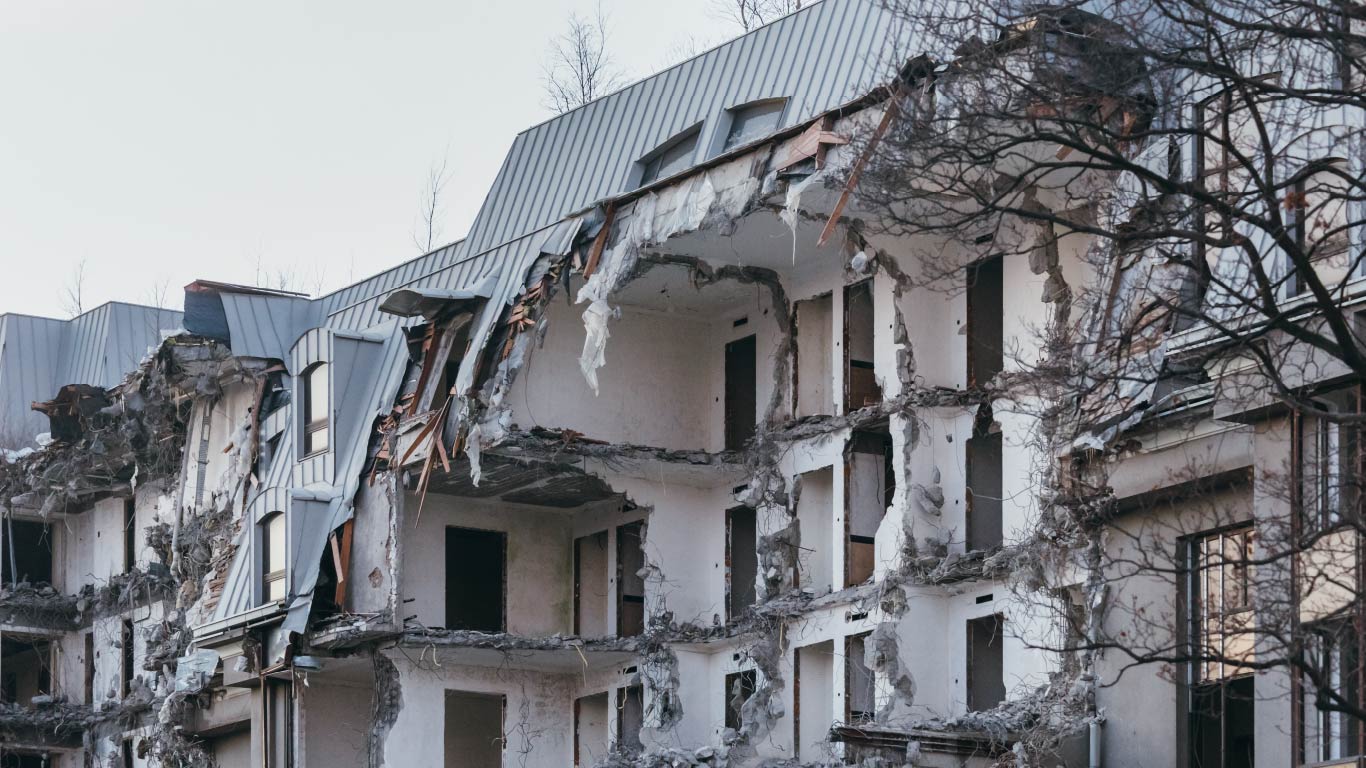
These are among the most common forms of natural hazard events experienced around the world, and they’re becoming more frequent as climate change takes hold. These natural hazards can strike at any moment and often displace people, halt livelihoods, and can even affect country economies.
Resilience – “the capacity to withstand or to recover quickly from difficulties” – is key to individuals and economies coping with the aftermath of catastrophic events. In financial recovery terms, this means having an emergency fund available to aid recovery, but for many this simply is not possible. The insurance industry can offer a lifeline to enable individuals to weather the storm during a natural hazard event and after the dust settles, water retreats, or fires are put out.
In today’s blog, we consider the immediate financial effects of natural hazard events and how micro insurance products, such as MiIncome, can play a vital role in helping individuals and communities bounce back when disaster strikes.
Let’s consider someone many of us see in the streets every day or have seen on news stories…
Weathering the Storm
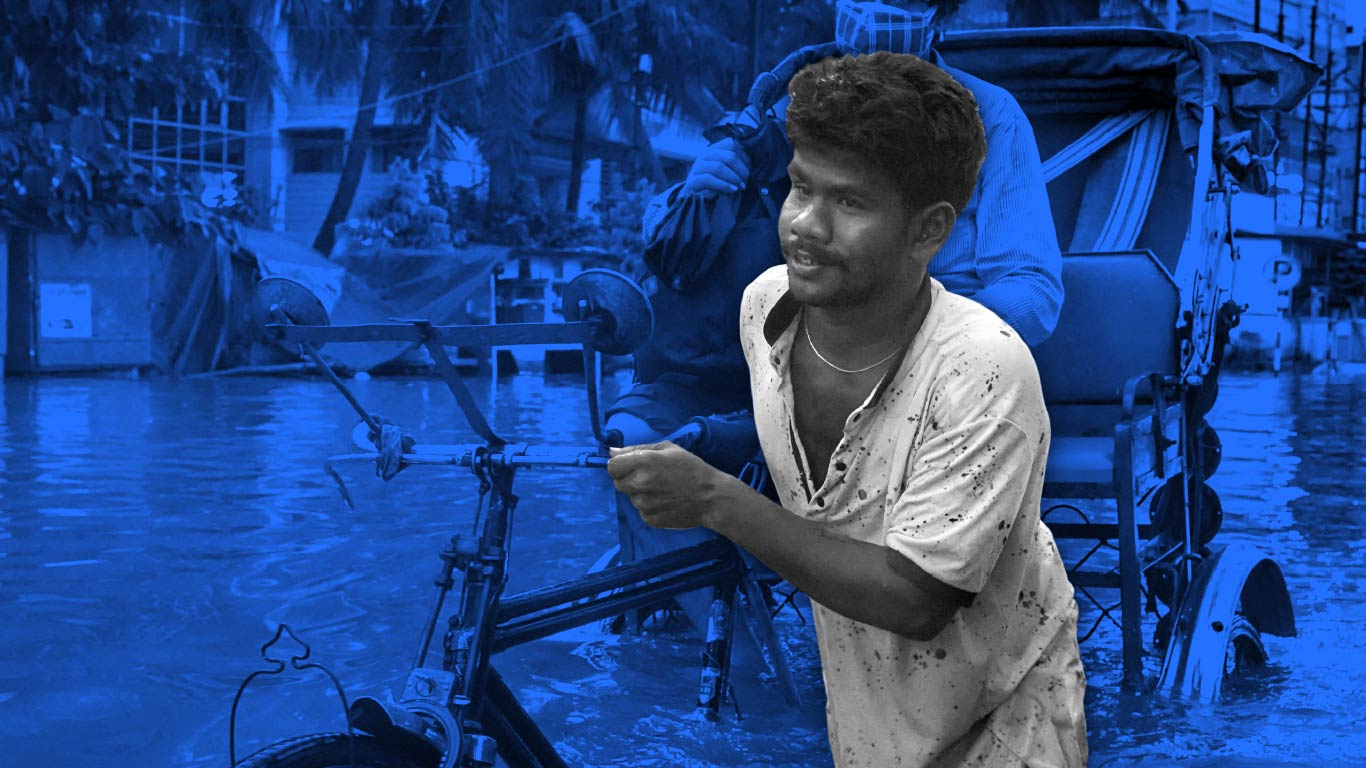
Ali is a bicycle rickshaw rider living in a country prone to extreme weather. As a gig worker, his income is based on his ability to work. For Ali, that’s riding and receiving fares, so any disruption can be costly. The last few years have been tough. The pandemic halted his earnings as people were mandated to stay in their homes, so he had no choice but to break into his savings to keep on his feet. Now, any emergency expense or loss of income is a major issue, as living week to week, he has little left to save.
Recently, the country has experienced an extended dry spell followed by torrential rainstorms that lasted a couple of days, with more rain expected. In Ali’s hometown, flash flood waters have risen rapidly, resulting in streets resembling rivers, and ground floors of homes and buildings like dirty swimming pools. Lives are on hold as flooding impedes movement, forcing many shops to close and utilities to be switched off.
Ali is attempting to work as usual, but with flood water up to his waist and being unable to see debris around his feet, he soon concedes and returns home, resulting in immediate loss of income. With more rain forecast, he has no idea when he’ll return to the road. To add insult to financial injury, with water and electricity supplies shut off, he needs to buy bottled water and much of his food could go to waste, requiring replacement when normality resumes – another inconvenience he could really do without.
A Global Protection Gap
Ali has an immediate need to access money to survive the flood, but dwindled savings will make day-to-day life challenging.
This begs the question – how can micro insurance be used to improve individual and national economic resilience in areas vulnerable to natural hazards?
MiIncome for Individual Financial Resilience
MiIncome digital reinsurance solution is our affordable, accessible, and relevant loss of income product which ensures people are adequately protected from threats to their livelihoods and incomes. We work with insurers and platform companies to support their own income protection products by tailoring MiIncome to their business and target demographic’s needs.
The MiIncome Resilience trigger provides coverage for loss of income due to natural hazards and extreme weather events. Coverage is parametric, enabling our insurance and platform partners to provide fast inconvenience pay-outs to their customers when insured events are met, to help navigate the issues they face in the moment. Going back to our earlier scenario, with coverage supported by MiIncome in place, Ali’s income gap will be softened, enabling him to afford emergency expenses, plug his lost income, and ride out the weather event.
Branching out further, MiIncome can be utilised at a national scale to help aid a country’s economy in the wake of natural hazards and extreme weather.
Where countries have a large proportion of gig and MSME entrepreneurs operating, a natural hazard event can temporarily remove many of these workers from the economy. Government-backed micro insurance programs can be offered to ensure that their local economy continues to operate and grow while people and small businesses recover from disaster.
Disaster Response Micro Insurance Case Studies
To better understand the practical impact of micro insurance on a national scale in post-disaster scenarios, let’s look at a few examples:
The Philippines: The Philippines is a nation that frequently faces extreme weather, including typhoons and earthquakes. Micro insurance programs, supported by both the government and local organisations, have allowed vulnerable communities to rebuild their homes and livelihoods after devastating events.
India: The Indian government has implemented micro insurance programs that specifically target agricultural communities. These policies provide coverage against crop failure due to extreme weather events, ensuring that farmers can recover and continue their agricultural activities even after a poor harvest.
Haiti: After the devastating earthquake in 2010, micro insurance played a crucial role in helping Haitian families rebuild their homes. Local organizations provided affordable micro insurance options, enabling communities to recover from this catastrophic event.
Helping People Recover from Natural Hazards with MiIncome Resilience
Natural hazards and extreme weather can hugely affect individuals in the moment, with a need for quick access to funds to cover short term loss of income, or in more serious circumstances provide cash to survive. Country’s economies can also suffer disruption while workers are unable to work and pay for goods and services.
With MiIncome Resilience, workers can access policies designed to help them in their hour of need with fast inconvenience payments*, which may provide a real lifeline when navigating a natural disaster. On a grander scale, governments can protect their citizens with government-backed insurance, but also gain a safety net that ensures that their economies remain stable and can weather the storm, while they focus on disaster recovery.
Tell me more about MiIncome Resilience
Thanks for reading our article. To learn more about MiIncome, visit our product page and get in touch with us below to discuss how we can help your business put money in your customers’ pockets in their time of need.
We are following the recent earthquake in Puerto Rico where around 2/3rds of the people remain without electricity (9th Jan 2020), many also still don’t have water and frightened residents were staying outside as a series of aftershocks rocked the island following a magnitude 6.4 earthquake. This is from CNN reporting and our hearts go out to these people, many of them who are still recovering from hurricane Maria some two years ago.
CNN is reporting that many say it is worse than Maria, some say Residents and officials have repeatedly said the impact from the quakes surpasses the devastation that Hurricane Maria, a Category 4 storm when it hit the island, delivered two years ago.
“With the hurricane, you knew when and at what time it would arrive,” Guayanilla resident Tatiana Rodriguez, 28, said, adding of the quakes, “This, you don’t know at what time it’s going to happen.”
The town of 18,000 located near the southern coast hasn’t been getting regular updates, she said. Residents are disinclined to leave their homes because they don’t know what areas are safe. Rodriguez worries that recovery will be difficult, especially for those hit hard by Maria, she said.
The earthquakes comes after Hurricane Maria devastated the US territory in September 2017. Many in southern Puerto Rico said the earthquakes’ damage was worse. “There’s no warnings for this,” Puerto Rico Police Commissioner Henry Escalera said of the earthquakes. “A hurricane gives us time to plan ahead.”
The Magnitude 6.4 quake was the biggest in a large number of tremors and quakes. Hundred have been felt over the last month or two and each time it must be hard to know where it’s leading.
Even the best warning systems for earthquakes can only give a few seconds warning to people. So planning is key.
This is where insurance should be kicking in. We know people don’t like to buy insurance and insurance can be expensive. In the end of the day Insurance is not ‘aid’. It is more like a saving plan for when things go wrong. Insurance should be a community project. However costs are sometimes too expensive for many and this can also be reflective in the likelihood of the issue such as Hurricane etc.
Additionally insurance is often seen as not paying out. There are so many clauses and exclusions that for an average person it can complicated and the rules behind making a claim can daunting.
What is MIC Global doing about the threat from Earthquake?
Our approach to insurance products for earthquakes is new and innovative. We are developing a Parametric approach to our products. This means that our products are directly tied to the initial reports and will be triggered for automatic payout when an insured property is affected.
The parametric approach is a way to simplify the insurance process and build cover around the claim. It is based on a set of known rules and when these are triggered, the insurance pays out.
Our vision fully supports our clients growth ambitions by limiting the impact of our services on their processes, whilst delivering essential insurance cover for their customers.
At MIC Global we are focused on changing the way business insurance is developed and processed. We are insurance with AI built in with API’s. We are in the forefront of that change; developing policies by the season, job, by the hour, by the day and by the Km, thus fitting our model to that of the platforms and the way small and micro businesses see risk. We are unbundling business policies so that the cover offered fits with peoples and business needs or the actual job or process being undertaken. Making Business Insurance transactional.
With earthquakes back in the news from Puerto Rico with a 6.4 Magnitude shock and many aftershocks, this got me thinking about how many such events occur every month and what the latest is around warning of these events?
This map shows the USGS data for the last 30 days (from 7th Jan 2020) and indicates 447 earthquake events over 2.5 Magnitude. Clearly there are 100’s of events every year and thankfully only a very few causing problems and make the news.
We have a lot of issues on the planet right now, many caused by global warming with the effects being felt through fire’s, drought, flood and strong winds. Earthquakes can be equally devastating but there is very little warning.
The latest science and work being carried out at USGS with their ShakeAlert system would give people a few seconds to respond to an immanent earthquake.
In a reconstruction, using data from the Magnitude 6.9 1989 Loma Prieta Earthquake the ShakeAlert starts sending alerts after 8 seconds of the initial report. For some they would have felt the earthquake by this time, however other would get up to 20 seconds advanced warning on their mobile phones.
What to do with this time? The advice would be to look around you and check you are away from danger of falling objects.
What to do during an earthquake?
If you are indoors when an earthquake hits:
Drop down and take cover under a desk or table. Be prepared to hold on until the shaking stops.
Stay inside until the shaking stops and it is safe to exit.
Stay away from bookcases and other furniture that can fall on you.
Stay away from windows and light fixtures.
If you are in bed – hold on and stay there. Protect your head with a pillow to protect yourself from flying glass and other debris.
If you are in a wheelchair – go to a safe position and lock the wheels. Stay where you are and cover your head and neck with your arms if you are unable to move quickly to a safe location.
If you are inside a high-rise – drop, cover and hold on. Avoid windows and other potential hazards. Do not use elevators and be prepared for sprinkler systems and fire alarms to activate.
If you are outdoors during an earthquake:
Drop to the ground in a clear spot away from buildings, trees and power lines. If you are driving – pull over, stop and set your parking brake. Avoid overpasses, bridges, power lines, trees, signs, buildings, vehicles and other things that may fall on your car.
What to do in stadiums, theatre and large venues:
If you are in a stadium or theatre – stay at your seat and protect your head and neck with your arms. Don’t try to leave until the shaking has stopped. Then, walk out slowly, watching for anything that could fall during aftershocks.
What is MIC Global doing about the threat from Earthquakes?
Our approach to insurance products for earthquakes is new and innovative. We are developing a Parametric approach to our products. This means that our products are directly tied to the initial reports and will be triggered for automatic payout when an insured property is affected.
The parametric approach is a way to simplify the insurance process and build cover around the claim. It is based on a set of known rules and when these are triggered, the insurance pays out.
Our vision fully supports our clients growth ambitions by limiting the impact of our services on their processes, whilst delivering essential insurance cover for their customers.
At MIC Global we are focused on changing the way business insurance is developed and processed. We are insurance with AI built in with API’s. We are in the forefront of that change; developing policies by the season, job, by the hour, by the day and by the Km, thus fitting our model to that of the platforms and the way small and micro businesses see risk. We are unbundling business policies so that the cover offered fits with peoples and business needs or the actual job or process being undertaken. Making Business Insurance transactional.
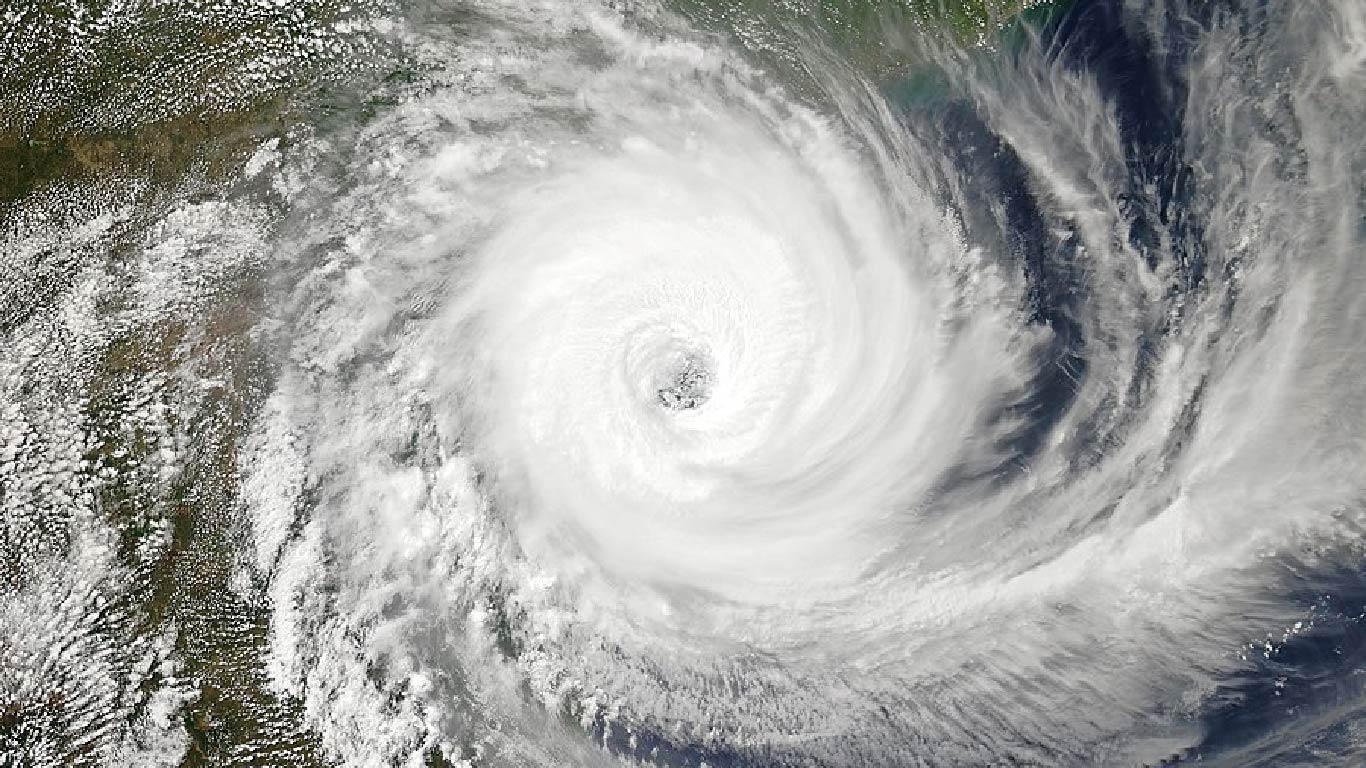
Why is insurance penetration important? The recent intense Tropical Cyclone Idai, one of the worst tropical cyclones on record to affect Africa and the Southern Hemisphere, is a good case to look at.
This storm was long-lived and caused catastrophic damage in Mozambique, Zimbabwe, South Africa and Malawi, leaving more than 1,200 people dead and thousands more missing.
Cyclone Idai made landfall in Mozambique March 14 and 15, 2019 as a Category 2 storm. Then, a few weeks after, Cyclone Kenneth came ashore in northern Mozambique April 25, 2019, with hurricane-force winds and heavy rains. The storm arrived only six weeks after Cyclone Idai devastated a broad area of the country about 600 miles south of Cyclone Kenneth’s impact zone
The basic facts of the Cyclone Idai are:
Highest wind speed: 127 mph
Date: March 4, 2019 – March 21, 2019
Dates: Mar 4, 2019 – Mar 21, 2019
Damage: ≥ $2 billion (2019 USD); The cyclone caused overall losses in Mozambique and neighboring countries of $2 billion. The loss in Mozambique is equivalent to about one-tenth of the country’s gross domestic product.
However almost nothing was insured, so very few of the people affected were able to obtain prompt financial assistance for the loss of their belongings property and life.
Insurance provides a critical safety net for households, preventing them from falling into poverty by avoiding the damaging costs of emergencies such as the ones being felt from the above cyclones.
Specifically the new low cost microinsurance schemes are designed to grow insurance programs and are aimed at helping low-income people avoiding difficult, often devastating risk coping measures following such issues. This can be putting children to work, eating less food, or selling productive assets. All these have long terms impact on peoples growth.
Increasing insurance penetration promotes access to vital services, including health and agricultural services, and can promote healthier and more productive decisions.
How is insurance penetration measured? Penetration rate indicates the level of development of insurance sector in a country. Penetration rate is measured as the ratio of premium underwritten in a particular year to the GDP.
Looking at the overall figures for insurance penetration. In Emerging Asia, property insurance penetration is very low at just 1.1% – only slightly above the figures for sub-Saharan Africa. In India, the Philippines and Indonesia, insurance penetration is a feeble 0.5–0.6%. Compared to Asia’s developed countries with an average insurance penetration level of 2.4% – which is similar to western Europe – the US shows an insurance penetration of 3.3%.
These low levels of insurance penetration are particularly problematic in African and Asian countries, as many of them are exceedingly prone to natural catastrophes.
Apart from the humanitarian tragedies with high numbers of casualties, property losses after natural catastrophes invariably cause serious economic setbacks.
Studies have proven that high insurance penetration significantly reduces or even balances out these negative effects. The positive economic effect of risk transfer is thus particularly strong in emerging economies.
Social programs and technology is here now to support the delivery of microinsurance and new insurance programs to these countries. We are developing parametric solutions and programmes to support this backed up with AI and Machine Learning tech.
Right now in Kerala, India, there is a disaster progressing – floods. The monsoon flooding has severely hit 12 of Kerala’s 14 districts, with thousands of homes damaged since June 2018 and 1,000’s of peoples lives turned upside down.
Crops on 32,500 hectares of land have also been damaged, the Home Ministry has said. The international airport at Kochi, a major port city, suspended flight operations after the runway was flooded. Authorities also asked tourists to stay away from the popular hill station of Munnar in Idukki district because of flooding.
As of now, a total of 407 people have died in Kerala, 190 in Uttar Pradesh, 183 people in West Bengal, 139 in Maharashtra, 52 in Gujarat, 45 in Assam and 11 in Nagaland state, officials and the Press Trust of India news agency reported.
This is worse than normal. The goverment is fighting on all levels and is also even having to rebut rumours, according to News18, water resources secretary, Tinku Biswal, said in a statement: “Rumours are being spread in social media sites like WhatsApp, Facebook, etc that the Mullaperiyar Dam has developed some cracks. This rumour is completely baseless and the Dam has not developed any cracks as alleged.”
This is a true fight that the people of Kerala are fighting.
MIC‘s tech office is based in Trevandium, Kerala and this is why the plight of the people and animals of Kerela is dear to my heart. Yet it also highlights as real issue professionally to me.
At least 85% of homeowners in the U.S. have homeowners insurance. While it’s not a required form of coverage by the US government, home insurance is typically required as a condition of having a mortgage loan and is very valuable in the protection it offers homeowners. If there are problems then generally people are covered. This is in sharp contrast to homeowners in India.
In India, the penetration of insurance is much much lower and the knowledge of what insurance can offer is not widely understood. Insurance is there to underpin a community at a time of need, especially during disasters.
Lloyd’s Global Underinsurance Report of 2012 had said that a one percentage point increase in insurance penetration is associated with a reduced burden on the taxpayer of one fifth of estimated total damage in case of a loss. This is a very cool way of saying that insurance really helps.
Putting it another way, as stated in the report ‘Transformative Agenda for The Indian Insurance Industry and its Policy Framework’;
“A 1% rise in insurance penetration translates into 13% reduction in uninsured losses-an increased investment equivalent of 2% of national GDP and a 22% reduction in taxpayers contribution.”.
Ms Beale, then (2012) CEO of Lloyd’s of London, said:
“The insurance industry can contribute a lot towards making the Indian economy more resilient. Lloyd’s can help support the expansion of insurance penetration in India and limit the economic impact of catastrophes.”
India’s current, 2017, insurance penetration rate stands at 3.42%, far below the global average of 6.2%, says an industry report.
With 17% of the worlds population, the Indian insurance market accounts for less than 1.5% of the worlds total insurance premium.
Home insurance policies generally provide coverage for disasters, damage to a home’s structure and damage to owners personal property. Today it is very possible that many people in Kerala are not only facing the loss of their property and home but also facing the fact they will still have to fund their mortgage, despite their home being in ruins, and or to find funds to rebuild their lives.
Parametric insurance is not wildly known about. Its one of the many insurance industries best kept secrets. However it is becoming a more used terms these days because of the focus on Tech and customer services.
Parametric insurance can be very attractive to groups, individuals and even companies. It offers to pay out on given triggers (or parameters) and then the ‘insurance’ is paid out on that basis.
Parametric insurance uses third parties and independent agencies to measure the triggers and when limits are met or events occur then the insurance is paid out.
In conjunction with Crystal & Co and Axa, we have launched our first parametric insurance this year, in May 2018. This is a parametric insurance product aimed at hurricanes in Florida.
Let’s say a company wants to purchase hurricane insurance. The traditional model in which, say, a hurricane hits and then the insured party has to tally up the losses and submit a claim for damages under the terms of the insurance and lets say 50% of the damage is caused by wind damage and 50% by flood damage then the policy for hurricane will only pay for the wind damage. This process can take a long time and is very costly.
With parametric insurance there exists a pre-specified agreement between the two parties (the entity taking out the policy and the insurance carrier) about what constitutes a hurricane in the first place. They may agree that if winds are sustained for 1 minute at 80 miles per hour within 20 miles of the address location – that is a hurricane which would trigger a payout for the insured.
With hurricane parametric insurance this is measured in real time and monitored. The hurricane is tracked, and the location of the insured are known. Simple.
One advantage of parametric insurance is that this model allows claims to be paid much more quickly than do traditional policies. Once the parameter is set and then passed, the agreed upon sum is paid out, with the policyholder only having to pass a simple process to quantify its losses.
Parametric insurance could offer policyholders in insurers better efficiencies because the cause-and-effect nature of triggered payouts obviates the need for assessors, arguments, protracted claims, plus the time and effort needed to tally up what was lost.
Parametric Insurance – Hurricane Insurance for Florida
05.07.2018
Natural Hazards
As MIC Global gears up to launch its first parametric insurance product in partnership with AXA and Brokerslink in Miami, Fl, we thought it a good time to open up a discussion on the subject. The product is Hurricane Insurance for Florida.
Parametric insurance or index insurance is growing in awareness across many industries and locations, however adoption of such insurance can be challenging for all concerned. However MIC Global makes it easy.
Insurance companies can be reluctant to offer index or parametric insurance owing to the perception it’s difficult to assess and overall, complicated to evaluate. Many insurers lack the needed knowledge and technical understanding to develop a sustainable and profitable parametric insurance solutions.
This is a pity since today many things can go wrong owing to population growth, urbanisation, climate change, technological growth and an overall growth in economic activity around the world. This environment should be ideal for insurance – the aim of insurance is to offer resilience to its customers in time of need, this is the fundamental thing insurance offers – a way of recovering when things go wrong. As the world grows more complex, insurance should grow in importance and prominence.
The way insurance responds is a challenge. Insurance gets a bad press owing to the policies being complex and when the time comes to make a claim its often hard and time consuming. Consumers and business owners can feel let down in their time of need by their insurer. Greater use of technology and awareness of the customer in insurance is causing changes however and parametric’s is just one example of this.
Parametric insurance is being talked about more and more across the global insurance and reinsurance industry and is often linked to the fact that of all the losses in the world many are not covered by insurance. In the developed world only 30% of losses are covered and in the developed world it is less then 10%. With weather related losses growing this situation is only going to get worse. Parametrics is a way to tackle this protection gap.
The case for parametric insurance is growing and it has several advantages over more established forms of insurance. Parametric insurance can be developed to cover specific needs and can offer very commercially viable forms of protection owing to the high use of tech such as Artificial Intelligence (AI) and Machine Learning to monitor and trigger the insurance payments. Data is the key and new data sets are being used together with technology such as Internet of Things (IoT) and other sensors and devices. Gaining a strong correlation between the insurable risk and the data is key.
Parametric solutions are suitable for many instances, building resilience into personnel lives and commercial businesses alike. Building a suit of products that can be deployed globally based on a set of technology and data points is possible. This is matched with the ability to monitor and manage the claims process with high levels of automation.
Clarity and communication is key to its success, ensuring that customer understand the product and can see and join in with the use of the product. Data analytics and visualisations aimed at the insured can be developed to aid the communication of the policies and these can be transparent to the user, showing in real time how the policy is performing against the event(s) under the policy.
Perhaps this will see customer satisfaction levels move off rock bottom!