In The Press

MIC Global and TanManagement partner in Tanzania

03.01.2021
Press Release
a pr TM

TANZANIA (March 1, 2021) – MicroEnsure, part of the MIC Global (MIC) – the world’s first end-to-end digital insurance platform, appoints TanManagement Insurance Brokers Limited as their representative in Tanzania for the growth of digital and microinsurance products. At MIC, our mission is to provide a simple safety net, so when the unexpected happens, people can bounce back swiftly. We do this by delivering relevant insurance through our digital channels and partners allowing us to access the more than 4 billion people and 100 million businesses that make up our community across the globe.

MIC has been working diligently to partner with like-minded businesses and organizations in order to grow the distribution of microinsurance globally. The appointment of TanManagement, as MicroEnsure’s representative in Tanzania, is part of this process. Under this arrangement, we will develop new and innovative insurance products and deliver them to millions of individuals and businesses. These insurance products will be distributed through technologically enabled seamless digital processes, leveraging license and outreach provided by TanManagement.

‘‘This partnership is a significant step towards fast growth of insurance penetration in Tanzania which otherwise has one of the lowest insurance penetration rates in the region. Both MicroEnsure and TanManagement are leveraging each other’s strengths and building a strong foundation of providing most relevant insurance products to millions of customers of FinTechs, mobile network operators, digital wallets, microfinance institutions and digital platforms.’’ –

Rehan Butt VP Sales Operations of MIC

“This partnership is the most logical next step for our Group as it will create substantial value for Customers throughout the Country. It will benefit Customers through new services and expand the current service capabilities. It is also very much in line with the Governments’ vision of ensuring 50% of Tanzanians are Insured by 2028. We look forward to playing our part with this vision and look forward to the future of Insurance in Tanzania.”

Mohammed Jaffer, Group CEO of TanManagement Insurance Brokers Limited

“I have known TanManagement for several years and I am very pleased that we have been able to form this exciting partnership to widen our mission to deliver a simple safety net to the businesses and peoples of Tanzania.”

Harry Croydon, COO and President MIC Global

MicroEnsure is a part of MIC Global (MIC). MIC was formed through the merger of Micro Insurance Company and MicroEnsure. MIC is the global insurance platform delivering technology, underwriting, policy management and distribution. MIC provides insurance to platforms, businesses, millions of micro & small businesses, and to the 4 billion people on the planet that are currently unserved.

Whereas most Insurtechs seek to improve existing monoline products and markets, we follow the concept of straight through processing. We do this in order to create highly relevant insurance products that we can offer via our platform globally at very low cost so that we can support people in their local communities. MIC is the world’s first global end-to-end digital micro insurance platform that has combined reinsurance capacity, in-country insurance licenses, world class distribution, and market leading AI functionality. More details – www.micglobal.com

TanManagement Insurance Brokers Limited is a private Limited Liability company registered in Tanzania under the Companies ordinance Cap 212 and issued with a Certificate of Incorporation No. 35174. In the past 10 years, the company has grown from a small office in Moshi to being one of the top 10 Brokerage Firms in Tanzania. For more details, log on to www.tm.co.tz

Let’s Grow Together

Explore Our Demo

In The Press

MIC Global and Marie Stopes Society enter strategic partnership

02.23.2021
Press Release
a pr MarieStopes

PAKISTAN (Feb. 23, 2021) – Marie Stopes Society Pakistan has entered into a strategic collaboration with MicroEnsure (part of MIC Global) to introduce a new health care initiative under the Delivering Accelerated Family Planning in Pakistan (DAFPAK) programme funded by UK – Foreign, Commonwealth & Development Office (FCDO), Pakistan with the name of “Sehatyab Programme” for the women and their families living in low and middle-income communities of Karachi. Through this programme, services like general out-patient, family planning & maternal and child health services can be availed at a considerably low amount in addition to free health insurance for women and their families. The Development Director to the British High Commission in Pakistan Annabel Gerry said;

“The UK is committed to support Pakistan in increasing access to family planning services and healthcare facilities especially for the most vulnerable women. We’re proud to invest in the Sehatyab microinsurance programme which will directly improve the lives of 5000 families including women, children and men in Karachi, Sindh through the provision of quality maternal and child care health facilities.”

Speaking on the occasion, Ms. Asma Balal Country Director, Marie Stopes Society Pakistan stated that:

“In Pakistan, maternal complications such as post-partum infection and hemorrhage account for over 50% of maternal mortalities. Additionally, financial barriers and lack of social security systems make poor women most vulnerable in terms of being able to access essential reproductive health services. The Sehatyab programme will improve the economic well-being of women and their families by reducing out-of-pocket health expenditures, as well as result in reduced maternal and neonatal mortality rates through increased provision of mother and child health and family planning services for improved treatment outcomes.”

Appreciating the partnership as another step towards the goal of reaching out to the tens of millions of uninsured and under-insured Pakistanis, Mr. Rehan Butt Vice President of MIC added that:

“We are very excited to work with Marie Stopes Society on this project. We have a track record of developing simplified insurance products and processes which help build faith for common men and women in insurance as an important risk management tool. Marie Stopes Society and MicroEnsure have a mission of serving the underserved communities in Pakistan and have a natural strategic fit for collaboration. We are confident that this partnership will go a long way in extending affordable financial protection to those who need it the most.”

Marie Stopes Society (MSS) is a Pakistan based local organization, registered under the Societies Act, 1860 since 1990. MSS Pakistan is one of the leading private sectors services providing organization with a focus on sexual and reproductive health services, especially family planning with a network of 26 Behtar Zindagi Centres, 03 maternal and child health clinics, 400+ social franchises network, 6 Meri Pharmacies, and 15 Roshni mobile units for outreach activities spanning over 30 districts in Sindh, Punjab and Khyber Pakhtunkhwa provinces reaching out to the most strategic and rural districts in Pakistan. More information is available at www.mariestopespk.org and 0800-22333.

MicroEnsure Pakistan (Private) Limited is a wholly owned subsidiary of MicroEnsure Holdings, UK – part of the STP Group Holdings. The company is a licensed insurance broker by the SECP and a specialist provider of innovative mass market insurance solutions. The STP Group aims to provide insurance safety net to millions of micro & small businesses and to the 4 billion people on the planet that are currently un/under served. Insurance is a highly fragmented market fixated on complex products, cumbersome customer journeys and stymied systems that prevents the swift payment of claims. The STP Group has created the world’s first global end-to-end digital microinsurance solution that will combine reinsurance capacity, in-country insurance licenses, world class distribution and market leading AI functionality. For more information visit www.micglobal.com

Let’s Grow Together

Explore Our Demo

In The Press

MIC Global secures grant from UNCDF

11.25.2020
Press Release
a pr UNCDF

ACCRA, GHANA (Nov. 25, 2020) – MIC Global (MIC) is proud to announce that we have secured a grant from UNCDF after a competitive process of request for application. The grant will enable us to provide free insurance to thousands of MSMEs in Ghana. Our objective is to minimize the social and economic impact COVID-19 has wrecked on poor communities. This includes small to medium sized businesses such as farmers, grocery vendors, and porridge sellers.

We have created an 8-in-1 bundled income protection insurance in order to stimulate a faster economic recovery. We are utilizing our ongoing partnerships with Vodafone, Opportunity International and Advans Ghana Savings and Loans, Danone as well as MTN Mobile Money in order to distribute the insurance product to affected MSMEs. While our main goal is to mitigate the havoc caused by Covid-19, we have also worked hard to create a user-friendly experience. By doing so, our hope is to change the overall perception around insurance into a positive one, thus, encouraging MSMEs to purchase paid insurance for their businesses in the future after their period of free cover expires.

Christiana Abdullai who sells porridge (local breakfast made from millet) and has banked with Opportunity International for over 10 years has been rewarded with 12 months free protection cover. We look forward to seeing how this improves her economic situation and her general perception of Insurance.

“At the heart of MIC’s work lies a great need to bring relief and restore confidence in livelihoods. We are surrounded by risks everyday, which do not necessarily go away if we ignore them. This project helps us to show MSME owners that their lives can be better and their businesses can be safeguarded. Cheers to a year of free insurance protection for MSMEs in Ghana.”

Leona Abban, Ghana Country Manager for MIC Global

Let’s Grow Together

Explore Our Demo

In The Press

Triple Threat – for Insurance?

08.31.2020
Insurance Industry
blog triplethreat

Triple threat: A person, especially a performer or athlete, who is proficient in three important skills within their particular field. This generally makes them highly successful.

Within cricket for example, there are 14 batsmen with international hundreds in all three formats from Ireland, West Indian, two New Zealanders, three Indians, a couple of Sri Lankans, a pair of Aussies, a Bangladeshi, a South African, a Pakistani… and no Englishmen. Kevin O’Brien (Ireland); Chris Gayle (West Indies) ; Martin Guptill and Brendon McCullum (New Zealand) ; KL Rahul, Suresh Raina, and Rohit Sharma (India) ; Mahela Jayawardene and Tillakaratne Dilshan (Sri Lanka) ; Shane Watson and Glenn Maxwell (Australia) ; Tamim Iqbal (Bangladesh) ; Faf du Plessis (South Africa) ; Ahmed Shehzad (Pakistan) .

Triple threat for movie field would be a person who is a writer, producer and director. For example you can look to James Cameron, Christopher Nolan, Peter Jackson and George Lucas and they have all delivered movies on a global scale with huge box office results.

How can this be considered in business too. What is a triple threat insurance company? What are the three factors you need to make a highly successful insurance company? Technology – Capacity – Distribution

When you look at the new insurtech players like Lemonade or BIMA or ByMiles or Bought by Many we see one or two of the three elements in their armoury but not 3.

Lemonade and ByMiles have the tech and but rely on their partners for Capacity plus they are fighting in the distribution arena ny going direct. BIMA may have distribution, but again capacity is via a partner. All these are weak in 1 or 2 areas. They are relying on partners for capacity and what if this changes? They need money for marketing and what if this starts to become harder to get? They have tech but can they sustain its growth as they scale?

I am not saying we have all the answers however we believe we are a triple threat in insurance to our competition and this gives us the edge.

Technology – we have our own tech team. This is being built in the markets where we develop and sell our products. This means the tech is both for our customers and managed with them in mind. We have a depth of talents, traditional insurtech together with AI and Machine Learning capabilities.

Capacity – we are a licenses P&C and Life carrier. This means we can write a wide range of products from property through to life covers. This means we can put a customer at the centre and support their needs. Life. Property. Work. What ever they want we can support them. We don’t have to rely on other companies to moderate our ambition.

Distribution – this is where the insurance industry normally hands over to aggregators or brokers. We don’t. We have built up partners that allow us to embed our products in to systems that are direct to customers. The sales friction is reduced and the customer journey is greatly improved.

We match our key capabilities with our people. Our people are experts in insurance and sales. Our triple threat capabilities empower our people to deliver the best products and service that we can. Our people have these three core capabilities at their fingertips and this powers our company forward.

Let’s Grow Together

Explore Our Demo

In The Press

Fingers in the Insurance Pie

08.25.2020
Insurance Industry
blog pie

What is the saying? “To have a finger in every pie”. Someone who has a finger in every pie is involved in a lot of different activities or knows about a lot of different things. This idiom can be used positively, to show that someone is energetic and has varied skills and interests. However, in a different context, it can be used in a more critical way, to say that someone is too involved in activities that should not concern them.

As a start-up – well we are a mature start up in that we have recently merged several companies with pedigree going back over 16 years – we are always being pushed to focus by industry specialists and gurus and we do indeed focus. However, when I look around successful insurance companies and insurance agencies always see diversity in their business, indeed spreading risk across a multitude of areas is all part of insurance success. I see companies with fingers in many pies.

Having a diverse and spread book of business is an essential part of our success and strength.

I have been accused of having fingers in many pies and when I have presented alongside other start-ups we are the only company that has a diverse book of business. Lemonade has only just added a second line of business in pets, by miles is only about cars, and we see this single focus all the time. And yet the successful insurance companies – many that back these insurtechs – have a very wide cross section of business and so they should – it spreads the risk. Successful insurance players know that you need a wide portfolio to have long term success.

We are a digital insurance company. Our goal is to server the unserved globally, these are individuals and businesses, all people who cannot readily find a relevant insurance product to serve their needs. By definition, this is a diverse and large cross section of risks. We are committed to serving our community and building services and products to reduce the risks for them and be the safety net when things happen.

When people look at our company we will not fit in the normal insurtech box and we more accurately fit into the digital insurance company box. This is a box with very few companies in it.

Incumbents are on the edge of this box in that they have digital initiatives and goals and we see them moving slowly into the circle.

Insurtechs are also on the periphery and many are digital but again few are taking the risk, they are effectively part of the MunichRe train or other insurance investors in this space.

So the upshot of the accusation of fingers in pies is that we will continue to grow our business and focus on building a diverse book of business to protect our community. Without a strong company, you cannot do all the things that you want to do. If you want to help the unserved, as we do, then you need a strong and wide platform to leap from.

Let’s Grow Together

Explore Our Demo

In The Press

Social Impact or Insurance… or Both, Anyone?

08.19.2020
Insurance Industry
blog payment successful

Social Impact, what is it and can we do it?

What is it? A significant, positive change that addresses a pressing social challenge.

Can we do it? Creating social impact is the result of a deliberate set of activities with a goal matching definition above.

The point about the social part of the phrase is that the impact has to be focused on creating change and supporting what we can all agree on to benefit human on the planet. By definition it’s an impact on something we care about.

Today many people want to work for companies create social impact. I get that. On our web site we have (had) a page on social impact and when I put this page up I believed that part of what we did was good things and I wanted to shout about them. Show we had a heart and wasn’t like other insurance companies.

However over the last few months I have been reviewing our efforts about social impact and I got to thinking….

We are an insurance company. Surely everything we do as an industry has a social impact? A conscious insurance company fully focus on its social impact and responsibility, is this the definition of social impact? Isn’t insurance the ultimate social impact service?

Is this true today? Much of the ‘western’ focused insurance effort is fully focused on addressing companies and people that MUST buy insurance to fulfil a contract obligation or to spread risk from their balance sheet or to mitigate risk in buying something. Their audience focus is top earning people or companies. Globally this represents the top 3%, companies in the top 30,000 out of the 100 million or so companies and top 200,000,000 people out of the general population of over 7 billion. This audience represents where a majority of insurance is sold globally by value. If there is social impact it is totally focused on the few not the masses. It’s where the top brokers and insurers are focused. Therefore, they is very little social impact generated by the general insurance industry.

What about the rest of the planet’s people and businesses? They are looking for social impact but they buy very little insurance, this I believe is the opportunity. The opportunity to discover why they don’t buy and then to deliver service and products to them to make insurance relevant and easy for them to participate in and to release the benefits of insurance to them and their community.

This is why I have taken our ‘social impact’ page down. We are social impact. Our message is that our services and products help you and your community in your time of need. We help the community recover quickly when things happen. This is our social impact. Providing a safety net to allow people to recover quickly is our way of providing social impact. Delivering social impact is through the core of our business and buried in our DNA.

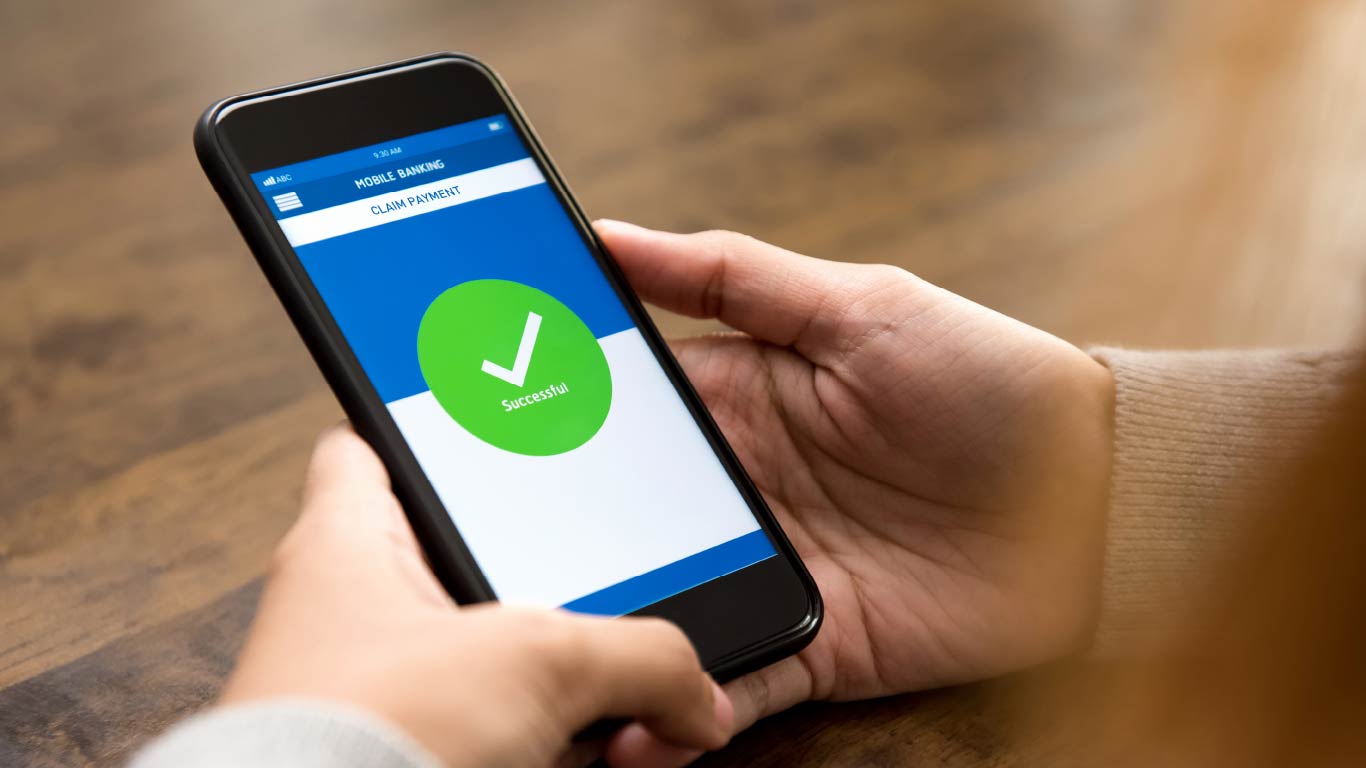
MIC Global provides its social impact most visibly through the payment of claims; however, the purchase of the policy is equally important as this is where the community is built. When people take out a policy, they are supporting themselves and the community in equal measure. The act of buying a policy enables the customer to do things with the risk covered for themselves, their business and their family. This could be going on a long trip or taking a loan out to grow or protecting their property. The policy covers the risk and allows progress of the person, business, family and their community. The act of buying the policy builds up a premium pot in MIC, this allows us to pay claims when unfortunate things happen to our customers.

The payment of claims is especially important to us and we try to pay claims very quickly. The way we do this is to make it clear what is needed when the policy is taken out and then we track claims activity every day. On some our programs we even contact customers to make sure they are making claims if we think they should be. Creating social impact is what drives our company – the bigger the impact we make the more successful our products are. The result is positive economic activity and protection of that activity when things happen. The result is that a community grows in wealth and security over time.

Let’s Grow Together

Explore Our Demo

In The Press

A New Global Insurtech – MIC Global

07.08.2020
Press Release
a pr mic merger

NEW YORK, NY, UNITED STATES (July 8, 2020) – Creation of the world’s first global end to end digital platform to bring micro transactional insurance to the unserved.

Effective 1st July 2020, STP Group merged with MicroEnsure and TonkaBI to create “The Micro Insurance Company” (later rebranding as the global insurtech “MIC Global”) which aims to provide insurance to internet platforms, millions of micro & small businesses and to the 4 billion people on the planet that are currently unserved

Insurers have been operating for decades and yet billions of people and millions of businesses still have no access to the safety net that insurance provides. Insurance is a highly fragmented market fixated on complex products, cumbersome customer journeys and stymied systems that prevents the swift payment of claims. The forming of “The Micro Insurance Company” will be the first global end-to-end digital micro insurance solution that will combine reinsurance capacity, in-country insurance licenses, world class distribution and market leading AI functionality.

Harry Croydon, CEO, STP Group, said

“Today’s announcement marks one of the most significant milestones in the history of the micro insurance industry. After years of market development, it is only now that the necessary technology has been developed so that we can offer complete micro insurance products to the unserved. We provide people with a simple safety net, so when the unexpected happens they can bounce back swiftly.”

MIC is formed through the merger of TonkaBI, STP Insurance Services, and MicroEnsure which brings together resources, expertise and skills in underwriting, technology and distribution. Whereas most Insurtechs seek to improve existing monoline products and markets, we follow the concept of straight through processing to create highly relevant insurance products and to offer them globally and very low cost so that we can support people in their local communities.

Richard Leftley, founder of MicroEnsure, said

“Today marks a new chapter for MicroEnsure, as the first dedicated micro insurance pioneer we needed to take on the role of underwriting; we have found the right partners to create, sell and service our own products globally and at a massive scale. We look forward with great excitement to working together to enhance lives of people globally.”

About Us

Micro Insurance Company (MIC Global)

The insurance industry has historically encouraged and protected socio-economic progress, but people and businesses are still desperately seeking workable solutions to their problems and many are left unserved. Global insurtech MIC Global was formed to address this large market globally and focuses on the unserved population and businesses of the world by providing an insurance platform that is capable of assuming various types of micro transactional insurance risk covering GIG Workers, IoT, Sharing Economy, Micro/Small Businesses and Weather, all managed through technology and delivered at low cost by using the principles of straight through processing. www.micglobal.com

TonkaBI

TonkaBI specialises in transforming the way you look at data by applying a data driven business intelligence approach. Our focus is to work with businesses who want to be data driven in this new area of insurance and technology. At our heart, TonkaBI is software development company that specialises in strategic development with a strong focus on AI, Computer Vision and RPA. TonkaBI enjoys helping our partners transform their businesses into digital platforms and solving their problems for better performance and higher growth. www.tonkabi.com

MicroEnsure

MicroEnsure is a pioneer in providing insurance to emerging consumers starting in 2002 within the microfinance community it rapidly grew to be the industry’s leading innovator being first to market with weather index insurance, using mobile networks to distribute insurance and creating over 200 products aimed at low income families. It has served over 65 million people by partnering with a range of MFIs, Banks, mobile networks and ride hailing companies across Africa and Asia.

MEDIA CONTACTS

EST time zone – Harry Croydon CEO harry.croydon@microinsurance.com

GMT time zone – Richard Leftley EVP International richard.leftley@microensure.com

Let’s Grow Together

Explore Our Demo

In The Press

Style or Sincerity

05.16.2020
Insurance Industry
blog oscar wilde

“In matters of grave importance, style, not sincerity, is the vital thing.”

Oscar Wilde, The Importance of Being Earnest.

The play is full of contradiction as the characters say one thing and then instantly reverse their stance to say the opposite thing.

This quote seems to sum up the play. Perhaps it sums up many businesses? Say one thing but do another.

Here at MIC Global we endeavour to say and act in the same. We are on a path to affect and look after the lives of many people through insurance.

This may seem an odd path to tread and the Oscar Wilde quote could sit quite nicely on top on the insurance industry – sell a policy and fight the claim. Style and Sincerity.

Integrity in important to us. We know we are the safety net. Our customers are not buying a policy because they expect to use it immediately, they are buying it to support them when the unexpected happens. We need to be there when this happens. We need to deliver in their time of need.

We are simplifying the insurance process though user friendly technology, simplified policies and quick claims processes. A digital insurance company that is connected start to finish.

What is microinsurance? Traditionally this is insurance for the developing world and generally term life, linked to a Micro Loan or a form of Accidental Death. We at MIC Global are extending this vision of microinsurance.

Our vision is insurance for the globe, across a range of products including term life and property and casualty for micro and small businesses and for people and families who have an annual income of less than $30,000 a year.

Micro and Small Businesses range from 1 person up to 50 people. These businesses could be an Uber driver, a small stall holder, a farm and up through to a start-up tech company and on to an established small manufacturing company. Community businesses, family businesses, your business.

Globally our target income bracket for customers will vary country by country. The aim is to always have products that are affordable and relevant to the person or business in that community.

Let’s Grow Together

Explore Our Demo

In The Press

Zoom – An Introduction to the Dark Web You Did Not Want

04.16.2020
Cyber Security
blog zoom darkweb

For many up to a few weeks back Zoom was the cool way to do video conferencing. No sign up and simple controls, I mean who wants the fuss of actually logging in right?

Zoom, that since it became more popular than ever during quarantine and then it went through serious security issues with many holes found in its security.

Now it seems that for 500,000 of Zoom users it maybe their first introduction to the Dark Web….. and the phrase “zoombombing” where hackers can enter video calls that they were not invited to.

Cybersecurity company Cyble has raised has alerted that more than 500,000 Zoom user accounts for sale on Dark Web forums for salefrom $0.002,and in many cases are directly “gifted” to annoy people in video calls, just for fun..

Zoom accounts began appearing on these forums from April 1, and include personal user information such as email address, passwords, personal meeting links, and the HostKey code, which allows you to take control of a meeting.

So not so much fun then for the user! Another careless security breach by yet another ‘great’ Tech company.

The “Dark Web” is a concept that is opposed to that of “Clearnet”- which is the more common internet we know. Dark Web sites are not accessed publicly through an address or a search engine.

Firstly how did Zoom allow this to happen, how they steal data?

These user credentials take advantage of data from old leaks, with which “hackers” have managed to access the current Zoom user accounts using stuffing techniques or credential filling, as reported by the Bleeping Computer.

In cases where they managed to enter the accounts, this data has been collected in lists that are currently sold on hacker forums on the Dark Web. Some account credentials were even offered for free so hackers could use them for malicious activities or for ‘zoombombing’, which involves entering group calls as an intruder, or sold simply to create chaos in third-party calls.

The “Dark Web”, what is it?

Deep Web and Dark Web are two terms that are used a lot to define a part of the internet that most of us don’t know much about. In the press and In general, its use is associated with security circles it is generally associated with criminal activities.

First things first: “Clearnet”. This would be the internet as most people know it. we use it everyday and access by a URL and, if we search Google, Bing or any search engine, it appears quickly and everyone is happy.

As it happens, about 90% of the content available on the web is not accessible through the search engines and browsers that we all use. It is simply not public. Pages blocked by a paywall, files saved on services like Dropbox, or temporary pages that are created as you browse, which are then deleted. This is the “Deep Web”.

The Dark Web is just 0.1% of that part. It is an area where content is intentionally hidden from search engines with masked IP addresses and accessible only with a special web browser.

The Dark Web works within the Deep Web. The Dark Web is then segmented into different “Darknets”. To access these, users use a special browser. One of the best known is TOR, although there are others like Freenet, I2P or ZeroNet: each of these is a Darknet.

The important thing is to understand that the contents (pages etc) are “non-indexable” content, thus they will not be displayed by Google, Bing and other search engines.

For all these reasons, the Deep Web is partly used as the Dark Web, special for crime and hackers. It is here where the Zoom accounts are for sale along with all the other data from corporate giants such as BA, Facebook, Experian, Credit Cards and the many other firms and places that have allow personal date to be stolen.

Let’s Grow Together

Explore Our Demo

In The Press

Humans Vs GPU – Is It a Fair Contest?

04.11.2020
AI
blog human gpu

We are building new insurance products that can be responsive and relevant to our customers. Part of this is using photos taken from mobile phones at the start of the policy and during a claim. The big challenge here is how to look at large volumes of images each day.

Lets consider some numbers – high volume is say 50,000 or 100,000 images a day.

Human Workload

Images per day ~100,000. Number of humans needed to look, just look – open-look-close-next – say 10 seconds each – that’s 1,000,000 seconds = 35-man days per day!! This is just to LOOK, nothing else. Day in day out – add in hiring, churn, 24 hour operations and soon you will have over 100 people employed doing this simple task, just looking at the pictures!! Add in data collection, quality review, report writing, audits and reports and you can easily double that to 200 people.

How can a human look at all the pictures and collect a vast number of data points analysed in real time from a single image or multiple images, and then determine location, time, date, bike not bike, bounce not bounce, damaged or not and where.

Humans don’t have good memories when compared to a computer. How can a human retain the data and reproduce it in real time analytics for consumption and actionable reporting? Its no wonder that in the world of insurance doing sensible things like visual inspections of vehicles prior to taking out insurance is not done and the ownness of fraud detection etc is left to when a claim happens.

However in my world of micro insurance and high volume / low costs premiums and claims this is not an option.

Computers specialise in speed and volume and automation repays investment with data. Every photo consistently and accurately assed and the data put into actionable reports. Comparisons? Computers can easily compare large volumes of data providing information for the business to act upon.

Training a large human team is costly and time consuming. Once trained its difficult to update the process and even harder to completely change a system or process. Once trained humans leave, and churn gives rise to constant levels of training and support for core business operations. Training is easy for computers, once its understood the rule and command base they just keep going and going….

Biases and inconstancies are constant in human driven processes even after training. Computers have bias too but are consistent in this meaning that over time it can be driven out. Holiday’s, moods and sick days are prevalent in a human workforce, we all get sick and want days off, we don’t want to work 24/7, we love a good holiday and have moods which all effect the quality of work and the productivity, plus if we get a better offer – we leave!

The process of hiring a good member of staff on average takes 4 to 6 weeks this doesn’t include notice periods and gardening leave which drastically change from days to months and from industry to industry and location to location. If you want to double the capacity of a computer automation system it could all be done overnight, fully tested and ready for the new capacity challenge.

If your business relies on users taking photos to prove your business operation, then without an AI automation system you make huge compromises in your business that costs real money and real customer issues day in day out. A 1 in N approach to service is just not good enough in the personal digital world. 100% is the only way to guarantee success.

Humans vs GPU

Use case comparison for simple vehicle inspection…

Number plate extraction

Human: 10 to 15 seconds, 10 start of day 15 seconds towards end of day, higher possibility of missing and getting confused with characters. Max images per person in 8 hours = 2,400 – but more realistically 1,500 per day

GPU: 2 second all day every day lower probability of inconsistencies. = 21,000 in a typical day

Damage inspection

Human: 10 to 15 seconds, 10 start of day 15 seconds towards end of day maybe longer with a possibility of missing damage. Humans lack consistency within processes and come with biases. Max images per person in 8 hours = 2,400 – but more realistically 1,500 per day

GPU: 4 seconds all day every day = 11,000 in a typical day

Is it a car or bike in the photo?

Human: 5 to 10 seconds, 5 start of day 10 seconds towards end of day maybe longer with a possibility of missing damage. Humans lack consistency within processes and come with biases. Max images per person in 8 hours = 4,000 – but more realistically 3,000 per day

GPU: 4 seconds all day every day = 11,000 in a typical 12 hour day

So to complete a task of say 50,000 images for all three tasks over a 12 hour work day:

Human Team

Number Plate Team = 34 people

Damage Team = 34 people

Not Bike = 17

Reporting Team = 10 people

Management = 12 people

Churn = 30% = 30 people constantly in training and hiring

Simple Cost = $110,000 per month to process ONLY 50% of images!!

GPU Team

Number Plate Team = 3 GPU’s

Damage Team = 4 GPU’s

Not Bike = 4 GPUs

Reporting = Automated and VERY valuable delivered in real time

Management = 0 (included)

Churn = 0

Cost = $10,000 per month

Costs are all local costs and people costs vary around the world, however there is less variables when costing GUP’s to do the work.

Using the image data to our advantage must not be undervalued. An automated AI system will return huge value per vehicle or journey. For a human based solution, the process will always be a compromise and the insurance company will never achieve the quality service or operational efficiencies that is needed in its business.

Without technology we will not be able to maintain service standards because of poor image standards, data quality and lack of actionable reporting across every policy.

This not about computers taking jobs, this is about the ability to server millions of customers with insurance and sharing in their risk each day. It’s about making insurance available to everyone.

At MIC Global we are focused on changing the way business insurance is developed and processed. We are insurance with AI built in with API’s. We are in the forefront of that change; developing policies by the season, job, by the hour, by the day and by the Km, thus fitting our model to that of the platforms and the way small and micro businesses see risk. We are unbundling business policies so that the cover offered fits with peoples and business needs or the actual job or process being undertaken. Making Business Insurance transactional.

Let’s Grow Together

Explore Our Demo