In The Press

Earthquake and Hope…

01.10.2020
Natural Hazards
blog earthquake damage

We are following the recent earthquake in Puerto Rico where around 2/3rds of the people remain without electricity (9th Jan 2020), many also still don’t have water and frightened residents were staying outside as a series of aftershocks rocked the island following a magnitude 6.4 earthquake. This is from CNN reporting and our hearts go out to these people, many of them who are still recovering from hurricane Maria some two years ago.

CNN is reporting that many say it is worse than Maria, some say Residents and officials have repeatedly said the impact from the quakes surpasses the devastation that Hurricane Maria, a Category 4 storm when it hit the island, delivered two years ago.

“With the hurricane, you knew when and at what time it would arrive,” Guayanilla resident Tatiana Rodriguez, 28, said, adding of the quakes, “This, you don’t know at what time it’s going to happen.”

The town of 18,000 located near the southern coast hasn’t been getting regular updates, she said. Residents are disinclined to leave their homes because they don’t know what areas are safe. Rodriguez worries that recovery will be difficult, especially for those hit hard by Maria, she said.

The earthquakes comes after Hurricane Maria devastated the US territory in September 2017. Many in southern Puerto Rico said the earthquakes’ damage was worse. “There’s no warnings for this,” Puerto Rico Police Commissioner Henry Escalera said of the earthquakes. “A hurricane gives us time to plan ahead.”

The Magnitude 6.4 quake was the biggest in a large number of tremors and quakes. Hundred have been felt over the last month or two and each time it must be hard to know where it’s leading.

Even the best warning systems for earthquakes can only give a few seconds warning to people. So planning is key.

This is where insurance should be kicking in. We know people don’t like to buy insurance and insurance can be expensive. In the end of the day Insurance is not ‘aid’. It is more like a saving plan for when things go wrong. Insurance should be a community project. However costs are sometimes too expensive for many and this can also be reflective in the likelihood of the issue such as Hurricane etc.

Additionally insurance is often seen as not paying out. There are so many clauses and exclusions that for an average person it can complicated and the rules behind making a claim can daunting.

What is MIC Global doing about the threat from Earthquake?

Our approach to insurance products for earthquakes is new and innovative. We are developing a Parametric approach to our products. This means that our products are directly tied to the initial reports and will be triggered for automatic payout when an insured property is affected.

The parametric approach is a way to simplify the insurance process and build cover around the claim. It is based on a set of known rules and when these are triggered, the insurance pays out.

Our vision fully supports our clients growth ambitions by limiting the impact of our services on their processes, whilst delivering essential insurance cover for their customers.

At MIC Global we are focused on changing the way business insurance is developed and processed. We are insurance with AI built in with API’s. We are in the forefront of that change; developing policies by the season, job, by the hour, by the day and by the Km, thus fitting our model to that of the platforms and the way small and micro businesses see risk. We are unbundling business policies so that the cover offered fits with peoples and business needs or the actual job or process being undertaken. Making Business Insurance transactional.

Let’s Grow Together

Explore Our Demo

In The Press

Earthquake – How Much Warning?

01.08.2020
Natural Hazards
blog seismic

With earthquakes back in the news from Puerto Rico with a 6.4 Magnitude shock and many aftershocks, this got me thinking about how many such events occur every month and what the latest is around warning of these events?

This map shows the USGS data for the last 30 days (from 7th Jan 2020) and indicates 447 earthquake events over 2.5 Magnitude. Clearly there are 100’s of events every year and thankfully only a very few causing problems and make the news.

We have a lot of issues on the planet right now, many caused by global warming with the effects being felt through fire’s, drought, flood and strong winds. Earthquakes can be equally devastating but there is very little warning.

The latest science and work being carried out at USGS with their ShakeAlert system would give people a few seconds to respond to an immanent earthquake.

In a reconstruction, using data from the Magnitude 6.9 1989 Loma Prieta Earthquake the ShakeAlert starts sending alerts after 8 seconds of the initial report. For some they would have felt the earthquake by this time, however other would get up to 20 seconds advanced warning on their mobile phones.

What to do with this time? The advice would be to look around you and check you are away from danger of falling objects.

What to do during an earthquake?

If you are indoors when an earthquake hits:

  • Drop down and take cover under a desk or table. Be prepared to hold on until the shaking stops.
  • Stay inside until the shaking stops and it is safe to exit.
  • Stay away from bookcases and other furniture that can fall on you.
  • Stay away from windows and light fixtures.
  • If you are in bed – hold on and stay there. Protect your head with a pillow to protect yourself from flying glass and other debris.
  • If you are in a wheelchair – go to a safe position and lock the wheels. Stay where you are and cover your head and neck with your arms if you are unable to move quickly to a safe location.
  • If you are inside a high-rise – drop, cover and hold on. Avoid windows and other potential hazards. Do not use elevators and be prepared for sprinkler systems and fire alarms to activate.

If you are outdoors during an earthquake:

Drop to the ground in a clear spot away from buildings, trees and power lines. If you are driving – pull over, stop and set your parking brake. Avoid overpasses, bridges, power lines, trees, signs, buildings, vehicles and other things that may fall on your car.

What to do in stadiums, theatre and large venues:

If you are in a stadium or theatre – stay at your seat and protect your head and neck with your arms. Don’t try to leave until the shaking has stopped. Then, walk out slowly, watching for anything that could fall during aftershocks.

What is MIC Global doing about the threat from Earthquakes?

Our approach to insurance products for earthquakes is new and innovative. We are developing a Parametric approach to our products. This means that our products are directly tied to the initial reports and will be triggered for automatic payout when an insured property is affected.

The parametric approach is a way to simplify the insurance process and build cover around the claim. It is based on a set of known rules and when these are triggered, the insurance pays out.

Our vision fully supports our clients growth ambitions by limiting the impact of our services on their processes, whilst delivering essential insurance cover for their customers.

At MIC Global we are focused on changing the way business insurance is developed and processed. We are insurance with AI built in with API’s. We are in the forefront of that change; developing policies by the season, job, by the hour, by the day and by the Km, thus fitting our model to that of the platforms and the way small and micro businesses see risk. We are unbundling business policies so that the cover offered fits with peoples and business needs or the actual job or process being undertaken. Making Business Insurance transactional.

Let’s Grow Together

Explore Our Demo

In The Press

Convincing Young People to Work in Insurance

01.07.2020
Insurance Industry
blog convinceyoung

What has Toms Shoes; Warby Parker; The UK Lottery; Dog for Dog AND Insurance companies got in common?

UK National Lottery – people pay money each week on the basis that they may get a big pay-out plus there is the feeling that a portion of money also goes to good causes along the way, both local and national projects such as Sport and the Arts, huge social impact.

Warby Parker – Glasses – Buy a Pair, Give a Pair program. Alleviating the problem of impaired vision is at the heart of what they do and continues to expand. And more recently getting local with their Pupils Project, a program with a number of organizations and local government agencies, like the Department of Education in New York City and the Department of Health in Baltimore, that provides free vision screenings, eye exams, and glasses to schoolchildren. According to the Center for Disease Control and Prevention, vision disability is the single most prevalent disabling condition among children in the U.S.; The Pupils Project model eliminates barriers to access by providing free prescription glasses and meeting children in their classrooms, where vision issues often first come to light.

Toms Shoes – as the original One for One company their community has given away more than 100 million pairs of shoes. This has created a huge impact in the world as well as spawned many other companies to do the same. They are now committed to giving away one third of their net annual profits. This allows global and local issues to be supported and enables more of their community to be involved. Global goes local.

Dog for Dog – is a high-quality dog treat, care and accessory product company with a mission to help dogs in need. Dog for Dog has an online community committed to enhancing the life of our best fur friend via proper nutrition, care and play, and they strive each and every day to deliver the cleanest, most-nutrient rich dog treats to dogs across the country, whether in cosy homes or waiting to be picked up at the local rescue shelter.

It seems that more and more having a heart, servicing social impact and a community sells a product and attracts employees and committed people to work with and for you.

Millennials like community, social impact and good causes but are now seen to be moving past their initial save the world global ambitions to focusing on local real issues that they can support and make a real difference. This is also reflected in the companies highlighted above – early on it was one BIG issue and now they are moving on to local projects and ideas to support social impact.

At a fundamental human level, millennials are showing that they’ve had enough with abstract goods. They want a sense of wholeness in their lives, wholeness built from healthy relationships, responsibility, belonging, an identifiable role. There’s an inherent personalism involved in choosing the local – it demands real conversations in real-time, real meals around real tables, and real problem-solving and sacrifice, less hash-tagging and virtue signalling.

And now we switch back to that question – What has Toms Shoes; Warby Parker; The UK Lottery; Dog for Dog AND Insurance got in common?

Nothing much I hear you say. Totally abstract product. Big corporates fixed on profits for their shareholders. Nothing community about it. Always in the news for poor customer service and not paying on their obligations. Global and not local. Zero social impact. But is this true?

What is the underlying principal of insurance?

If you Google this it comes up with the basic 6 or 7 principles of Insurance, these principles all underline the abstract nature of insurance and fully proves there is no heart in an insurance product.

However, I am digging deeper here…

The principle I am searching for is that of Community. And this is found at the very start of ‘insurance’.

Insurance dates back to prehistory. People sold goods in their own villages or gathering places or travelled to nearby villages and towns. Two main form of trade existed – ‘barter’ and currencies’. Forms of Insurance was also developed in these economies too ‘mutual’ and ‘community’. Both are forms of these groups of people getting together to help when one or more of the communities falls on hard times.

Mutual would be if one family’s house gets destroyed, the neighbours are committed to helping rebuild it.

Community would be where public granaries store grain to indemnify against famines.

This is a natural and good spirited development and one that is fully replicated in Insurance of today – except that the heart has been lost and certainly the companies fail to expresses this in their core messages. Its all about the company, not the community.

Today, when you buy an insurance policy for your car, you are not really expecting to call upon it that year or in fact any time soon. Or if you buy Holiday insurance you are not thinking your holiday will be a disaster. It’s just in case. The idea is that your ‘premium’ goes towards others who do have an accident or a loss. The Community of car drivers and holiday makers are in effect clubbing together to pay-out in the event of one (or a few) of the community having an accident or suffering a loss. The insurance company is just holding the money.

Except that is not how it is sold or shown in adverts – there is no idea of community or of the business model behind insurance. Today its sold as a law (legally you need insurance to drive) or prudent or fear (home insurance) or must have (business contract necessity).

The sense that the insurance company is the custodian of the community in times of need is not something that you see in many (any) of the adverts or as part of their websites.

Mostly these adverts are enjoyable (or annoying) 30 second slots of brand recognition between the cable news. Or the company web site is a confusion of corporate and product company speak. They present the Company as helping not the community and this presented in a huge legal policy of what forms a claim etc, which is confusing and boring just as they promise in their TV adverts.

Insurance really is the ultimate community program and one that all millennials and new business gurus should be all over. Instead the insurance industry is dominated by #okboomers and struggles to attract young talent to drive their businesses forward.

Thousands of policies are sold and only a few result in a claim – this is the community model. The claims should be the thing that is promoted as a positive. The insurance companies call these LOSSES as though it’s a big negative. Expressed in their loss ratios and combined ratios. In fact, the claims and claims process should be the central celebration in the insurance industry.

Back in the early days of communities mutually coming together to rebuild a farmhouse destroyed in a fire, imagine the sense of good will and community sprit that would have been there on that day when the home is re-built and the family restored. What insurance company brings that level of sprit to their policy holders?

This is lost in the modern world of insurance. Claims are often outsourced to a third party administrator and the measures of customer satisfaction struggle to get off the bottom run compared to other industries.

Insurance companies are also seen as profit grabbing and money-making machines, yet their actual underwriting performance is often poor. This is expressed in their Combined Ratio – losses and loss adjustment expenses as a percent of earned premiums.

This chart shows that the actual performance of the industry is really poor – of the 19 years on the chart only 8 year showed an underwriting profits.

This should all point to a huge community sprit – they don’t even profit from the products they sell!! (OK, I do know they profit and they have very inefficient models but this is another story and an opportunity).

On customers – most of the brands we see on TV are well below where they could be. JD Powers survey puts most of the companies and categories in their lowest segment once you move away from the top 4 or 5 companies.

So, again back to the question, what do the companies have in common? Quite a lot on paper and nothing in practice or perception I think.

Is this the central failing in the industry – the inability to get away from the legals and to bring out the community spirit? Is this the opportunity that has been missed in the insurtech boom? Is this the central reason why young people don’t want to join the insurance industry?


Let’s Grow Together

Explore Our Demo

In The Press

Is Insurtech Making Any Difference?

01.05.2020
Insurtech
blog tabletquestion

I have a great interest in technology and the impact it is having and has had on all our lives over the past 30 years or so since I first worked inside Microsoft and saw first hand how growth and sales in a new sector worked and impacted the lives of millions of individuals and businesses globally.

This interest has again been peaked with the up coming CES Expo and a direct comparison with where the insurance industry is after decade or more of investment in InsurTech.

I am left wondering how the tech CEO’s and investors going to CES this year would feel about their efforts and investment if CES was all about InsurTech? But they are not and as an example in net-connected home market grew 24% in unit terms in 2019 according to IDC.

The comparative insurance industry figures can best be described as FLAT and has been over the last decade or so.

The ‘Advanced’ growth figures which include USA, Europe etc remain at slow growth rates – and this is premiums NOT unit sales – looking at the unit sales and its an even more interesting picture – taking life insurance as an example.

Life insurance is losing its appeal in the U.S. In 1965, Americans purchased 27 million policies, individually or through employers. In 2016, a population that was more than 50 percent larger still bought only 27 million policies.

This is a huge drop in sales since the late 1990’s and again FLAT sales despite all the InsuTech investment and companies started over the past 20 years – although the peak for new start-ups in this area has fallen off in the last few years.

This leads me to think that InsurTech is totally focused on the wrong area and has been ineffective – looking at investment in Customer Acquisition – this can only be seen as totally ineffective – no growth – just moving a customer from one carrier to another.

I think that the success of the InsurTech revolution should be more focused on smarter and more relevant insurance products – and the key measure being the growth in people buying insurance not only in the USA but globally.

Advertising insurance is HUGE in the USA (as most developed countries) – GEICO alone spends over $1billion per year, the top 10 companies spend over $5billion. They have been doing this for years too!! Most of this money is spent year on year on a bunch of adverts which are mainly focused on jokes or promoting fear or saying how boring insurance is.

My question is why would you want to buy a product that is promoted by a liar – Pinocchio.

This $5 Billion dwarfs the investment in tech and yet still sales are flat.

As an industry shouldn’t we be more focused on growing and serving our customer base, adding new customers with smart, easy to use, and understandable products that are relevant and useful?

How is MIC Global responding?

Our insurance products are new and innovative. How do we know this? Because today we have found it very hard to impossible to get the traditional insurance markets to support our vision for new products and growth. They prefer to look backwards.

Our model of integrated and embedded products into our client platforms and operations is new. Our insurance products back client service operations that will enable our business can scale through this and our tech.

Our vision fully supports our clients growth ambitions by limiting the impact of our services on their processes, whilst delivering essential insurance cover for their customers.

Let’s Grow Together

Explore Our Demo

In The Press

Sharing Economy – 2020

01.02.2020
Sharing Economy
blog handyman

The sharing economy is here to stay in 2020 and was one of the fastest growing business trends of the last decade, although at this point in time it’s impossible to know the actual size of the sharing economy because many of the companies are private and don’t publish their full business results.

But to bring some focus on to value you only have to look at recent IPOs and the big players with their public valuations such as AirBNB, Upwork, Uber and the like.

So just what is the Sharing Economy? How does it look at the start of 2020?

In its simplest form it is swapping goods and services between two or more parties. This simple economic form has then been put on steroids by the inclusion of technology and cheap computing power. This new form of economic powerhouse will grow and evolve as both tech changes and more people have access to the internet globally.

Technology has allowed new forms of shared marketplace, collaborative platforms and peer-to-peer applications to be built. Today the ability to build a large global community has never been easier and the network of different communities and shared interests can power these new companies to success.

The sharing economy also has many other names and parts within its economic system such as Peer-to-Peer and Freelance/Gig workers and these terms are used interchangeably.

Technology has given these companies the ability to operate globally and vey efficiently. The companies are not loaded down with inventory and this helps these share-based businesses run lean. These efficiencies then allow these brands to pass-through value to their customers and their supply chain partners.

This is bringing challenges to existing industries and also their traditional support systems such as insurance. These support industries have lagged behind in the past decade but change is also coming faster to the whole network.

Transportation; Consumer Goods; Professional Services; Health Care these are the first of many areas where the sharing economy has affected their established business plans. Financial services, such as payment processes, are also being challenged to respond and new services are pouring into this once stable area which was controlled by the banks, no more.

Companies such as Uber, Ola, Lyft, eBay, Etsy, Rent the Runway, Fivrr, Upwork, People per Hour, Taskrabbit, Doctor on Demand all have million and billion dollar valuations and are growing fast. This was the result of the 2010 to 2019 decade….2020 onwards we will see these companies exploit their strong positions and changes in demographics.

What Is Next for the Sharing Economy in 2020?

More Technology and more disruption. But the difference will be that the sharing economy process will be assumed into the existing channels and the ways of doing business. Companies that don’t adapt will disappear and new ones will move into existing industries at a new faster pace.

Let’s Grow Together

Explore Our Demo

In The Press

The Aim of AI in Insurance

11.04.2019
AI
blog ai circuit

We are working with many clients and platforms to provide insurance and insurance services and we have noticed a sea change in the last few months. This sea change is that AI is coming. AI became generally available in the insurance industry around 4 years ago (2015) with the funding of a few Insurtechs and the likes of IBM trying to gather data into their Watson AI engine. The big promise is that it will be used to improve the process of dealing with claims and placing insurance and pricing.

Tasks such as measuring the ground floor distance to the surrounding ground level for flood, looking at the pitch of the roof of a building, answering questions through a bot, looking at car dealerships for hailstone risks, determining damage to cars and phones via computer vision or viewing crop growth via satellite images, These are all things that AI can do – AI is not one thing, it is many things.

At MIC Global we have a vision for our AI process and use of AI and Machine Learning is central to this. These technologies will power our vision. The vision is to turn the human effort around – the processes starts with our customers and ends with customer satisfaction.

Customers enter data – take pictures, answer questions, upload documents, integration with Apps. This data is then used in the claims or policy process to speed up and give accurate results.

The AI processes the data, aligns the results, completing a recommendation, gaining approval, sending a policy or closing the claim.

This is all based on zero human processing by MIC Global. This is the vision, speed, accuracy and transparency.

Data Entry; AI Processing; No humans involved

Each product we develop will have a profile of Easy Customer Data Input; AI processing; Zero human input for MI.

Why is this important?

Our insurance products are integrated into our client platforms and operations. Because our insurance products back client service operations it’s essential that our business can scale through tech. Our vision fully supports our clients growth ambitions by limiting the impact of our products and services on their processes, whilst delivering essential insurance cover for their customers.

At MIC Global we are focused on changing the way business insurance is developed and processed. We are insurance with AI built in, API. We are in the forefront of that change; developing policies by the season, job, by the hour, by the day and by the Km, thus fitting our model to that of the platforms and the way small and micro businesses see risk. We are unbundling business policies so that the cover offered fits with peoples and business needs or the actual job or process being undertaken. Making Business Insurance transactional.

Let’s Grow Together

Explore Our Demo

In The Press

Get Back Fast – Have a Plan!

08.13.2019
Cyber Security
blog plan

Over two years on from NotPetya, ransomware remains a major threat to organisations which in some instances are losing millions after falling victim to attacks.

What was NotPetya? Basically it was a series of powerful cyberattacks using the Petya malware and began on 27 June 2017. It quickly swamped websites of Ukrainian organizations, including banks, ministries, newspapers and electricity firms. Similar infections were reported in France, Germany, Italy, Poland, Russia, United Kingdom, the United States and Australia.

But despite the damage done by NotPetya and WannaCry before it (May 2017), there are still fears that the world isn’t prepared for the impact of another global ransomware outbreak.

The report by the Cyber Risk Management (CyRiM) project — a collaborative partnership including Lloyd’s of London, the Cambridge Centre for Risk Studies, the Nanyang Technological University in Singapore, and others — uses a theoretical catastrophic ransomware attack to model the broader impact.

The simulation is as follows and sounds very scary.

  • The malware is potent, once one employee runs the ransomware , it’s enough to spread the file-locking malware around the network, with a demand of $700 in cryptocurrency on each machine.
  • Around 30 million devices at organisations around the globe are locked in just 24 hours.
  • Organisations of all sizes in all sectors unable to perform day-to-day operations.
  • Some organisations opt to pay ransoms — including healthcare companies, due to the need to keep life-saving equipment online.
  • Other firms opt to replace devices instead of paying criminals — this also costs money, estimated cost at $350 per device.
  • Predictions of $193bn around the world as a result of cyber incident response, damage control and mitigation, business interruption, lost revenue, and reduced productivity.

Unlikely? Maybe but can you say for sure. Are you even ready? Can you say that your data recovery process is strong?

With the Moller Maersk attack the cyberattack was so bad that it just didn’t seem possible that something so destructive could have happened so quickly according to people involved.

“I remember that morning – laptops were sporadically restarting and it didn’t appear to be a cyberattack at the time but very quickly the true impact became apparent,” said Lewis Woodcock, head of cybersecurity compliance at Moller-Maersk, the world’s largest container shipping firm.

“The severity for me was really taken in when walking through the offices and seeing banks and banks of screens, all black. There was a moment of disbelief, initially, at the sheer ferocity and the speed and scale of the attack and the impact it had.”

The company was one of the most badly hit of those caught in NotPetya, with almost 50,000 infected endpoints and thousands of applications and servers across 600 sites in 130 countries.

Maersk had to balance the need to continue operating – despite the lack of IT – and recovering and rebuilding networks. In many cases, it was a manual process that took days and what was described at the time as a “serious business interruption” is estimated to have cost Maersk up to $300m in losses.

It gets worse….

The last decade has seen significant growth in subscription-based services such as “SaaS” whereby vendors provide customers with the ability to rent or subscribe access to services. This has also transferred into the criminal worlds too.

Given the high demand for RansomWare in this day and age, creative cyber-criminal entrepreneurs followed this subscription based industry trend to and have created RansomWare As A Service (RaaS) to ease the burden (poor things) of cyber attackers having to develop their own attacks.

Would you be able to cope with data recovery?

Do you have a data recovery plan?

While protecting networks and critical systems is the ultimate and is all well and good, a recovery plan must be in place. Failure to do so means that really you are only 50% ready.

A significant part of a recovery plan is that ability to really understand the core business processes and know everything about the systems and applications which run the operation.

Protect Secure and Recover – crucially in that order.

How to start?

A good place to start is here, the IRMI – International Risk Management Institute, Inc.

A cyber-incident response plan should be developed as part of a larger business continuity plan, which may include other plans and procedures for ensuring minimal impact to business functions (e.g., disaster recovery plans and crisis communication plans). Data recovery activities encompass a tactical recovery phase and a strategic recovery phase.

Let’s Grow Together

Explore Our Demo

In The Press

Insurance Penetration

08.05.2019
Insurance Industry Natural Hazards
blog cycloneidai

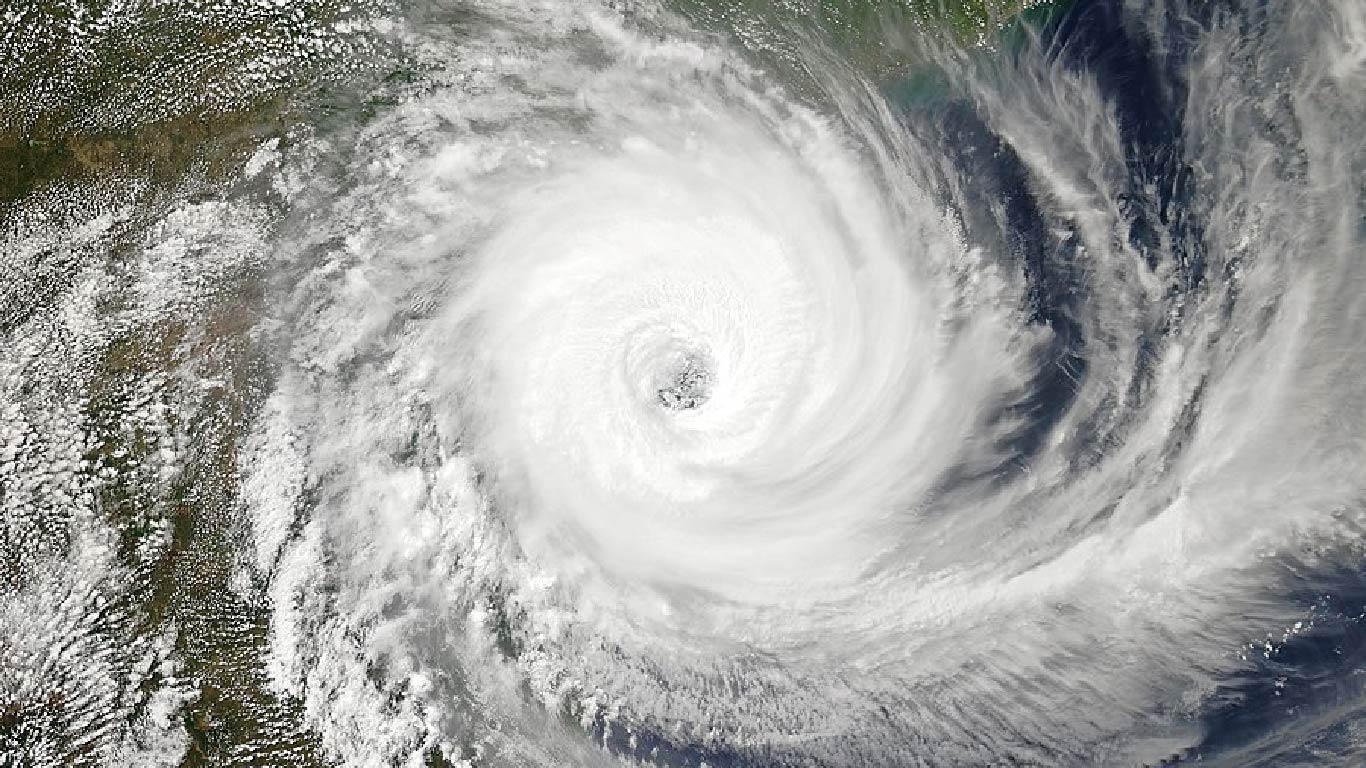
Why is insurance penetration important? The recent intense Tropical Cyclone Idai, one of the worst tropical cyclones on record to affect Africa and the Southern Hemisphere, is a good case to look at.

This storm was long-lived and caused catastrophic damage in Mozambique, Zimbabwe, South Africa and Malawi, leaving more than 1,200 people dead and thousands more missing.

Cyclone Idai made landfall in Mozambique March 14 and 15, 2019 as a Category 2 storm. Then, a few weeks after, Cyclone Kenneth came ashore in northern Mozambique April 25, 2019, with hurricane-force winds and heavy rains. The storm arrived only six weeks after Cyclone Idai devastated a broad area of the country about 600 miles south of Cyclone Kenneth’s impact zone

The basic facts of the Cyclone Idai are:

  • Highest wind speed: 127 mph
  • Date: March 4, 2019 – March 21, 2019
  • Dates: Mar 4, 2019 – Mar 21, 2019
  • Damage: ≥ $2 billion (2019 USD); The cyclone caused overall losses in Mozambique and neighboring countries of $2 billion. The loss in Mozambique is equivalent to about one-tenth of the country’s gross domestic product.

However almost nothing was insured, so very few of the people affected were able to obtain prompt financial assistance for the loss of their belongings property and life.

Insurance provides a critical safety net for households, preventing them from falling into poverty by avoiding the damaging costs of emergencies such as the ones being felt from the above cyclones.

Specifically the new low cost microinsurance schemes are designed to grow insurance programs and are aimed at helping low-income people avoiding difficult, often devastating risk coping measures following such issues. This can be putting children to work, eating less food, or selling productive assets. All these have long terms impact on peoples growth.

Increasing insurance penetration promotes access to vital services, including health and agricultural services, and can promote healthier and more productive decisions.

How is insurance penetration measured? Penetration rate indicates the level of development of insurance sector in a country. Penetration rate is measured as the ratio of premium underwritten in a particular year to the GDP.

Looking at the overall figures for insurance penetration. In Emerging Asia, property insurance penetration is very low at just 1.1% – only slightly above the figures for sub-Saharan Africa. In India, the Philippines and Indonesia, insurance penetration is a feeble 0.5–0.6%. Compared to Asia’s developed countries with an average insurance penetration level of 2.4% – which is similar to western Europe – the US shows an insurance penetration of 3.3%.

These low levels of insurance penetration are particularly problematic in African and Asian countries, as many of them are exceedingly prone to natural catastrophes.

Apart from the humanitarian tragedies with high numbers of casualties, property losses after natural catastrophes invariably cause serious economic setbacks.

Studies have proven that high insurance penetration significantly reduces or even balances out these negative effects. The positive economic effect of risk transfer is thus particularly strong in emerging economies.

Social programs and technology is here now to support the delivery of microinsurance and new insurance programs to these countries. We are developing parametric solutions and programmes to support this backed up with AI and Machine Learning tech.

Let’s Grow Together

Explore Our Demo

In The Press

Pre-money Valuations

08.03.2019
Insurance Industry
blog value

I was at an investor pitch meeting the other day and was asked about our valuation. How to justify a X multiple of our revenue. Truth is we are just starting to get revenue from some parts of the business, we have booked revenue from one area, but these is so much more potential. At the time I did not have a good answer. I was thinking its not about revenue at this point. This time next year it will be, but today the pipes are just turning on. So now I have given it some thought and would have a better answer.

I thought I would pass on my thoughts and also thank John Ason’s web site for being very helpful, professional and clear.

Getting pre money valuations

The valuation is probably the most difficult and even emotional aspect for us, the founders of a company. We have invested a lot of money and time already. So, on the one hand, we want the highest possible pre money valuations as proof of the concept, our investment and reward for our hard work. And then on the other hand, we also know high pre-money valuations can kill any possibility of getting funding. This was running through my mind when I was asked the question in our pitch meeting!

For pre-revenue elements of the company there is no simple way to mathematically derive a present money value, today we only have revenue from parts of our business currently. We are working hard on revenue across all elements and we are close to this point now, this is as at Aug 2019.

So how does an early stage investor arrive at pre money valuations that works for them?

A suggestion is to first, analyse our revenue projections, we can send these to you. This will provide you, the investor, with some insight into the direction of the business and business model and maybe some fun and tears. I would say we are in a very exciting area, there are very few digital insurers trying to solve for being global with high volume low value policies. Automation of insurance is highly efficient.

Second, is for you to construct your own private revenue projections; you can research our markets and sectors and review our model and likely revenue from similar companies. This can include “ancillary” businesses or using other revenue models. To invest in an insurtech I believe you need to know a bit about the sector. It’s highly regulated. If these revenue projections provide you with a 10 bagger (i.e. 10 times the investment) then we should be a candidate for consideration of an investment. We believe we hit this model.

Trying to calculate a value for a start-up is difficult to impossible, so asking about a multiple and me saying we are at a 10 times or 20 times or 40 times revenue multiple at todays revenue is not the right question or answer at this stage. This process attempts to manage the risk of investing along with the goals and wants of the founders. Bringing together a good partnership.

First, we the company, must demonstrate that we have potential of at least a ten bagger. Second, a standard non-emotional formula is applied based on amount of funding obtained to derive the ownership. We can work with investors on this model, I think any startup and investor can.

Thanks for reading – I hope this was helpful – I feel better able to answer this question now at least!

What is a 10 Bagger?

A 10 bagger is a stock or company that increases in value by at least 10 times its purchase price, or by at least 900%. The term 10 bagger was coined by legendary fund manager Peter Lynch in his best-selling book, “One Up on Wall Street.”

Any company that appreciates ten-fold from the date an investor initially purchased it can be referred to as a 10 bagger. Although such investments are a rarity on Wall Street, more are found from early stage start-ups and early revenue companies.

Let’s Grow Together

Explore Our Demo

In The Press

Insurance and the Sharing Economy

07.09.2019
Sharing Economy
blog stream

The sharing economy is growing up fast, message is that the growth will reach or surpass PwC’s projections which show that five key sharing sectors — travel, car sharing, finance, staffing, and music and video streaming — have the potential to increase global revenues from roughly $15 billion in 2015 to around $335 billion by 2025. Massive growth.

Linked to this we are seeing companies going from start-up to unicorn in just a few years. This is unmatched in history.

What does this mean for the insurance industry? The sharing economy is breaking down the business model of insurance that is very well established. the new sharing economy is responsive, customer focused, data driven, short term, growth focused, multi relationship and tech based. Traditional insurance in nearly the polar opposite of this.

To be responsive and to meet the challenges for both the platform users and the providers there needs to be a new type of insurance company. One that is truly digital and built based on paying claims rather than processing policies. For insurance to be relevant to this new business model the digital insurer needs to be there when the claim is to be paid. This is trust.

Insurance is all about trust but somehow this has been eroded over the decades and lost in the depth of the contract small print and the layers of complexity. Customers need to know that the claim will be paid. The platform would need to know the claim would be paid. The digital insurer needs to understand how to deal with high-volume short-term policies and fast claims payment. If the insurer can do this then trust will be earned back. It’s all online, simple, clear, transparent processing of policies and claims.

GiG Work. As of 2014, 34% of the US Labor force, or between 54 and 68 million people, is comprised of independent workers. These workers are not all GiG workers but the numbers are growing an this is is being driven by the sharing economy and the gig economy.

GiG work is expected to grow to 40% by the year 2020 (Freelancer’s Union, 2014). On-demand platforms such as AirBnB, Uber, TaskRabbit, and Upwork have played an enormous role in growing the independent labor force. While platform workers currently account for only about 15% of the independent labor force (McKinsey Global Institute, 2016), the rise of the Sharing Economy platforms have significantly shifted mindsets about the nature of independent work, making supporting one’s self independently increasingly appealing and appear more feasible.

By empowering freelancers and other independent workers to connect with businesses and buyers of their services at a scale that has never before been possible, these platforms are inspiring an unprecedented number of workers to flee the constraints of the traditional workplaces in favor of more autonomy and flexibility in their work–in the process helping to create an entirely new kind of labor force, the Gig Economy. This is the driving force behind the sharing economy and with that the force that will re-shape the insurance industry.

Here at MIC Global we understand these forces and they are driving our company forward. We believe in the new economies and are building process, services and policies to fit into the new business models of today and the future.

The speed, reach and data that the new platforms operate on is driving change. Put simply, they get global fast and consume more data than traditional business. The insurance industry needs to respond equally to these challenges and build new products and services to meet these clients needs. The new type of insurer needs to be responsive, innovative and yet remain focused on underwriting the risk. Data is the key to this, however having the data is one thing successfully applying it to new insurance products is another. Having 1 million customers per day on hourly variable contracts is totally different to 1 million annual policies. The data velocity alone is a huge item to grasp.

Interested to know more? we have curated 3 great reports that are focused on the gig and sharing economy together with insurance. These reports are independent and cover the areas in depth.

Sharing economy insurance report AXA XL

Sharing economy business report PwC

Gig economy insurance report Cake & Arrow

At MIC Global we are focused on changing the way business insurance is developed and processed. We are digital insurance. We are in the forefront of change; developing policies by the season, job, by the hour, by the day and by the Km, thus fitting our model to that of the platforms and the way small and micro businesses see risk. We are unbundling business policies so that the cover offered fits with peoples and business needs or the actual job or process being undertaken. Making Business Insurance transactional and available.

Let’s Grow Together

Explore Our Demo