In The Press

Insurance Penetration

08.05.2019
Insurance Industry Natural Hazards
blog cycloneidai

Why is insurance penetration important? The recent intense Tropical Cyclone Idai, one of the worst tropical cyclones on record to affect Africa and the Southern Hemisphere, is a good case to look at.

This storm was long-lived and caused catastrophic damage in Mozambique, Zimbabwe, South Africa and Malawi, leaving more than 1,200 people dead and thousands more missing.

Cyclone Idai made landfall in Mozambique March 14 and 15, 2019 as a Category 2 storm. Then, a few weeks after, Cyclone Kenneth came ashore in northern Mozambique April 25, 2019, with hurricane-force winds and heavy rains. The storm arrived only six weeks after Cyclone Idai devastated a broad area of the country about 600 miles south of Cyclone Kenneth’s impact zone

The basic facts of the Cyclone Idai are:

  • Highest wind speed: 127 mph
  • Date: March 4, 2019 – March 21, 2019
  • Dates: Mar 4, 2019 – Mar 21, 2019
  • Damage: ≥ $2 billion (2019 USD); The cyclone caused overall losses in Mozambique and neighboring countries of $2 billion. The loss in Mozambique is equivalent to about one-tenth of the country’s gross domestic product.

However almost nothing was insured, so very few of the people affected were able to obtain prompt financial assistance for the loss of their belongings property and life.

Insurance provides a critical safety net for households, preventing them from falling into poverty by avoiding the damaging costs of emergencies such as the ones being felt from the above cyclones.

Specifically the new low cost microinsurance schemes are designed to grow insurance programs and are aimed at helping low-income people avoiding difficult, often devastating risk coping measures following such issues. This can be putting children to work, eating less food, or selling productive assets. All these have long terms impact on peoples growth.

Increasing insurance penetration promotes access to vital services, including health and agricultural services, and can promote healthier and more productive decisions.

How is insurance penetration measured? Penetration rate indicates the level of development of insurance sector in a country. Penetration rate is measured as the ratio of premium underwritten in a particular year to the GDP.

Looking at the overall figures for insurance penetration. In Emerging Asia, property insurance penetration is very low at just 1.1% – only slightly above the figures for sub-Saharan Africa. In India, the Philippines and Indonesia, insurance penetration is a feeble 0.5–0.6%. Compared to Asia’s developed countries with an average insurance penetration level of 2.4% – which is similar to western Europe – the US shows an insurance penetration of 3.3%.

These low levels of insurance penetration are particularly problematic in African and Asian countries, as many of them are exceedingly prone to natural catastrophes.

Apart from the humanitarian tragedies with high numbers of casualties, property losses after natural catastrophes invariably cause serious economic setbacks.

Studies have proven that high insurance penetration significantly reduces or even balances out these negative effects. The positive economic effect of risk transfer is thus particularly strong in emerging economies.

Social programs and technology is here now to support the delivery of microinsurance and new insurance programs to these countries. We are developing parametric solutions and programmes to support this backed up with AI and Machine Learning tech.

Let’s Grow Together

Explore Our Demo

In The Press

Pre-money Valuations

08.03.2019
Insurance Industry
blog value

I was at an investor pitch meeting the other day and was asked about our valuation. How to justify a X multiple of our revenue. Truth is we are just starting to get revenue from some parts of the business, we have booked revenue from one area, but these is so much more potential. At the time I did not have a good answer. I was thinking its not about revenue at this point. This time next year it will be, but today the pipes are just turning on. So now I have given it some thought and would have a better answer.

I thought I would pass on my thoughts and also thank John Ason’s web site for being very helpful, professional and clear.

Getting pre money valuations

The valuation is probably the most difficult and even emotional aspect for us, the founders of a company. We have invested a lot of money and time already. So, on the one hand, we want the highest possible pre money valuations as proof of the concept, our investment and reward for our hard work. And then on the other hand, we also know high pre-money valuations can kill any possibility of getting funding. This was running through my mind when I was asked the question in our pitch meeting!

For pre-revenue elements of the company there is no simple way to mathematically derive a present money value, today we only have revenue from parts of our business currently. We are working hard on revenue across all elements and we are close to this point now, this is as at Aug 2019.

So how does an early stage investor arrive at pre money valuations that works for them?

A suggestion is to first, analyse our revenue projections, we can send these to you. This will provide you, the investor, with some insight into the direction of the business and business model and maybe some fun and tears. I would say we are in a very exciting area, there are very few digital insurers trying to solve for being global with high volume low value policies. Automation of insurance is highly efficient.

Second, is for you to construct your own private revenue projections; you can research our markets and sectors and review our model and likely revenue from similar companies. This can include “ancillary” businesses or using other revenue models. To invest in an insurtech I believe you need to know a bit about the sector. It’s highly regulated. If these revenue projections provide you with a 10 bagger (i.e. 10 times the investment) then we should be a candidate for consideration of an investment. We believe we hit this model.

Trying to calculate a value for a start-up is difficult to impossible, so asking about a multiple and me saying we are at a 10 times or 20 times or 40 times revenue multiple at todays revenue is not the right question or answer at this stage. This process attempts to manage the risk of investing along with the goals and wants of the founders. Bringing together a good partnership.

First, we the company, must demonstrate that we have potential of at least a ten bagger. Second, a standard non-emotional formula is applied based on amount of funding obtained to derive the ownership. We can work with investors on this model, I think any startup and investor can.

Thanks for reading – I hope this was helpful – I feel better able to answer this question now at least!

What is a 10 Bagger?

A 10 bagger is a stock or company that increases in value by at least 10 times its purchase price, or by at least 900%. The term 10 bagger was coined by legendary fund manager Peter Lynch in his best-selling book, “One Up on Wall Street.”

Any company that appreciates ten-fold from the date an investor initially purchased it can be referred to as a 10 bagger. Although such investments are a rarity on Wall Street, more are found from early stage start-ups and early revenue companies.

Let’s Grow Together

Explore Our Demo

In The Press

Insurance and the Sharing Economy

07.09.2019
Sharing Economy
blog stream

The sharing economy is growing up fast, message is that the growth will reach or surpass PwC’s projections which show that five key sharing sectors — travel, car sharing, finance, staffing, and music and video streaming — have the potential to increase global revenues from roughly $15 billion in 2015 to around $335 billion by 2025. Massive growth.

Linked to this we are seeing companies going from start-up to unicorn in just a few years. This is unmatched in history.

What does this mean for the insurance industry? The sharing economy is breaking down the business model of insurance that is very well established. the new sharing economy is responsive, customer focused, data driven, short term, growth focused, multi relationship and tech based. Traditional insurance in nearly the polar opposite of this.

To be responsive and to meet the challenges for both the platform users and the providers there needs to be a new type of insurance company. One that is truly digital and built based on paying claims rather than processing policies. For insurance to be relevant to this new business model the digital insurer needs to be there when the claim is to be paid. This is trust.

Insurance is all about trust but somehow this has been eroded over the decades and lost in the depth of the contract small print and the layers of complexity. Customers need to know that the claim will be paid. The platform would need to know the claim would be paid. The digital insurer needs to understand how to deal with high-volume short-term policies and fast claims payment. If the insurer can do this then trust will be earned back. It’s all online, simple, clear, transparent processing of policies and claims.

GiG Work. As of 2014, 34% of the US Labor force, or between 54 and 68 million people, is comprised of independent workers. These workers are not all GiG workers but the numbers are growing an this is is being driven by the sharing economy and the gig economy.

GiG work is expected to grow to 40% by the year 2020 (Freelancer’s Union, 2014). On-demand platforms such as AirBnB, Uber, TaskRabbit, and Upwork have played an enormous role in growing the independent labor force. While platform workers currently account for only about 15% of the independent labor force (McKinsey Global Institute, 2016), the rise of the Sharing Economy platforms have significantly shifted mindsets about the nature of independent work, making supporting one’s self independently increasingly appealing and appear more feasible.

By empowering freelancers and other independent workers to connect with businesses and buyers of their services at a scale that has never before been possible, these platforms are inspiring an unprecedented number of workers to flee the constraints of the traditional workplaces in favor of more autonomy and flexibility in their work–in the process helping to create an entirely new kind of labor force, the Gig Economy. This is the driving force behind the sharing economy and with that the force that will re-shape the insurance industry.

Here at MIC Global we understand these forces and they are driving our company forward. We believe in the new economies and are building process, services and policies to fit into the new business models of today and the future.

The speed, reach and data that the new platforms operate on is driving change. Put simply, they get global fast and consume more data than traditional business. The insurance industry needs to respond equally to these challenges and build new products and services to meet these clients needs. The new type of insurer needs to be responsive, innovative and yet remain focused on underwriting the risk. Data is the key to this, however having the data is one thing successfully applying it to new insurance products is another. Having 1 million customers per day on hourly variable contracts is totally different to 1 million annual policies. The data velocity alone is a huge item to grasp.

Interested to know more? we have curated 3 great reports that are focused on the gig and sharing economy together with insurance. These reports are independent and cover the areas in depth.

Sharing economy insurance report AXA XL

Sharing economy business report PwC

Gig economy insurance report Cake & Arrow

At MIC Global we are focused on changing the way business insurance is developed and processed. We are digital insurance. We are in the forefront of change; developing policies by the season, job, by the hour, by the day and by the Km, thus fitting our model to that of the platforms and the way small and micro businesses see risk. We are unbundling business policies so that the cover offered fits with peoples and business needs or the actual job or process being undertaken. Making Business Insurance transactional and available.

Let’s Grow Together

Explore Our Demo

In The Press

Microinsurance by MIC Global

07.02.2019
Micro Insurance
blog microinsurance cyclist

The generally accepted definition of microinsurance is the protection of low-income people (those living on between approximately $1 and $4 per day) against specific perils in exchange for regular premium payment proportionate to the likelihood and cost of the risks involved

This definition seems to focus on one Target Market – the low income peoples of the world. This target market does not typically buy insurance and are generally ignored by main-stream insurance companies.

Here at MIC Global we do not really like this definition, why pick on a population with a particular insurance sector?

We prefer a wider more inclusive definition of microinsurance, one that allows products to be developed, sold globally, works in the new sharing economy and includes solutions for many of the issues surrounding selling, distributing and managing microinsurance policies and schemes. Products that cover all populations based on their specific needs.


Why I started MIC – Harry Croydon, CoFounder, President and COO


The problem with the accepted definition for microinsurance is that it is exactly the same as one might apply for regular insurance except its aimed at low income people. I.e. Insurance is the protection of people/businesses against specific perils in exchange for regular premium payment proportionate to the likelihood and cost of the risks involved

I guess the general insurance industry could not bring itself to call it Low Income Insurance, like they do for High Net Worth Insurance so the term microinsurance was adopted.

Anyway we are getting away from the point.

Microinsurance has many challenges and these challenges are not just issues surrounding products for low income families. Just like the definition for microinsurance is the same for any insurance, so are the challenges for any insurance product when faced with high volume sales and policies, new business models like the sharing economy and platform businesses.

Today’s insurance industry is not very well geared up to deal with high volume sales and claims. The nearest you get to high volume is car insurance and in terms of microinsurance, these volumes are very small.

Here at MIC Global we see that the investment of resources needed to solve the challenges of microinsurance can be used globally for insurance policies that are simply small, micro. That can be used by everyone. Policies that match user and policy.

Typically insurance policies are complex and expensive. Insurance companies must like these as they sell millions of $$ of them each year.

We look at insurance the other way. We think of making insurance simple, event driven and the policy value small. Covering events that might last for a journey, a purchase, a short period, a job etc, hopefully you get the point – rather than buying for a year or month etc, cover the event instead.

Simple. Tech Based. High Volume. Embedded. Transactional.

Simple

Insurance policies are generally complicated – many insurance TV adverts point this out, focusing on saving money, making the process simple but hiding the complexity since people tend not to read ‘small print’. The industry has this issue in its DNA. They are contractual documents after all.

Microinsurance policies do not need to be complicated, times needs to be invested to simplify the whole process ensuring that policies are fully incorporated through the process – marketing, quoting, buying, renewal and on through to a claim.

Tech Based 

Leverage in the tech in your phone or on your PC to good effect. Linking the process such that the customer journey is well thought through and connected, end to end, right though the customer journey and the life of the policy. Processes are built with APIs and integration at the core of the tech to allow

High Volume

Insurance companies generally do not like high volumes of anything – especially claims. They simply are not geared up to deal with high volumes of customer contact for sales, queries, claims and complaints. They typically pass these tasks to others – Sales via aggregators or agents and brokers – Claims are passed to Third Party Administrators, specialist claims companies – Complaints are pushed overseas to keep costs down. Insurers and brokers split the process across many companies and struggle to have a complete view of the customer apart from financial performance and product based metrics.

To manage high volume required by microinsurance means owning and investing in the process and managing the transaction end to end. Entering data once and then straight through processing along the entire journey. This has the advantage that lots of data is collected and allows for better data usage and management which leads to improved process, more customer engagement and pricing.

Embedded

Rather than buying policies for Cars, Gadgets, Home etc more and more insurance will be embedded in the process and by your use the benefits of the insurance will be passed on to you. Home security and Home help devices could come with home insurance, electric cycles would be insured against damage and theft, App that allow you to use the cycles could have insurance added per KM and variable depending on if you are in the local park or on a busy road. IoT devices for crops could come with insurance that monitors the crop and the rate varied depending upon the actions of the farmer and the weather.

Transactional 

Insurance does not have to be on an annual basis. The current process is to some extent driven by the inability for insurers to manage volume and customer engagement, it’s cheaper and easier to manage once per year rather than 12 times a year or on each usage – say 1,000 times a year. Imagine if car insurance was all usage based? This would be fair; the way insurance is managed would be very different. This is the world of transactional insurance – insurance when you want it and no more. High volume, small value insurance policies based on the transaction. Managing the policy life cycle, monitoring and claims fully automatically and on a transactional basis. Microinsurance based on activities and usage. The distribution model and commissions for brokers, agents and partners all built into the process and a transparent claims process that has clear triggers for payment. Examples of this is parametric insurance for travel, hurricane and agriculture.


At MIC Global we are focused on changing the way business insurance is developed and processed. We are insurance with an API. We are in the forefront of that change; developing policies by the season, job, by the hour, by the day and by the KM, thus fitting our model to that of the platforms and the way small and micro businesses see risk. We are unbundling business policies so that the cover offered fits with peoples and business needs or the actual job or process being undertaken. Making Business Insurance transactional.

Interested in working with MIC Global? Check out our Careers page.

Let’s Grow Together

Explore Our Demo

In The Press

Augmented Insurance – the New AI?

06.17.2019
AI
blog ai laptop

We hear the fear in people’s voices when we mention AI and ML, blue collar jobs going, eating into white collar jobs, autonomous cars, lorries, taxis.

The fear is what will we all be doing with our time? How will we earn money? Will we hear ‘they took our jobs….’ But this time it’s not some other country – it’s tech soaking up work like blotting paper. This ‘fear’ could even be hampering adoption of even the most basic AI and ML.

However, the truth is that things like autonomous cars will take time to fully come about, in a recent article in the WSJ it pointed to augmenting drivers in the here and now. Using the best AI tech, implemented in human-driven cars, to augment the human driver to reduce or even nearly eliminate road deaths in the USA as the quickest benefit. This could be the real competition to Autonomous cars, Human Augmented Driven Cars.

That could have huge implications for the fortunes of companies like Tesla. It could also spell doom for companies such as Uber and Lyft, which aren’t yet profitable and might not be until they can cut out their high human costs—that is, removing drivers from vehicles.

I think there will be a mix of driverless and human augmented cars. In the confines of a city, all the sensors and additional tech needed to support fully driverless cars could be implemented and hence I keep coming across this term, and we use it within our tech pitches, Augmented. Human and tech is deliverable, today.

All this doom and gloom for tech companies won’t come about. The issue is we do not want to be driving in cities and towns, we don’t want to be doing repetitive jobs, convenience has a value. Over time there will be a transition. The AI Augmented Human will take many forms and will be stiff completion for robots.

For insurance we use the term Augmented Insurance, this is AI for insurance. Adding AI Tech into a process and making the humans better. Adding AI Tech to human process is the way to improve, to offer new services, do better customer services and provide an overall better user experience.

I believe in insurance on-demand, insurance as a service, matching usage with payment. These can only be provided with AI and ML.

At MIC Global we are focused on changing the way insurance is developed and processed. We are insurance with AI built in, a digital/ augmented insurance company. We are in the forefront of that change; developing policies by the season, job, by the hour, by the day and by the Km, fitting our model to that of the platforms and the way small and micro businesses see risk. We are unbundling business policies so that the cover offered fits with peoples and business needs or the actual job or process being undertaken. Making Business Insurance transactional, the digital insurer for the new economy.

Let’s Grow Together

Explore Our Demo

In The Press

Lessons from Amazon

06.15.2019
Insurance Industry
blog amazon

In the USA and China an increasing number of tech companies are bringing more in house. Is this the lesson for Insurance? Insource not Outsource?

Is this a lesson for Insurance companies?

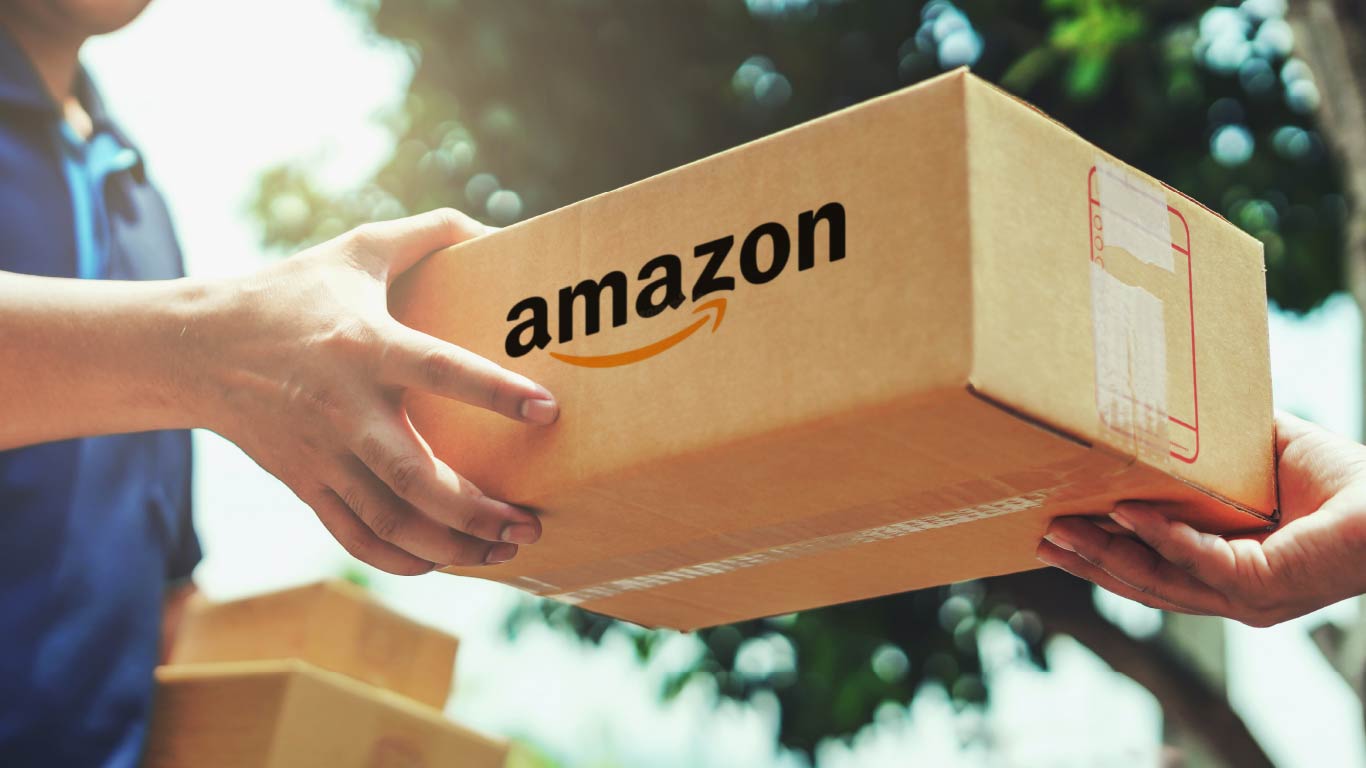
Amazon  has recently been building up more and more capability to deliver bring to an end, maybe forcing the end, of their FEDEX Express contract.

What does this mean for each of them in the USA?

In the short term, Amazon will have to lean on some of its other logistics partners to fill the void left by FedEx’s departure. FedEx delivered 3% of Amazon packages last year, accounting for about 200,000 Amazon boxes a day, according to figures cited by Business Insider.

In the long term, Amazon isn’t going to rely on legacy logistics firms, it’s going to threaten them. Amazon has been aggressively building out its own logistics unit.

This has already helped that Amazon ships more of its own products — Amazon delivered about one-quarter (26%) of the orders placed on its site last year, up from nearly zero five years ago, according to estimates from Wolfe Research cited by The Wall Street Journal.

As the company continues advancing into the logistics space via investments and new services, it will begin to threaten legacy firms for market share. Amazon even went as far as declaring itself a transportation and logistics company in its 2018 annual report.

For FedEx – not much change in the short term but longer term it could see its core business undermined as Amazon builds a Logistics service in the same way it built AWS.

Why you may ask – basically its more data and more control and more flexibility in the LONG TERM to use Tech – think here of autonomous truck…. If left with outsourced companies, Amazon would not have the data, skills and capabilities to build their own service. Bringing it inhouse means it can now automate at its OWN pace and transition the business very effectively. And this is kinda what it did with AWS – built up a core business for itself and then resold it to everyone else.

Lessons from Amazon for Insurance? What can the an insurance company do?

  • Bring core services in house.
  • Automate those core services
  • Roll out across entire business
  • License to smaller companies

This means getting on to the innovation path, investing internally, investing in IP, investing in new process all with the aim of automation and productivity.

Let’s Grow Together

Explore Our Demo

In The Press

What is AI to Insurance?

06.06.2019
AI
blog ai chip

What does it take to be a Digital Insurer? Well one of the basics is to have a deep and a sound understanding of Machine Learning (ML) and Artificial Intelligence (AI) with the capabilities to actually develop these for ‘insurance’ case studies.

Our main AI product is a set of several AI modules, we design very robust AI modules for individual requirement. While at the same time, users/products can do multiple analysis efficiently.

MIC used Auto-Machine Learning (Auto-ML) approach in our AI product, where Auto-ML decides the best ML Algorithm. We used best ML Algorithm as suggested by Auto-ML which enhances our product capability.

We see other companies develop generic AI products, then focus on insurance domain. However, our products are designed specially for Insurance case studies.

Typically companies say that they use AWS or Google or TensorFlow. We don’t use single ‘AI’ from the likes of AWS or Google.

What we do is use a ranges of tools and our own algorithms and code, the core being made up as follows:

TensorFlow is an end-to-end open source platform for machine learning. It has a comprehensive, flexible ecosystem of tools, libraries and community resources that lets researchers push the state-of-the-art in ML and developers easily build and deploy ML powered applications

Keras is a high-level neural networks API that works as a layer.

Deep Learning (also known as deep structured learning or hierarchical learning) is part of a broader family of machine learning methods based on artificial neural networks. Learning can be supervised, semi-supervised or unsupervised.

Natural Language processing (NLP) is a subfield of computer science, information engineering, and artificial intelligence concerned with the interactions between computers and human (natural) languages, in particular how to program computers to process and analyze large amounts of natural language data.

Optical Character Recognition or optical character reader (OCR) is the mechanical or electronic conversion of images of typed, handwritten or printed text into machine-encoded text, whether from a scanned document, a photo of a document, a scene-photo (for example the text on signs and billboards in a landscape photo) or from subtitle text superimposed on an image

Machine Learning (ML) is the scientific study of algorithms and statistical models that computer systems use in order to perform a specific task effectively without using explicit instructions, relying on patterns and inference instead.

Tensor Flow and Keras takes maximum memory and computing time, it is very big challenges for companies to deploy deep learning-based application. We over come this using our embedded application, this takes less memory and less computing time (0.5-1.2 sec per image) and can run on any operating system.

Our AI product allows us to focus on accuracy, for our use cases and successfully identifies body parts, damage, colour with user input images with 80-90 percent accuracy. Furthermore, we developed robust algorithm to calculate damage severity with very good accuracy 75-80 percent. This is growing as more data is applied and as we add features.

Our AI product takes less computing time with highly mechanized deep learning neural network architecture, this enables us to provide faster solutions suitable for insurance. Additionally we deal with error tolerance and to handle outlier/noise. This helps support multi-tasking with error less environments.

We use our team and they have their own definitions of our licensed tech.

Let’s Grow Together

Explore Our Demo

In The Press

Uber – New Opportunity or Just an Algorithm?

06.04.2019
Gig Economy
blog uber

The Gig economy is starting to see large companies become mature, these are led by Uber and the likes of AirBnB. Recently CNBC provided some great insight to what it is like to work in this new gig economy.

This shows the many ways people work in this new GiG economy, the ability that people can plug in and plug out of work, and make additional income from this and other jobs and platforms. How it fits with older people who often, despite the law, face discrimination etc.

This is also true for Uber and AirBnB – they can’t afford to focus on ONE business only, they want and need income from other areas. Uber has Uber Eats and AirBnB has their Experiences. These are other income areas for these companies and, just like their associates and drivers, they need to diversify. They need income from more than one good idea – to be more like Amazon and such companies, income from a range of products and services, to build an ecosystem. They are no different from the people who work with them via their Apps.

This is a message to us all – it seems that people, like companies, need to be diverse to be successful. To build an ecosystem of work and income. In todays economy companies and people need to be more alike.

Lifting a story from CNBC… Lama, a driver, uses three phones splayed across his dashboard (one for each app — Lyft, Uber and Juno.) “With Uber alone, you can’t make enough,” Lama said. He laughs at the fact that he’s considered an independent contractor….”The algorithm is our boss,” Lama said. “That’s the main guy.”

In the fourth quarter of 2018, Uber reports that 50 percent of its first-time Uber Eats customers were new Uber network users and that users of both Uber Eats and the rideshare app were more loyal than the average customer. The company also believes that less profitable partnerships with larger chains helps grow Uber’s audience, while giving drivers an opportunity for more work and compensation through Uber Eats. It’s all in the company algorithm.

What does this all mean for me and microinsurance or gig economy insurance? Well it means that it is no good having a monoline business focused on one area. To be a success and to leverage all your skills, leverage all the investments you have made, you need to be a multi-line company.

Here at MIC Global we are developing skills in several areas of insurance, sharing and gig economy, property loss, agriculture, weather and finance. We are using our skills in tech to manage these areas.

We have huge experience, for example, in motor claims. These are high volume low value claims and we are starting to implement Computer Vision to settle the insurance claim. Working with our clients we are developing photo image recognition Artificial Intelligence (AI) to process thousands of images in minutes rather than days.

The ability to use Computer Vision will be a core skill that we can leverage across all our insurance areas, the ability to automate a claim from AirBnB or Uber in the future will allow them to have the policies that they want at a cost the drivers can afford for example.

These custom built algorithms are at the centre of our tech and drive forward our ability to process high volume claims that are at the core of the gig and sharing economy.

Let’s Grow Together

Explore Our Demo

In The Press

Community Insurance

05.29.2019
Insurance Industry
blog communityinsurance

Millennials and Generation Z (GenZ) all have one thing in common – they don’t like the idea of buying insurance. Wait…; maybe this is across all generations? Plus, there are the labels – lazy, entitled, self-centred, disloyal and spoiled, but again is this not all generations at this young age?

Let’s not focus on this, let’s take a closer look at this new (ish) group of young adults, what shines out for me is that they are turning to borrowing, sharing, renting and hiring rather than buying. They want the ‘experience’ not the hassle of ownership. They want the ease. Cake & Arrow have been studying this group and their insights are interesting, not just for insurance but for all of commerce.

Millennials have grown up with a fully functioning computer in their hand and this drives everything.

While not all Millennials/GenZ are alike, there is one term defining their generation most might agree upon – the convenience generation. From on-demand taxi services, to on-demand food delivery and on-demand entertainment, these adults have opted for new levels of convenience unlike any other generation before them. Millennials and GenZ are choosing the convenience of Boxed and Amazon Prime over the prices of Costco and Sam’s Club.

How is this insurance industry responding? We see terms like “digital transformation,” “personalization,” and “on-demand,” these are the chosen jargon of the industry, used in industry events, panels, webinars, and reports across the world in an attempt to set clear objectives and guidelines for companies that want to stay relevant. What’s more, these terms have been portrayed by others as promising opportunities for those willing to embrace the journey.

But is this true? Do we really know that this is what drives a millennial insurance shopper? Or is that just the convenience of the ability to deliver on this in the context of what a company was doing anyway? Let’s make it digital??? This is the easy option, it’s got to mean something. Having a fancy front end, is this enough?

I believe that digital is a step in the journey but it not the end of the journey or even the point of the journey. The journey to me is much more than this, it is about making a difference and bringing out the true qualities of the industry, the fundamental reason for insurance and the difference it can make to those who take it out. These qualities are hidden and pushed way back in the dim past of the industry and the companies that form the industry. It’s the WHY of the industry, yet this seems lost.

For MIC Global, we are going to bring out this WHY. People talk about Peer to Peer insurance, but isn’t this what insurance is anyway? Why do people want insurance, why is it such a good thing? is the only reason you buy insurance is because you are forced to? Let’s look at a bit of the origins of insurance to find out the why it came around in the first place….

The first methods of transferring or distributing risk in a monetary economy, were practiced by Chinese and Babylonian traders in the 3rd and 2nd millennia BC. Chinese merchants traveling treacherous river rapids would redistribute their wares across many vessels to limit the loss due to any single vessel’s capsizing. The Babylonians developed a system and practiced by early Mediterranean sailing merchants. If a merchant received a loan to fund his shipment, he would pay the lender an additional sum in exchange for the lender’s guarantee to cancel the loan should the shipment be stolen or lost at sea.

It’s about looking at activities, groups and risks and providing cover for them should something go wrong. The whole point of community insurance is to build a community and allow large groups of the members to pay a little (insurance policy) towards the losses (claims) of the few.

This is the thing that seems lost today, users don’t see their part in the community giving benefits to the few. Todays insurance industry has drained all the feeling and warmth from their products. They forget the people paying for the few who claim. They forget to highlight how the easy payments of claims really benefit the ones who have suffered.

Microinsurance is all about the claim. Building in transparency to all customers. Not just the claims but the policies – allowing the communities that are built around our policies to see the claims and see how their money has helped support the community.

GenZ and Millennials want to be part of communities and helping support others and bring sense in to their lives. To grow and be relevant to these generations insurance needs to update itself and be more than digital, it needs to get back to its early existence and be part of the community, for the community.

Let’s Grow Together

Explore Our Demo

In The Press

Data Left Behind?

05.01.2019
Cyber Security
blog padlocks

vpnMentor’s research team recently (April 2019) discovered a hack affecting 80 million American households. Nothing new here. Just another massive data breach. Many new and many of the same people affected. Lets wait for the apology and move on……

However this time it’s a little different. There is a data security story with a twist – has the data been left behind?

Cybersecurity hacktivists Noam Rotem and Ran Locar discovered an unprotected database impacting up to 65% of US households. This is hosted by a Microsoft cloud server. The data base includes the number of people living in each household with their full names, their marital status, income bracket, age, and more.

So again – let us OUT the “corporate” stupid enough to leave it unprotected. This case is another step towards our trust dwindling a little bit more….. How much trust do you have left?

The research team is on the look out for these issues, they are looking after joe public interests by undertaking a huge web mapping project. They use port scanning methods to examine known IP blocks. This reveals open holes in web systems, which they examine for weaknesses and data leaks.

Usually, they can identify the company or person who owns the data base and they reach out to the owner to report the leak, and where possible, alert the people affected.

Their aim here is to build a safer and more protected internet, more power to them.

BUT, this time it’s different. Whilst the database includes identifying information for more than 80 million households across the United States, directly impact hundreds of millions of individuals. They cannot directly actually identify who set up the database and who is responsible for it.

Wait? …..What? You mean you can set up a Db on the cloud and not have it linked to you? You can get free space? This is a serious issue – lazy corporates who copy data for testing, PoC’s etc just setting it up and then leaving it behind after the project moves on or fails….no clean up.

It’s hosted on a cloud server, which means the IP address associated with it is not necessarily connected to its owner.

vpnMentor started calling on the public to help identify the database and close the leak. As an update of 30th April 2019 the database is no longer open to the public. Phew.

Following the publication of the vpnMentor report, Microsoft took the server offline. In a statement, Microsoft said, “We have notified the owner of the database and are taking appropriate steps to help the customer remove the data until it can be properly secured”. Microsoft has not revealed who owns the database.

This breach should to be fully reported. How can risk be tracked and identified if the company is allowed to get away with this? On their Cyber Policy renewal what would they say I wonder? We agree with vpnMentor – The 80 million families listed here deserve privacy. Help Them Here.

Let’s Grow Together

Explore Our Demo