In The Press

Cyber Attack? Small Business Owners Say They Are Immune

07.11.2018
Cyber Security
blog cybersecurity

Insureon, a small business insurance broker based in Chicago, recently carried out a survey of 2,500 small businesses and the results show a staggering level of complacency.

When asked if they feel at risk of a cyber data breach, 82 percent of respondents said no.

Why the lack of concern? Maybe its because 58% of the respondents said, when asked who looks after IT security said “I DO”; OR perhaps its that 85% have not suffered a cyber attack; OR maybe it’s because 82% simply don’t feel threatened from a Cyber Attack.

Should we as insurance professionals be worried? Maybe not – only 26% have cyber insurance!

Most professional security professionals agree that 100% of companies are at risk and, when pushed, would also agree that 100% of these same companies are vulnerable in some way to cyber attacks. Just look at the big name companies who spend millions on security yet still become the subject of headline news. Saying “It’s Me” who looks after cyber security suddenly may not be such a good answer when you have to answer to your customers.

The survey by Insureon of some 2,500 small businesses – the results:

Q1. Do you feel you are at risk of experiencing a cyber attack or breach?

  • Yes: 18%
  • No: 82%

Q2.Do you have controls in place to protect yourself from a data breach?

  • Yes: 77%
  • No: 23%

Q2a. If so, what?

  • Anti-malware software: 80%
  • Anti-virus software: 89%
  • Automated data backups: 66%
  • Firewalls: 81%
  • Employee IT training: 54%
  • Spam filters: 76%
  • Automated software updates: 70%
  • Regular vulnerability scans: 71%

Q3. Have you experienced a data breach in the past?

  • Yes: 15%
  • No: 85%

Q4. Do you have cyber liability insurance?

  • Yes: 26%
  • No: 74%

Q5. Do you have customer data that would be susceptible to an attack on your business network?

  • Yes: 24%
  • No: 76%

Q6. Who manages your company’s IT needs?

  • A contracted IT worker: 13%
  • A third-party IT firm: 12%
  • I have a full-time IT employee: 17%
  • I do: 58%

At MIC Global we are focused on changing the way insurance is developed and processed. We are insurance with an API.We care about security and making sure people are able to look after their own data and assets.

We are in the forefront of that change; developing policies by the season, job, by the hour, by the day and by the Km, thus fitting our model to that of the platforms and the way small and micro businesses see risk. We are unbundling policies so that the cover offered fits with the actual job or process being undertaken.

Let’s Grow Together

Explore Our Demo

In The Press

Cyber Security – Going On Holiday?

07.10.2018
Cyber Security
blog cyber holiday

Going on holiday? Here are few things to do (or not do) before you go and while you are there!

Before you Go….

Lock Down Your Computer and Clear Your Desk

Everyone needs to think about computer security these days and the day you go on holiday do this. In your office, before leaving shut down and remove all devices, and put away any sensitive papers. At your home office, shut down and disconnect any computers and remote storage devices to prevent hackers from gaining access. Think about changing the homes modem Pre Set Password!

Update and Secure All Devices

While you have ‘unlimited bandwidth’ at home, run the security patches on all your devices and update all the apps. Now is the time to get that promised off line back up done – back up all your devices and data. Check that you have the data and documents that you’re reasonably sure you’ll need while away. Unless really needed best to leave it behind. Think before you pack – do you really need all those devices? Pack only what you’ll need.

Extra cautious? Add two-factor authentication on all your devices, and have a remote wipe mobile device management feature on your smartphone. Change the passwords on sensitive accounts when you get home. Virus scan your devices for any malware or security vulnerability when you get back.

Make Use of a VPN

When on holiday or away its easy to use public networks at the airport, hotel lobby or Starbucks. This can be risky. So before you go it’s a good idea to add a virtual private network (VPN) connection to your laptop. This is an extension of a private network that includes links across shared or public networks, such as the Internet.

Basically, only access a public network with a VPN. When you are not using the network, turn off Wi-Fi, Bluetooth, and any auto-connect. Make sure you check all devices.

Don’t Use Thumb Drives

Don’t be tempted to just take a thumb drive – better to add to DropBox. Before you leave, decide what documents and data you’ll need for your trip and add to computer or add to Drop Box or similar.

When You Are On The Beach…

Think About Physical Security

Many users forget about simple physical security, there is a need to become more aware of appearance. For starters, don’t use the ‘laptop bag’ to transport your device – put in a more discreet bag or carrier. When leaving your room or bar or restaurant or taxi have an awareness of where your devices are located. Hotels have room safes – this is better than nothing! It better left in the safe than in the desk draw or on by the pool.

Be Smart, Be Discreet

Never flaunt expensive tech – it’s easy to steal and easy to sell. It make more sense not to take devices on holiday. Use your phone or iPad for browsing the web for directions and keeping tabs on the news. You don’t need all your devices to do that! Resist the temptation to take it.

If you do take it then use it discreetly and carefully. People are looking out for nice phones, iPads and computers to steal. Its not all espionage and data theft, mostly its about getting $50 for your iPhoneX.

Social Media and Telling Everyone Where You Are

Posting photos while away to social media platforms, such as Instagram and Facebook, is just telling everyone you are not in. The world knows that it’s the perfect time to launch attacks on your digital assets or break into your house.

Try and take a break from Social Media too – post your photos and tell people what a great time you had when you’re back home.

Using Wifi and Internet Café

Be careful using local WiFi, public computers and printers at a hotel’s business centre and or local internet cafes. These should be used only in emergency or to print out local directions or restaurant details. Never access your bank account or a sensitive financial or medical site on a public computer or network.

Let’s Grow Together

Explore Our Demo

In The Press

GIG Economy Ruling

06.20.2018
Gig Economy
blog plumber

Britain’s Supreme Court on Wednesday 13th June 2018 ruled that a plumber employed in the gig economy (sharing economy) had “worker” status in a landmark case that could have major implications.

The UK’s highest court decided unanimously that Gary Smith was a “worker” having worked for Pimlico Plumbers for nearly six years from 2005, even though his contract described him as a “self-employed operative”.

This case highlights both the good and bad for employees and employers. It shows that BOTH sides need be very clear about what they want out of each other. Where do sharing economy workers stand?

The contract did provide the worker with elements of operational and financial independence.

The workers services to the company’s customers were marketed through the company. However, the platform/company tried to control the hours that the worker was available and did not allow for a reduction. A lower court earlier ruled that Mr Smith was a worker because he was required to use the firm’s van and was obliged to do a minimum number of hours a week, this decision upheld by the Supreme Court.

This case follows a similar ruling in November, when an employment tribunal said that drivers for US ride-hailing company Uber were workers, not self-employed. Uber is appealing this ruling.

Clearly employment law is starting to fall behind the reality of how people are choosing to work and how companies and platforms want to manage the ebb and flow of work.

Part of the issue is that Freelance should be Freelance and attempts to control hours etc start to blur this.

At MIC Global are focused on changing the way insurance is developed and processed. We are in the forefront of that change; developing policies by the job, by the hour, by the day and by the Km, thus fitting our model to that of the platforms and the freelancers that work though them. We are unbundling clauses so that the cover offered fits with the actual job or process being undertaken.

Let’s Grow Together

Explore Our Demo

In The Press

Why Parametric Insurance?

06.16.2018
Natural Hazards
blog hurricane

Parametric insurance is not wildly known about. Its one of the many insurance industries best kept secrets. However it is becoming a more used terms these days because of the focus on Tech and customer services.

Parametric insurance can be very attractive to groups, individuals and even companies. It offers to pay out on given triggers (or parameters) and then the ‘insurance’ is paid out on that basis.

Parametric insurance uses third parties and independent agencies to measure the triggers and when limits are met or events occur then the insurance is paid out.

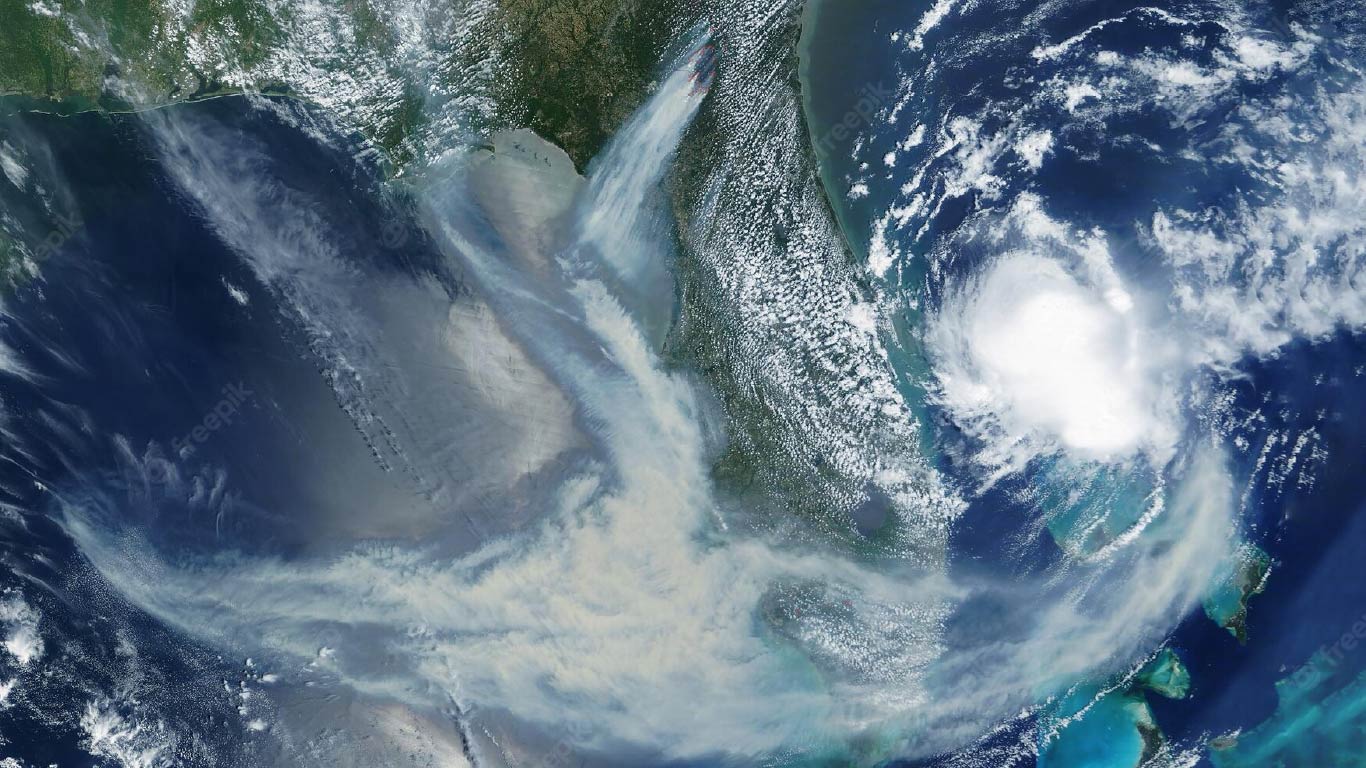
In conjunction with Crystal & Co and Axa, we have launched our first parametric insurance this year, in May 2018. This is a parametric insurance product aimed at hurricanes in Florida.

Let’s say a company wants to purchase hurricane insurance. The traditional model in which, say, a hurricane hits and then the insured party has to tally up the losses and submit a claim for damages under the terms of the insurance and lets say 50% of the damage is caused by wind damage and 50% by flood damage then the policy for hurricane will only pay for the wind damage. This process can take a long time and is very costly.

With parametric insurance there exists a pre-specified agreement between the two parties (the entity taking out the policy and the insurance carrier) about what constitutes a hurricane in the first place. They may agree that if winds are sustained for 1 minute at 80 miles per hour within 20 miles of the address location – that is a hurricane which would trigger a payout for the insured.

With hurricane parametric insurance this is measured in real time and monitored. The hurricane is tracked, and the location of the insured are known. Simple.

One advantage of parametric insurance is that this model allows claims to be paid much more quickly than do traditional policies. Once the parameter is set and then passed, the agreed upon sum is paid out, with the policyholder only having to pass a simple process to quantify its losses.

Parametric insurance could offer policyholders in insurers better efficiencies because the cause-and-effect nature of triggered payouts obviates the need for assessors, arguments, protracted claims, plus the time and effort needed to tally up what was lost.

Let’s Grow Together

Explore Our Demo

In The Press

Freelance Working

06.03.2018
Gig Economy Sharing Economy
blog driver

In this new age of self-employment, who do you work for? A company? A Platform? Your own business? Self-employed? Freelance working? All of the above?

Multiple mobile applications (Apps) are creating a vast amount of jobs and creating new opportunities for people looking to try new things and break the norm or even get back into work.

Most of these App companies don’t actually employ these people and the people are counted as free lancers, gig workers or self-employed. The Apps just “facilitate orders” or “requests”. They are a ‘platform’. Uber is the largest taxi company in the world without employing any drivers. AirBnB is the largest hotel operator that not only does not own hotels but does not employ cleaners, catering staff, concierge or maintenance teams.

If you operate through these companies and ask them “Are you my boss?” or “Are you employing me?”, their answer will most definitely be NO! But if you ask the people on the other hand “What job do you do?” They will usually say I am a driver for Uber or Lyft, or say I am a host for AirBnB. There is an attachment here, but there is also a change in the way people see the role of the company. It is a new way to represent yourself – you are freelance – self-employed – but you have 1, 2 or 3 or more jobs.

What feels like a life time ago now, before mobile Apps, when people said “I’m self-employed” they usually owned and ran a small business, for example tax accountant or builder. One part of being self-employed was giving out your business a name like Smith Accounting or Big Build Construction.

Now it’s not the same, people don’t have the chance to personalise their services and own the ‘brand value’ they now promote the App. When you’re self-employed with your own business the success or failure of the business can be based on your success. But if the App that “facilitates” you goes bust or is merged or just stops, where do you stand?

Let’s say you’re a driver for a company called ‘ZOOMCarApp’. You have been successfully driving (self-employed, freelance working) for 3 years. You have completed 30,000 trips and you have an average of 4.8-stars, awesome! But what does this mean for you? What can you do with this?

Can this data be transferred when changing companies or finding a new App to work with or a new role? What of this do you own?

Whose ‘reputation’ is it really?

When you want to start on a new App or change roles or add a new skill and go to an interview with a new App or employer you maybe be asked what you have been doing for the last year(s). What do you say? “I have been self-employed” “I’ve been freelance working” Great! What client references do you have. Can you hand over your ‘stars’ what do they count for?

What can Apps do to help? How can they support people when leaving the App or starting on a new App? Who really owns the person’s 5-star rating?

Tech companies also have huge amounts of un-published data, how can that data help people? Rating a driver 1 to 5 star goes deeper – is it just 4.2-stars, or is it 3,000 jobs at 5-stars and 20 at 2-stars over a period of 1 year and the driver showed great attention to detail and managed to improve and achieved 3 months at constant 5-star on 500 jobs?

Here at MIC Global we believe that DATA is the key to building a better, more flexible and transferrable workforce and insurance can be a way of building an real asset linking your data in a multitude of Apps back to your policy, allowing you to own the rating you have built up.

Let’s Grow Together

Explore Our Demo

In The Press

Designing New Insurance Products for the World

05.09.2018
Sharing Economy
blog startdesign

When I start to think about designing a new insurance product I always like to start with the questions why do people need it? and who is it for? Building a picture of the business, person or family helps.

Insurance is a product designed to help in time of need. At its heart there is a product that should lift you up and support you. You should buy insurance to help you make those difficult decisions in life.

We have new ways of working and we need new insurance – sharing economy insurance for example. Who wants sharing economy insurance?

I do know that people don’t always think this way – insurance for most people is something that you must buy – for the car, the office, a contract or for a loan or when you go on a trip. Plus, when the policy is called upon, the insurance industry suddenly sufferers from poor customer service, just when you need it the process fails. Finally we must not forget that, for many people around the world, insurance is simply not available. These people must manage their risks without the safety net of insurance.

So, today, it was great to find a web site that is global and shows what people care about and what their dreams are. The website is called Dollar Street and created by Factfulness co-author Anna Rosling Rönnlund.

Dollar Street imagines a world where everyone lives on the same street and the houses are ordered by income. The poorest live on one end, and the richest live on the other end.

It is hard to imagine the people buying your products and what their circumstances are and in product design this is essential. This web site is great for me, now I can see and imagine how insurance can help and support these people. I can see the similarities.

Having spent time on Dollar Street, the similarities become clear. People all need the same things, as their wealth increases the same things come up in the pictures, from Brundi to Sweden. At the end of the day, we all want shelter, food, and better tools to take care of ourselves.

Let’s Grow Together

Explore Our Demo

In The Press

Parametric Insurance – Hurricane Insurance for Florida

05.07.2018
Natural Hazards
blog hurricane florida

As MIC Global gears up to launch its first parametric insurance product in partnership with AXA and Brokerslink in Miami, Fl, we thought it a good time to open up a discussion on the subject. The product is Hurricane Insurance for Florida.

Parametric insurance or index insurance is growing in awareness across many industries and locations, however adoption of such insurance can be challenging for all concerned. However MIC Global makes it easy.

Insurance companies can be reluctant to offer index or parametric insurance owing to the perception it’s difficult to assess and overall, complicated to evaluate. Many insurers lack the needed knowledge and technical understanding to develop a sustainable and profitable parametric insurance solutions.

This is a pity since today many things can go wrong owing to population growth, urbanisation, climate change, technological growth and an overall growth in economic activity around the world. This environment should be ideal for insurance – the aim of insurance is to offer resilience to its customers in time of need, this is the fundamental thing insurance offers – a way of recovering when things go wrong. As the world grows more complex, insurance should grow in importance and prominence.

The way insurance responds is a challenge. Insurance gets a bad press owing to the policies being complex and when the time comes to make a claim its often hard and time consuming. Consumers and business owners can feel let down in their time of need by their insurer. Greater use of technology and awareness of the customer in insurance is causing changes however and parametric’s is just one example of this.

Parametric insurance is being talked about more and more across the global insurance and reinsurance industry and is often linked to the fact that of all the losses in the world many are not covered by insurance. In the developed world only 30% of losses are covered and in the developed world it is less then 10%. With weather related losses growing this situation is only going to get worse. Parametrics is a way to tackle this protection gap.

The case for parametric insurance is growing and it has several advantages over more established forms of insurance. Parametric insurance can be developed to cover specific needs and can offer very commercially viable forms of protection owing to the high use of tech such as Artificial Intelligence (AI) and Machine Learning to monitor and trigger the insurance payments. Data is the key and new data sets are being used together with technology such as Internet of Things (IoT) and other sensors and devices. Gaining a strong correlation between the insurable risk and the data is key.

Parametric solutions are suitable for many instances, building resilience into personnel lives and commercial businesses alike. Building a suit of products that can be deployed globally based on a set of technology and data points is possible. This is matched with the ability to monitor and manage the claims process with high levels of automation.

Clarity and communication is key to its success, ensuring that customer understand the product and can see and join in with the use of the product. Data analytics and visualisations aimed at the insured can be developed to aid the communication of the policies and these can be transparent to the user, showing in real time how the policy is performing against the event(s) under the policy.

Perhaps this will see customer satisfaction levels move off rock bottom!

Let’s Grow Together

Explore Our Demo

In The Press

Small Business – Scammers Want You!

04.23.2018
Cyber Security
blog email

Scammers don’t just target big companies, it’s small business too! In the press you hear all the big numbers from big events – WannaCry – 250,000 computers globally and parts of the UK’s NHS, HBO’s Game of Hacks – HBO lost data and new releases, NotPetya – Maersk was one of the biggest headlines, Facebook and Google fall for Targeted $100 million Phishing attack, THE Equifax Breach, 3,000,000,000 Yahoo’s and this is just a few from 2017.

Behind these large headline grabbing events are the many micro and small businesses that are also being attacked. Its not true that hackers only go after large businesses. Scammers and Hackers throw a wide net and small businesses are falling into their traps.

For small business security is often not a high priority and many companies don’t have the skills to avoid scammers. For this reason they are often caught up in the scams and attacks and are vulnerable to loosing data, suffering financial loss or worse reputation damage.

Most cyber-attacks start with phishing, this is a technique where a hacker will try to trick you into giving away sensitive information that will allow them to break into your accounts.

Phishing attacks usually come via email, often disguised as something legitimate – the use of the Tax office is a common attack or, recently, mass attack where hackers sent out fake Uber receipts, with a link at the bottom to a bogus complaints website. These emails looked genuine, the hacker is trying to get you to click on something and when you do….. you give the hackers access to your system.

So how can you tell the fake emails from the real ones? The first thing is to be aware, know that it can happen to you and your company. It can be tricky to see, but these are the top tips.

  1. Don’t click links blindly – think before you click. Use your mouse to hover over the link, this will show you the URL. If that doesn’t match up to the URL you’re expecting, then delete the email.
  2. Treat emails with attachments with suspicion. Attachments are used to down load packets on to your machine. If you receive an attachment that you’re not expecting and you don’t recognise the sender, it could well be a phishing attempt. Delete.
  3. Again on attachments – sometimes you can be asked to “enable macros” when you open it. Don’t, unless you know the person and it is from their business email.
  4. If you’re in any doubt about the legitimacy of an email, don’t open any attachments from it or click any links. Always check with the person – using a NEW clean email or phone – replying to dodgy emails might be playing right into the phisher’s hands.

Let’s Grow Together

Explore Our Demo

In The Press

No Single Future of Work

04.21.2018
Sharing Economy
blog holdingmoney

There is no single future of work. The only more certain thing is that all work will change, hours, terms, tools, colleagues, coffee and hopefully the commute.

Today all the buzz is about Uber, Upwork, AirBnB and anything with a blockchain or is sharing something. In my earlier life I worked for Microsoft and when I told people who I worked for, they had never heard of it, yet we all believed we were changing the world just like the millennials of today. The big difference is the buzz around the importance of technology and the changing work place.

A recent report from Australia focuses on Uber’s rapid growth as it becomes the cheerleader for the growth in the freelancer or gig economy. This new economy is being touted as giving people all the flexibility they want with the ability to work. The freelancer economy is where people perform work on an irregular, on-demand basis, paid by the task, and without the stability or security of traditional paid employment.

As this model has grown globally and especially in the conservative labour law based western economies, the freelancer model is raising concerns about the erosion of labour standards, minimum wages, paid leave, wait time, maternity and other benefits.

The report uses simulations and shows that typical Uber drivers earn much less than would be required under relevant minimum wage standards in Australia.

The report highlights that the headline rates are soon cut down by all the deductions bringing the overall income levels down. This is the problem with many of the freelancer and sharing economy jobs, however the flip side of the value, flexibility, is often not added back. The fact that people can and do have more than one stream of income allows overall a very flexible way to build up good income levels. However the report shows that these workers end up earning less than the minimum wage of a country and states that this is a ‘subsidy’ and this has allowed for Uber and other companies, rapid expansion.

The arguments miss the benefits of what these companies have brought and the technology has enabled. From the best education being available to ‘anyone’ (internet being available) in the world to enabling a new arrival in a strange new city being able to actually get a job that starts them on an employment journey.

These benefits will become more critical, especially in the countries where there is a growing number of people entering the workforce at the same time as when automation is becoming a stark reality.

Approximately 300 million people will be entering the workforce in the next 10 years, a third of those from India. This requires not only skills acquisition but in a form of experiential learning which makes those skills applicable on the job from day 1.

The ability to find and build income through new platforms, have access to build new skills and to grow skills are all key to building a new partnership with technology, allowing individuals to have flexible work patterns – which leads us to the growth of an open relationship between universities, technology and industry partners. The future of work is flexible, adaptable and changing.

Let’s Grow Together

Explore Our Demo

In The Press

Time to Take Back Your Data?

04.06.2018
Cyber Security
blog socialdata

Recently, well for the past 3 years or so, there has been an increasing focus on the insurance industry to change and for users to have simplified processes. This focus is even more apparent to enable shared economy insurance and Gig worker or freelancer insurance to work. The pressure has been put on the existing players in the industry to shake up and start to work out how to build tailored insurance policies that are fit for purpose in this new shared and gig world of work. Progress? Right now, it’s just hard!

This difficulty is starting to allow new companies to come in and threaten the existing players. This is a good thing and we are seeing the industry embracing these new companies and accepting them.

This was all looking like an interesting play for the likes of Google and Facebook. That is until you hear that Facebook now have said that most of its 2 billion users could have had their data accessed improperly, giving fresh evidence of the ways the social-media giant failed to protect people’s privacy while generating billions of dollars in revenue from the information.

These companies want to do everything (books, to travel; insurance to home cleaning) and use their power over the data to exploit their users. But now we see the cost.

“What we didn’t do until recently and what we are doing now is just take a broader view looking to be more restrictive in ways data could be misused. We also didn’t build our operations fast enough — and that’s on me.”

Sheryl Sandberg, COO Facebook

Their focus is on ‘customer experience’ and sucking every business income stream into their machine. Google and Facebook use AI and machine learning to read data and monitor your usage of their technology to serve you up what they think you need and what’s profitable for them. This data usage has been abused to drive revenue to match their huge future focused valuations.

The new InsurTech / FinTech start-ups are focused on ‘customer experience’ too. This is defined by cutting down questions to a minimum, using ‘social’ data to fill in the blanks to give you a quote for insurance or a loan. These companies use customers social media, third party apps and other accounts to gain information to provide quotes and service with minimum input from the user. But what data is being used and who checks this? And do we ever read the small print?

Is this acceptable? Is complying with new data protection rules enough? Or is it time to take back your data?

When I ask data professionals about taking back your data they shrug and say it’s out there already, so what’s the point. I disagree with this and think now is the time to take a stand and we should stop accepting that companies have a free flow use to your data and just scrape and access data for on the back of providing customer experience.

For example, Facebook’s search tool to find other people, now disabled, has been used to scrape public profile information, and now Facebook have said “Given the scale and sophistication of the activity we’ve seen, we believe most people on Facebook could have had their public profile scraped in this way.” They just noticed this? This was a feature built into Facebook for customer experience.

It’s interesting that Facebooks main defence from Mark Zuckerburg is:

“We didn’t take a broad enough view of what our responsibility was and that was a huge mistake.”

These new young, keen, naïve, start-up companies who want to take over the world live in their own created bubbles – thinking everyone is like them, that they know what an ‘experience’ is and that everyone wants to know who joined, who could be a friend, who’s got a new job, who your friend is dating, etc and allowing this free use of data to create value, not for the user, but the company. This practice is in DNA of these companies, exploiting date is a core theme. It’s the route to their value.

Having worked in the very often slow and frustratingly compliant world of insurance I can say exploiting data is not at its core, risk management is. Hence the customer experience is very very poor for most insurance interaction. It is no wonder that the Insurtech focus has been on ‘experience’ as their main ‘disruption tool’. But at what cost, and shouldn’t the user want to know what data is being consumed to give their quote?

There needs to be a balance between using ‘social’ data and re-modelling the insurance. Real work needs to be done on the very fabric of the way insurance works for the shared economy and gig economy insurance to make the whole experience work. Not just the buying of insurance but the whole process – end to end. Even where the policy lasts only one night or one hour. It’s not about scraping data and using social accounts its about real work dismantling the policies and the process to give insurance focused processes and to show the customer what data is used and how this impacts risk management in the event of a claim.

Let’s Grow Together

Explore Our Demo