In The Press

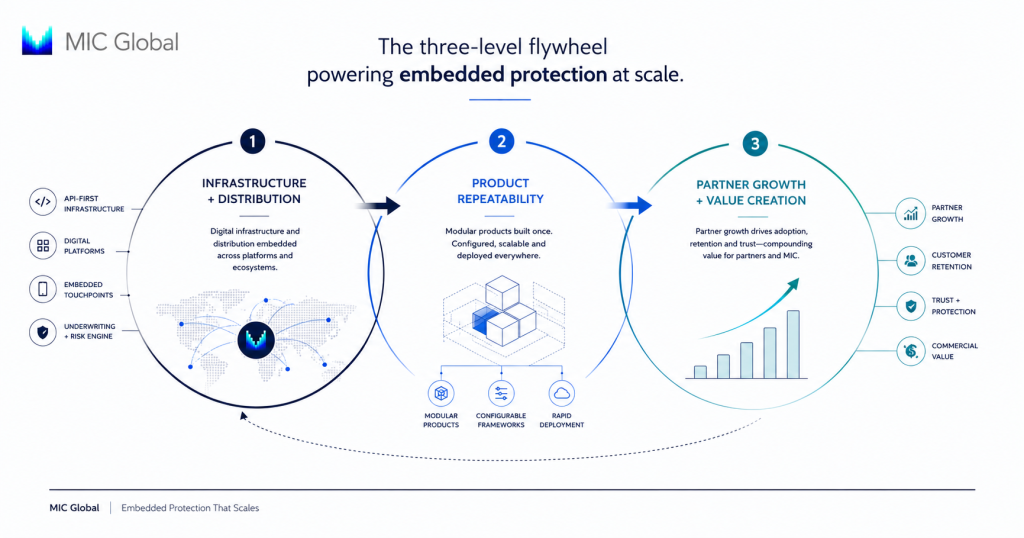
The Three-Level Insurance Flywheel

05.28.2026
Insurance Industry Micro Insurance Press Release Thought Leadership
the-three-level-insurance-flywheel

Why MIC Global’s growth model compounds instead of plateaus 

By Harry Croydon, Co-Founder, President & COO.MIC Global

Most insurance companies run on a pipeline. Leads come in, policies go out, renewals follow. Growth is a function of headcount, marketing spend, and distribution relationships — all of which cost money and plateau over time. The model works. But it does not compound. 

The problem with the pipeline 

Traditional insurance grows linearly. Add a salesperson, write more policies. Increase the marketing budget, generate more leads. The pipeline has no answer for the growth rates the best digital platforms post: fintechs doubling their user base in twelve months, gig economy operators crossing borders in a quarter. 

MIC Global was built to serve those platforms. To do that seriously, our growth model had to match theirs. The pipeline was never an option. 

The flywheel idea: why three levels

A flywheel is a growth model built on momentum. Each action adds energy to a spinning wheel. The heavier and faster it turns, the less effort each subsequent push requires. Amazon mapped this principle in its earliest shareholder letters: more customers attract more sellers, more sellers attract more customers, lower costs from scale attract more of both. The wheel becomes self-reinforcing. 

Most businesses that adopt a flywheel model operate at two levels. MIC Global operates at three. The third level is where the economics change.

Wheel one: capacity and partners

The first wheel connects our Lloyd’s Coverholder status and reinsurance relationships which is our underwriting backbone to a growing network of digital distribution partners: platforms, fintechs, lenders, and gig economy operators across the US and globally. 

The logic is direct. The more partners we add, the more data we accumulate. More data means better underwriting, faster product development, and sharper pricing. Better products attract more partners. The wheel starts turning. 

MiIncome™ is the engine here: embedded income protection designed to sit natively inside a partner’s platform. Not bolted on. Not a redirect. Protection felt as a product benefit, invisible as a policy. Partners including inDriveQICRhino, and ASNA are part of this wheel today, each adding momentum. 

One thing that keeps the first wheel nimble: MIC Global carries no long-tail catastrophe exposure, no large-limit liability. The platform is built to move fast. 

Wheel two: products and scale

The second wheel engages as the first accelerates. As our partner network grows and our data deepens, we develop and deploy new products at a pace and cost that traditional insurance infrastructure cannot match. 

MiIncome™’s trigger architecture makes this possible. Involuntary job loss. Natural hazard income disruption. Gig worker accident cover. Trip cancellation. Weather inconvenience. Each trigger is modular, repeatable, and deployable across new markets in a fraction of the time a traditional product build requires. 

Every product we add strengthens what we can offer a partner. Every market we enter expands the compliance and fronting network they benefit from. A partner launching in the US today can expand into India, Latin America, or Southeast Asia with MiIncome™ already positioned to support that move. 

The second wheel also collects data at scale: claims data, behavioural data, loss ratios by trigger type and geography. That feeds back into underwriting, pricing, and product design. The flywheel tightens. 

Wheel three: partner growth compounds our growth

This is the level that makes MIC Global’s model different from any two-level flywheel, and the reason we believe our growth potential is comparable to the platform businesses we serve. 

The partners we work with are not passive distributors. They are flywheel businesses in their own right — platforms actively growing their user bases, deepening their ecosystems, and expanding into new markets. And this is where our model does something a conventional insurance relationship cannot: we help them do it. 

We do not just grow when our partners grow. We help them grow. Embedded income protection — properly positioned — becomes a product feature that improves acquisition, deepens retention, and extends customer lifetime value. When a partner integrates MiIncome™, they are not bolting on an insurance policy. They are adding a commercial asset. Their acceleration adds to ours. Ours feeds back into theirs. The right partners do not slow the wheel. They spin it faster. 

The first wheel is running. The second is accelerating. The third is what makes the whole model self-reinforcing — for us, and for the platforms we work with.
Why now 

The income protection gap is not a niche problem. According to the International Labour Organization, more than 4 billion people globally have no meaningful social protection coverageIn the US alone, more than half of adults cannot cover three months of expenses from savings. The gap is structural. Existing solutions are priced and distributed for a different era. The opportunity to reach underserved people through digital platforms they already trust has never been more accessible. 

Traditional insurers were not built to close this gap. Their distribution models, product timelines, and cost structures were designed for a different customer relationship — one that reaches far fewer people, at far higher price points. 

MIC Global was built for this gap: with the flywheel architecture, the AI infrastructure, and the partner network to make embedded income protection a standard feature of digital life. 

The first wheel is running. The second is accelerating. The third is what makes it self-reinforcing. 

The right embedded protection partner should make your platform stickier, your customers more loyal, and your proposition harder to replicate. If that sounds like the right conversation, let’s have a chat. 


About the Author

Harry Croydon is Co-Founder, President and COO of MIC Global. Connect with Harry on LinkedIn

Let’s Grow Together

Explore Our Demo

In The Press

The $1M Employee: Why Talent Density and AI Are Rewriting the Rules of Insurance

05.19.2026
AI Insurance Industry Press Release Thought Leadership

At MIC Global, we are not planning an AI transformation. We are living one and in 2026, the numbers are starting to show it.

The metric we use to hold ourselves accountable is one we believe every insurance business should be tracking: revenue per employee. It is the clearest way to see the gap between companies genuinely built for the future and those retrofitting for it.

Our target at MIC is $1 million per employee, after cost of goods. We are on track to get there.

The Number That Tells the Truth

Revenue per employee sounds simple. It is not.

In insurance, headline revenue figures mislead if you take them at face value. Claims are the cost of goods. Strip them out and you see what a business actually produces per person: the real output of its people, processes, and technology combined.

In the technology sector, this figure routinely clears $1 million. In traditional insurance, it falls well short. That gap is not incidental. It reflects decades of manual workflows and organizational layers designed long before AI made them redundant. The companies closing that gap fastest are the ones that started without the legacy. AI-native businesses built on embedded, parametric, digital-first models have a structural advantage that no transformation program can fully buy back. What is Embedded Microinsurance?

What Chubb’s Numbers Actually Show

Chubb recently announced plans to cut headcount by around 20 percent, targeting expense savings of roughly 1.5 combined-ratio points. Management expects 85 percent of major underwriting and claims processes to be automated, with a similar share of gross written premium flowing through fully digital channels. It is an ambitious program and a clear signal that even the largest global insurers are waking up to what AInative operations can deliver.

But the numbers deserve honest scrutiny.

Chubb employs around 43,000 people and generated $59.4 billion in revenue last year, roughly $1.3 million per employee on the surface. That looks impressive until one accounts for claims, which represent about 61 percent of revenue. Strip those out and true net revenue per employee sits closer to $540,000.

Solid by insurance standards. Still well short of the $1m net revenue per employee target.

If Chubb executes well, cutting headcount while growing revenue, it may increase this value and may reach $700,000 per employee net of claims. A real achievement at that scale. But still a target we are already aiming beyond.

Once you reach $1 million per employee net of cost of goods, you can grow revenue without growing headcount proportionately. Legacy scale cannot replicate that and this is where Talent and Tech converge to create exponential corporate value.

The compounding advantage of an AI-native model is this: once you reach that threshold, revenue can grow without headcount following it. Legacy scale cannot buy its way to the same outcome. The gap comes from technology, business model, and product innovation, or the absence of it.

Why We Can Get There

The answer is not technology on its own. It is the right technology, with the right people, used the right way.

We call this talent density. The concentration of high performers in a team matters more than the size of the team. High-density teams move faster, hold each other to higher standards, and produce far more output per head. In a lean, cross-functional business like MIC Global, where one person may cover underwriting, product, and partner delivery, talent density is not a philosophy. It is the operating model. We believe in our talent and providing tech that gives them the tools to succeed.

AI has dramatically raised the ceiling on what one talented person can produce. Tasks that once took hours, now take minutes. Work that required days of research and drafting happens in a fraction of the time. Our teams are reskilling around these tools. Our hiring reflects them. We are not replacing capability. We are amplifying it.

Business teams at MIC Global now build the tools they need. Engineering deploys, iterates, and builds on them further creating synergy and efficiency. The cycle from idea to implementation has been compressed in a way that would not have been realistic two years ago. What keeps our people moving is not rigid process. It is curiosity, and that tone is set at the top.

The Human in the Loop Is Not Optional

This part does not get said clearly enough in conversations about AI: the quality of the human in the loop determines everything.

AI is powerful. It is also capable of confident error. It assumes. It fills gaps. It can introduce inaccuracies plausible enough to slip past someone who does not know the business well. This is where talent density and AI intersect in a way that is non-negotiable for us.

Our people need to know this business and be experts in their fields. They need to live our values and understand our partners, our customers, and the specific realities of embedded income protection across global markets including Qatar, sub-Saharan Africa, the US, LATAM, and Southeast Asia. Without that knowledge and experience, AI output cannot be properly reviewed. Errors build quietly.

The best use of AI is not to remove human judgement. It is to free highquality human judgement from low-value work so it can focus where it matters most: catching edge cases, questioning assumptions, and bringing in contextual understanding no model has yet learned to replicate.

Curiosity and vigilance are not soft skills. At MIC Global in 2026, they are commercial advantages.

6 Countries to 24 in Twelve Months

Over the past year we expanded from 6 to 24 countries, growing our partner ecosystem across mobility, financial services, remittance, and telecoms, now protecting millions of people globally. We secured regulatory approval in Qatar, established a GCC expansion strategy with Qatar Insurance Company, and are rolling out across Kuwait, Oman, and Saudi Arabia.

None of this came from scaling headcount proportionately. It came from scaling capability through technology, talent density, and an operating model that was built AI-native from day one rather than adapted to AI after the fact.

This is what embedded microinsurance at scale looks like in 2026. Not a product bolted onto a legacy platform. A complete operating model built from the start around the technologies and principles that make $1 million per employee a realistic, measurable target. How MIC Global’s embedded microinsurance works?

Transforming vs Being

There is a real difference between an organization transforming toward AI and one that was built inside it. The first is retrofitting decades of process, culture, and headcount to a new way of working. The second just operates.

We are not planning to become an AI-native insurance business. We already are one. The $1 million per employee target, net of claims, measured honestly, is how we hold ourselves to account for what that actually means in practice.

For our partners, it means working with a business that moves fast, integrates cleanly, and maintains quality that lean teams sustain rather than sacrifice. For investors, it means revenue that scales without a proportionate rise in operating cost.

The industry is beginning to understand what AI makes possible. At MIC Global, we are already doing it

Ready to embed AI- Native Protection into your platform?


About the Author

Harry Croydon is Co-Founder, President and COO of MIC Global. Connect with Harry on LinkedIn

Let’s Grow Together

Explore Our Demo

In The Press

OPT-INdia: Using Embedded Micro Insurance as a Catalyst to Fill India’s Insurance Protection Gap

08.16.2023
Insurance Industry Insurtech Micro Insurance
blog opt india

India, with its vast population and growing economy, is faced with a significant insurance protection gap – one of the largest in the world. This gap has major social and economic impacts and is prevalent across various segments of the population, posing substantial risks for individuals, families, and businesses.

Why has a protection gap opened? How large is India’s insurance protection gap? How can embedded micro insurance be used to begin filling the space left by traditional insurance companies? Here, we discuss India’s insurance crisis, what strategies can be implemented to combat the gap, and how MIC Global is busy developing relevant products for the Indian market.

Why is there an insurance protection gap in India?

Having insurance is important, there’s no two ways about it. A thriving insurance industry helps mitigate the risks associated with ill-health, loss of income, catastrophes, and theft, to name a few. So, if insurance is such a commodity, why isn’t the Indian market signing up?

From a customer perspective, there are common myths surrounding the purchase of insurance which may play a part, such as unaffordable premiums and a distrust in the insurance industry to honor submitted claims1; while financial illiteracy (a lack of awareness of insurance products and understanding of complex clauses – this is also a global issue), knowing where to buy, and relevancy seem more likely culprits2. Existing insurance products often fail to meet the specific needs of the population, compounding the already low uptake.

Moreover, the underdeveloped insurance infrastructure in the country is another critical factor contributing to the protection gap. Insurance distribution outside of major cities is poor, with general insurers and brokers largely operating inside urban centers. A presence in smaller towns and villages is perceived as unviable due to low profitability2. This leaves limited access for a substantial portion of the country that are without adequate coverage, despite being highly vulnerable to risks.

Many of the issues above can be remedied with suitable insurance products, timely education around available insurance, and improved distribution channels that do not require a physical insurer presence. We’ll get into that later.

Let’s talk numbers.

What exactly is an insurance protection gap?

A country’s insurance protection gap is defined by the disparity between the insurance coverage needed and the actual amount of coverage the population has in place. For example, if a country’s optimal insurance coverage is $2 billion, and the actual coverage in place is $1 billion, the protection gap would be 50%. This gap is flexible and can be affected by the country’s economic outlook and population, and risks such as climate change, cyber security, pandemics, and technological and behavioural changes3.

India’s insurance protection gap.

Speaking at 2021’s National Insurance Academy annual summit, Naveen Tahilyani (CEO, Tata AIA Life Insurance Co) said India’s non-life protection gap ranges from 83% to 92%, with life experiencing a lower percentage4. However, the natural catastrophe protection gap was estimated to be higher, peaking at 95% according to Swiss Re Institute5. With the increase in frequency and intensity of natural disasters and emergence of new risks – such as cyber – to people and industry, G Srinivasan (director, National Insurance Academy) reinforced the urgency to plug the rising uninsured economic losses and loss of lives6.

This represents a huge opportunity for insurers. Where traditional insurance is falling short, this leaves the market wide open for a new approach to insuring India’s under- and uninsured population. To fill this chasmic protection gap, SN Rajeswari (member distribution, IRDAI) suggested insurance companies must increase reach and the potential for uptake by adopting new strategies through leveraging digital technology, data, and micro insurance4.

How can embedded micro insurance help reduce India’s insurance protection gap?

Embedded micro insurance directly counters the issues discussed earlier surrounding distribution, accessibility, education, and relevancy.

In short, traditional consumer insurance policies are generally designed for large coverages, such as life, home, and car. Customers sign up to products directly with an insurance company either online or in-person (historically in India, in-person has been the only way in rural areas), and claims are made by contacting the insurer. As we learned earlier, this strategy is clearly not working in India.

Conversely, embedded micro insurance is intended to offer protections for smaller everyday events. Embedded micro insurance products are digitally distributed via platforms that customers are already engaging with – no need to contact an insurance agency. These insurances are relevant to the product or service they are purchasing, at a time when they are primed to learn about the benefits and consider opting in – such as screen protection for a mobile phone, or as part of a service’s additional benefits, such as income protection for credit card users. Claims are raised through the platform they signed up with, so customers do not have to deal with an insurance company at all.

From a customer perspective, opt-in insurance is convenient, timely, and less imposing than signing up for traditional insurance.

Additionally, access to affordable and relevant insurance products is highly desirable. With small premiums, customers have the option to carry many different insurances that are suited to their needs at the time, rather than traditional blanket coverages. Low premiums also fit the limited budgets of low-income individuals, which in turn encourages greater adoption of insurance products among this segment of the population.

In time, as more platform companies offer embedded micro insurance programs, India’s insurance protection gap will gradually reduce as customers opt-in to products.

Financial inclusion through digitisation and collaboration.

The Indian government is transforming the country into a digitally empowered society with its Digital India initiative. Part of this is building digital infrastructure – known as the India Stack – with one goal being to aid financial inclusion in the country. At the 2023 India Stack Developer Conference, Smt. Debjani Ghosh (President, NASSCOM) stated that financial inclusion through digital means had already reached 80%7. With more of the population managing their finances online, the opportunity for digital insurance penetration becomes more viable.

With greater digital financial inclusion, the government is proactively working with insurtech to develop simplified and easy to understand insurance products to protect the Indian population and counter India’s protection gap.

What is MIC Global doing to help in India?

We are working with local insurance stakeholders to bring innovative embedded micro insurance products to the Indian market. With our digital reinsurance solutions, we have created a repeatable blueprint from which further products can be rapidly rolled out.

This speed to market is enabled by our full-stack capability. By controlling the four key areas of product design, underwriting, our own insurance technology platform, and managing our distribution network, we can rapidly write and deploy products to new partners in weeks. This empowers our partners to quickly identify gaps in the market and deliver crucial coverages to their under- and uninsured customers.

MiIncome, our digital reinsurance solution contains triggers that already have the bulk of development completed, so when partnering with a new client, we simply customise the desired product to their needs, enabling us to meet the specific needs of different communities. If the triggers don’t fit a partner’s needs, we work together to design a suitable solution. This flexibility ensures highly relevant coverages that align with the unique risks of our partners’ customers.

Examples of this include:

  • Our MiIdentity platform, developed to monitor consumer data against the growing threat of data breaches that results in compromised personal information being used for credit fraud, providing reimbursement when a customer is impacted financially. This is offered through a national insurance institution specialising in general insurance.
  • A MiIncome product, designed to offer income protection as a result of involuntary unemployment. This is offered through a private insurer who is rolling out to relevant digital platforms through a company that creates service-oriented technology solutions.
  • An embedded warranty product, in the event of mobile phone screen and internal component damage, enabling repair or replacement of the device. This product is being expanded to protect consumer purchases across other segments such as portable gadgets, fashion, and accessories.

Challenge accepted.

India’s insurance protection gap is a challenging issue that requires concerted efforts from various stakeholders, including the government, insurers, and insurtechs. Alongside government’s initiatives to improving access to digital finance and insurance, embedded micro insurance is positioned to be a promising solution to the protection gap left by traditional insurance companies. By offering affordable, tailored, and accessible insurance products, platforms and services armed with embedded micro insurance solutions – such as those developed here, at MIC Global – can play a vital role in providing a safety net for the underserved sections of Indian society. Slowly but surely, the insurance protection gap will begin to close.

Contact us or simply send us your email address below to see how we can collaborate with your business to benefit its customers and employees with an embedded micro insurance solution, or simply send us your email address to get started.

Sources

  1. Nova Benefits, Why Indians DON’T Buy Health Insurance
  2. Mint, Four reasons why Indians buy such little general insurance, 16 April, 2016
  3. Insurtech Insights, The Insurance Protection Gap: What is it and how does it affect the insurance industry and our quality of life?
  4. The Economic Times, Insurance penetration in India requires combined efforts of all stakeholders, 15 October 2021
  5. Swiss Re Institute, India’s insurance market: poised for rapid growth, January 2023
  6. Financial Express, Need to close insurance protection gap in country: Irdai member, 15 October 2021
  7. PIB Delhi, The First India Stack Developer Conference held on 25 January 2023, 25 January 2023

Let’s Grow Together

Explore Our Demo

In The Press

From Songs to Dollars: How iPod Helps to Define Micro Insurance

07.26.2023
Insurance Industry Micro Insurance
blog pocket

There are many things that the late Steve Jobs will be remembered for. For us, one of his outstanding qualities was his innate ability to explain and market a product in a way that resonated with consumers. In this article, we reveal how his genius description of the original iPod shaped the way we think about our own micro insurance products.

Sell benefits, not features.

In 2001, at a small press event at Apple’s former Infinite Loop headquarters, Jobs revealed the first-generation iPod. Holding the gadget for the audience to see, he coolly explained “This amazing little device holds 1,000 songs and it goes right in my pocket”, casually slipping it back into his own pocket.

The iPod revolutionized the music industry overnight – becoming the must-have tech device of the early 2000’s – with Jobs’ simple explanation becoming the basis of its marketing campaign: 1,000 songs in your pocket.

Instantly, people knew what the iPod was about. Now, Apple could have marketed the iPod for what it was: The world’s first portable digital media player, 5GB hard drive, superfast Firewire connection, rechargeable lithium polymer battery… but to the average consumer that’s just tech jargon. Companies have a matter of seconds to make a first impression, so messaging is crucial – a more detailed explanation can come once a customer is engaged. When getting the attention of a potential customer, one way to make a solid first impression is to tell them how a product will benefit them – how it will make their life better.

For the iPod, those five words said it all. “1,000 songs” – that was comfortably more than the typical persons’ entire music library. “In your pocket” – it was small, portable, and easily accessible. People understood and proved it in their millions – by the time Apple retired the iPod line in 2022, it was estimated that they had sold 450 million devices.

Drawing inspiration.

Much like how the iPod transformed the music industry and how people experienced music on-the-go, micro insurance is revolutionizing the insurance industry and how people think about and access insurance.

Traditionally, personal insurance policies are applied for via a comprehensive in-person or online sign-up process, with successful applicants receiving documentation containing their policy certificate and details of how to make a claim. Likewise, the claims process itself can be documentation heavy, and slow to validate and pay out. Often these policies provide coverages measured in thousands – such as for health, life, home, and vehicle – with premiums paid monthly or annually. In some ways, conventional consumer insurance can be like the portable CD players of old – cumbersome, awkward to navigate, not particularly convenient, and people carried just a few discs at a time.

Which is where micro insurance comes in, offering an alternative to regular insurance. We could, and often do, describe our brand of digital reinsurance for what it is: digital embedded micro insurance products, underwritten by certain underwriters at Lloyd’s and in-house through MIC Re, partner driven global distribution, powerful API enabled straight through processing for claims and policy management. Within the insurance industry these terms are well understood, much like the iPod’s description above within the tech industry. But as an explanation of what we do for the everyday person, it’s not necessarily as easy to grasp.

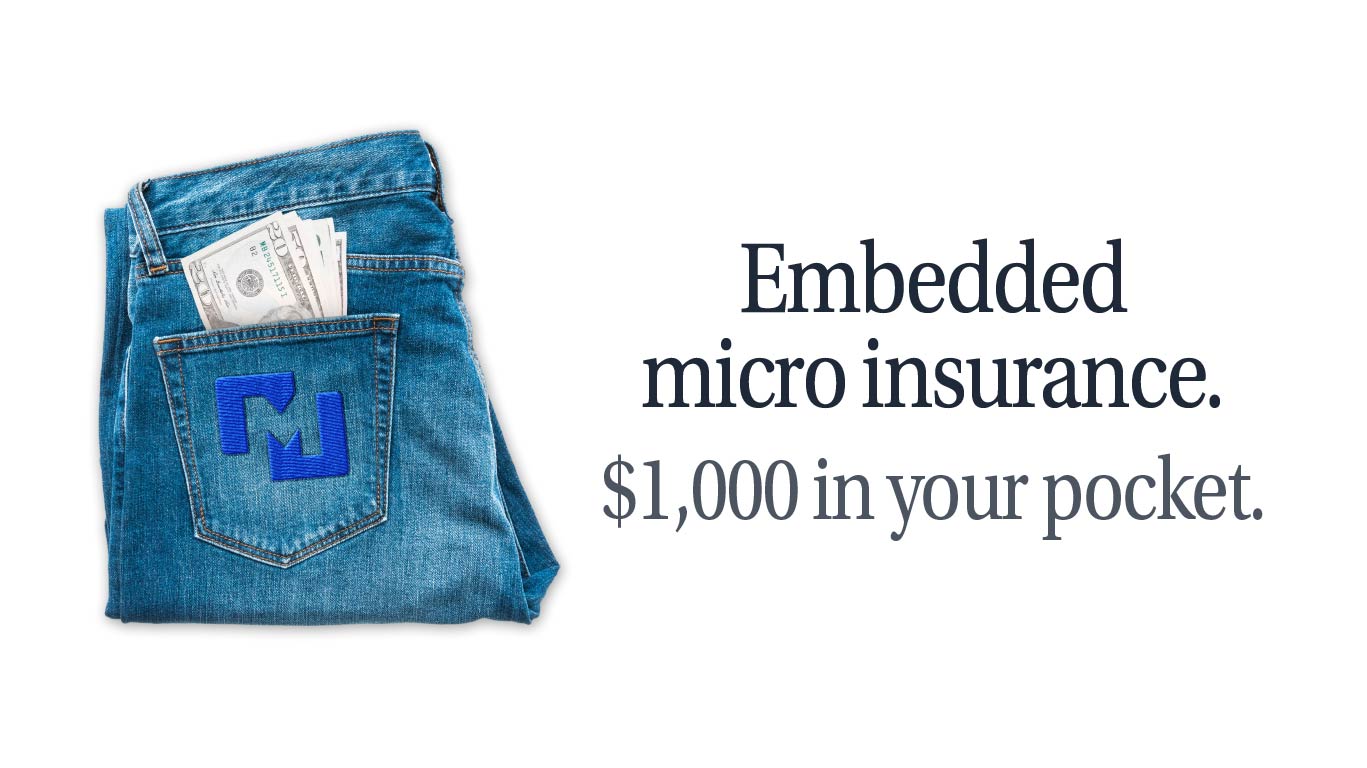
So, inspired by Jobs’ simple words, we like to characterise micro insurance in a similar manner: $1,000 in your pocket.

Hear us out… “$1,000” – coverage levels ideal for typical everyday claims. “In your pocket” – readily accessible policies applied for at the point of sale, via platform and service partner mobile apps and websites, with straightforward, lightweight sign-up processes and claims paid rapidly. Combined, this makes the “$1,000 in your pocket” relevant to the customer.

Micro insurance. The next big thing.

Expanding on this statement in more detail, MIC Global’s micro insurance programs are designed to fill the protection gap that traditional insurers have allowed to develop. Providing coverages for tens or hundreds of dollars for everyday incidents – such as broken gadgets, breaks in income, warranties, travel disruption, and loss of income driven by an event – our digital reinsurance products allow our insurance and platform partners to help their customers in their time of need.

Our embedded micro insurance products are highly accessible through partner platform mobile apps, websites, and subscriptions. We work with our partners to integrate our products into their sales process and create simple, understandable application processes to ensure that their customers can get insured quickly without causing disruption to the partner’s business – in short we add trust and we add value. When a claim arises, customers have convenient access to their coverage direct from the platform they enrolled with. Claims are sent to MIC and can be processed in hours thanks to our AI-powered software, and monetary benefits can be paid to our insurance partners to help the platform’s customers just as quickly. Put simply, this is insurance in a box for our partners.

For example, we have recently partnered with a new neo bank to support their Income Protection product. Customers apply through the bank’s app and the benefit is embedded in the client’s subscription and services. When a subscribed customer needs to make use of the benefit, the system is ready to pay* and support them in their hour of need, putting a $1,000 in to their pocket in an instant.

With simple, relevant, and affordable micro insurance products available at the touch of a button, our partners’ customers have peace of mind that when life happens, they can rely on their protection solution to ensure they have cash in their pocket to get back on track.

Contact us to see how MIC Global can help your business benefit its customers and employees with an embedded micro insurance solution, or simply send us your email address to get started.

* 80% of claims turned around within 48 hours, May–Dec 2023.

Let’s Grow Together

Explore Our Demo

In The Press

Everyday Disruption: Where is Your Insurer?

07.20.2023
Insurance Industry Micro Insurance
blog disruption

Have you ever wondered why there is a movement happening in the insurance industry towards faster claims payments and embedded micro insurance?

You’re likely to have some sort of insurance policy, whether it’s to cover your home or phone or car – usually through a traditional insurance company – and when the unexpected happens, you’re covered… right? Yes, but perhaps not as quickly as you might like!

So, what is micro insurance’s role in the industry and why can it be better than a traditional insurance policy in some situations? How does micro insurance enable your insurer to readily be there in your time of need? Let’s explore this.

A Series of Unfortunate Events.

Consider the following scenario.

David works as a plumber; no two days are the same and sometimes he’s in quite a rush to help his customers. Today is one of those days – David receives an emergency call from a customer with a flooded kitchen, nothing he can’t handle! He puts his phone into his overalls’ and drives to their house.

In his haste to get out of his van, David’s phone slips from his pocket and hits the pavement. He picks up his phone, revealing the screen is shattered… a $300 repair.

Broken phone disruption

Frustrated at the inconvenience, the plumber gets back to the task at hand – that pipe won’t fix itself. He grabs his trusty tool kit from the back of his van and sets to work. The job goes well, another happy customer, and David packs up and returns to his van.

Lifting his tool kit into the van, the handle breaks off… and the box lands on his foot, crushing it from the impact. There’s only one thing for it – a trip to the Emergency Room.

Plastered foot disruption

This isn’t how he wanted to spend the day as disruption like this will cost him dearly – if he can’t work, he won’t get paid. Eventually David is seen by a doctor and his broken foot is set and bandaged. Before leaving he is handed a bill for $700 – just what he needs!

Feeling deflated, David makes his way home before anything else happens, worrying about how he’ll find the $1000 that the day has cost, and how he’ll handle the loss of income while he recovers. He is dreading contacting his insurance providers and dealing with different policies and covered risks, wondering if they’ll cover him, what deductibles he’ll owe… it’s a lot to get though. Is his screen covered for accidental damage? Loss of Income covered? Health covered?

David now has a lengthy insurance claims process ahead of him – added stress and time he could spend concentrating on recovery. Where is his insurer when he needs them most? How could the outcome of this story be improved?

Traditional Insurance vs Micro Insurance.

We’ve all been there – going about our day-to-day lives when something happens beyond our control, that ultimately hits our wallets.

Having read David’s misfortune, you may be thinking that if you were in his shoes, you’d be covered with insurances for personal property damages, medical costs, and business income interruption, or beyond those any of the other multitude of coverages available. But claiming and getting payment from traditional insurers is typically a slow, drawn-out process measured in weeks – if they’ll cover your incident at all! In many cases it’s quicker to pay the bill yourself than wait for a claim settlement, or preferable to facing higher premiums if it’s a small claim… leaving you out of pocket after all the costs and increases.

So, while the traditional insurance process is often encumbered by a comprehensive in-person or online sign-up application and administration-heavy claims process, there is now a new way to get cover to the right people. This is embedded micro insurance: simple insurance programs distributed via platforms that use the insurance to complement their services; coupled with efficient claims handling – accessible, tech-powered, light on documentation, and with rapid turnaround times.

This is where MIC Global comes in. We are different from traditional insurance companies. Our micro insurance coverages are purpose built for life’s daily disruptions, putting money in people’s pockets fast so they can minimise the impact of inconvenient incidents. Our insurance capacity as a Coverholder of Lloyd’s coupled with our in-house AI-powered technologies means that claims can be assessed, settled, and paid to our local insurance partners within hours – enabling our platform partners to help people to get back to their everyday lives.

Sounds great, but how does micro insurance work?

With micro insurance, customers opt-in to coverages for small one-off or recurring daily, weekly, or monthly premiums. These coverages are embedded into a company’s existing product, for example a bank account or mobile application subscription. When a trigger incident occurs, an enrolled customer raises a claim through their provider and the MIC machine starts working.

Our AI-powered low-code technology assesses the claim and automatically makes decisions based on the provided information, requesting further details and real-world assistance if required. Once the claim conditions are satisfied, payments are made to our partner to help them support their customer. This straight-through-processing means that money can be paid to local insurance partners, through to the claiming customer within a matter of hours*.

When designing our digital reinsurance products, we start with the claim and focus on the triggers. This means that we know how we are going to service claims before we start developing the policy. Our processes are all developed with the goal of quick payments and straight through processing. Our ability to underwrite our policies is what sets us apart from traditional insurtechs, who require the additional backing of a third-party underwriter. This adds time to their claim payments and, also crucially, cost. Our partners and their customers benefit from our underwriting capacity with quick claims payments and lower premiums. The result is happy end-customers, added value and increased revenues for our partners.

Micro insurance: there for you when you need it most.

Thinking back to our example of the plumber, David, with his traditional insurance coverages – his concern was not only the bills that came from his misfortunes but also his loss of income and the cumbersome claims journey. This story is not unique – millions of claims are made each year across every category imaginable, with varying levels of administrative capability ranging from paper files to spreadsheets to insurance specific software. The settlement process can take weeks, leaving people in claims limbo while they wait for their settlement.

This is why when life happens, we are there for your customers – people just like David. When you work with us and embed one of our micro insurance products, we treat your customers as if they were our own and know that service is key. We take care of your customers’ everyday disruptions with products that protect people’s identitiesfinances, and misfortunes. Our innovative approach is built on the foundations of tailored products, underwriting capacity, leading AI-powered technology, and round-the-clock coverage made possible by a global team. Claims are automated, and settlements can be paid to our local insurer and your company to help your customers within a matter of hours, so people can get back to their day with money in their pocket.

So next time you find yourself disrupted, ask “where is my insurer”?

Contact us to see how MIC Global can help your business benefit its customers and employees with an embedded micro insurance solution, or simply send us your email to get started.

* 80% of claims turned around within 48 hours, May–Dec 2023.

Let’s Grow Together

Explore Our Demo

In The Press

The Next Insurance Company: Embracing the Digital Future

07.07.2023
Insurance Industry Insurtech Micro Insurance
blog next

Insurance as we know it began in the wake of the Great Fire of London in 1666. The first insurance company was formed to offer compensation in the event of fire in return for a premium, and this concept soon became a worldwide industry. Whilst the industry has grown in size, scope and complexity over the centuries, the basic premise remains the same – a customer pays a premium for a coverage policy, which the insurance company honours in the event of loss.

Simply put, an insurance company’s policy premiums are collected into a pool, from which customers’ claims are paid. At the end of the financial year, money left in the pool becomes the insurance company’s profits. By 2020, the insurance industry was worth $6.3 trillion.

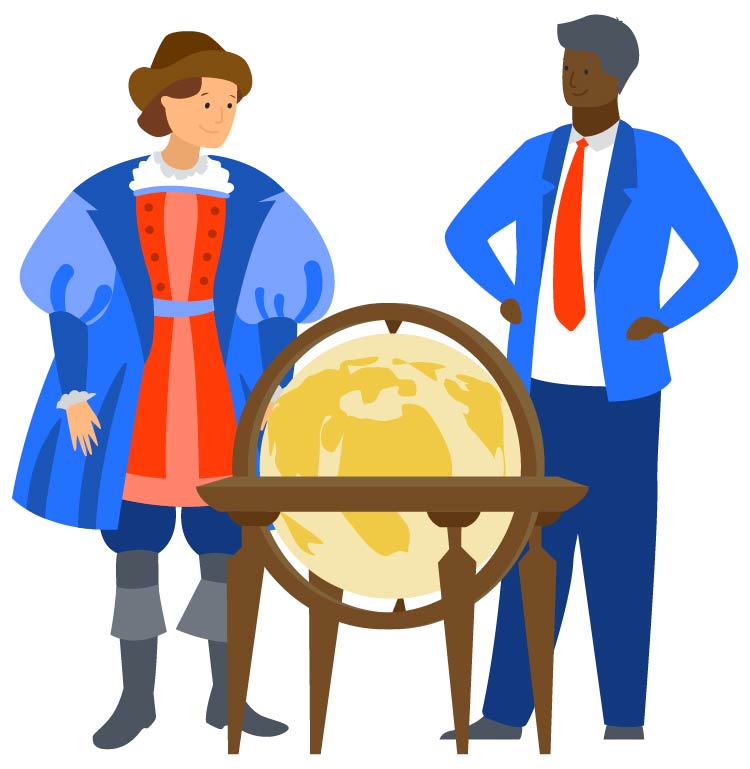
Illustration of Insurance businessmen from different eras standing beside a globe
Insurance has evolved over the centuries, yet still shares many similarities to its origins!

Insurtech: Shaping the Digital Future of Insurance.

This valuation is predicted to be just the tip of the iceberg. With the relatively recent emergence of insurtech in 2010 (now representing a $7 trillion opportunity) and industry advances in digital capability, the insurance industry has the potential to double in worth to $13 trillion. This ‘new’ $7T can be imagined as mostly sitting alongside the existing incumbents’ $6T+, with insurtechs operating inside this innovative new world – though there is some crossover, with insurtech bringing traditional products into the digital world and providing a bridge for the old incumbents to join in.

Earth-like planet and digital planet with rocket passing between
Digital insurance is the next frontier for the insurance world.

Where does MIC Global fit in?

We are part of this new digital world. As a full stack digital micro insurance company, we are already built for the digital insurance future. We provide our digital reinsurance solutions to end-customers through a B2B2C model of partnerships with local insurers, brokers, and retail and platform companies.

Innovative Embedded Micro Insurance Products.

We develop straightforward micro insurance coverages from the ground up that are embedded into partners’ existing products, offering their customers easily accessible protection with the click of a button. Our products are simply priced, with the option to collect premiums as one-off or recurring daily, weekly, or monthly fees, giving partners great flexibility with their pricing models.

Our product is called MiIncome – a digital reinsurance solution designed to help people deal with events that take money out of their pockets, whether that’s regular income loss or incidents that result in unexpected monetary outlay. MiIncome contains individual digital coverages – we call them ‘triggers’ – which we work with local insurers and platform partners to tailor to their and their customers’ specific needs. Triggers have been developed for personal finance, digital wellbeing, property, possessions, and daily disruptions – to name a few! – and this list is far from exhaustive.

Each trigger covers a different part of people’s lives, allowing partners to choose how they want to benefit their customers – and if our current triggers don’t fit a partner’s model, we work together to create a new trigger that works for them.

An innovative micro insurance solution can support your customers and employees. Simply send us your email address to learn more.

Fast, Scalable Technology.

Our low-code technology capability is powered by advanced machine learning and AI, meaning that claim settlement takes hours, not weeks. Our MiConnect system is capable of fully automating assessment, investigation, and settlement decisions – calling in real world help when necessary – and provides reports and interactive dashboards on all activity for comprehensive data analysis and audit. What’s more, a partner’s claims software solution can be up and running within weeks using pre-configured systems that are tailored to their specific needs.

People thinking about their microinsurance claim reasons

Micro insurance coverage for life’s disruptions, protecting instances such as involuntary unemployment (Layoff), stolen bank details (Identity), and broken mobile devices (Gadget).

So how is MIC Global any different to other insurtechs?

Syndicate-backed Underwriting Capacity.

What sets us apart from other insurtechs is our underwriting capacity. As a Coverholder of Lloyd’s, alongside MIC Re, we can write policies for our products and underwrite them, collect premiums and settle claims – without relying on third party underwriters. This speeds up the claims process and cuts costs – savings we’re able to pass on through smaller (or micro), affordable premiums.

On top of this underwriting capacity, we’ve been building a worldwide distribution network of local insurers to deliver our digital reinsurance solutions to partners and brokers – making us the first embedded micro insurance company to be operating on a global level.

Micro Coverages, Major Benefits.

Our focus is on daily coverage in an unpredictable world: developing micro insurance for emerging economies and everyday risks. While traditional insurance companies are insuring policies for thousands or hundreds of thousands of dollars, our coverages are protecting people for their day-to-day disruptions with policies for tens or hundreds of dollars. While this is micro in nature, the impact on people’s lives is major. A few examples include payments to replace a stolen package (Porch Package Piracy), loss from a leaking tap, or income protection in the case of accident (Involuntary Unemployment) – the scope for implementation is truly endless.

With innovative micro insurance products, technology capability, underwriting capacity, and a growing distribution network, MIC Global is the next insurance company – built for the digital future and leading the micro insurance revolution!

Contact us to see how we can help your business benefit its customers and employees with an embedded micro insurance solution.

Let’s Grow Together

Explore Our Demo

In The Press

Why Embedded Insurance is the Next Big Thing in E-commerce

08.01.2022
Insurance Industry Insurtech
ecommerce blog

Embedded insurance should be seen as a key tool to help e-commerce businesses improve their customer value proposition in a digital-focused future.

If you work in e-commerce you’ll know that the digital landscape for retail is constantly evolving.

With Amazon offering same-day delivery and disruptors like Klarna integrating ‘buy now pay later’ finance products into online checkouts, the market is hot with new innovations that offer speed and convenience.

But with the cost of living rising, reassurance and peace of mind have become just as valuable to e-commerce consumers. Embedded insurance is one way you can offer this to your audience, creating a better user experience as well as increasing revenue and brand loyalty.

So what exactly is embedded insurance?

You might think that you don’t know what embedded insurance is, but it’s simply a fancy technical term for something that’s hiding in plain sight throughout the ecommerce world.

Have you ever bought a flight or train ticket, and when you got to the check-out, there was an option to add cover, for a small add-on fee, that would refund your ticket if your journey was disrupted? Or what about when you buy a product and it has a warranty embedded in the price, so that if the item breaks or is faulty you are entitled to a refund?

These are both great examples of embedded insurance. It’s a simple way to increase the value that customers receive, as well as generating extra revenue. Brands can offer cheap, attractive insurance cover for undesirable eventualities as an add-on at check-out, or embed it further into their offering by including it in their prices.

Why Insurtech needs to be on your radar

At MIC Global, we believe that embedded insurance is a key differentiator that can help brands gain competitive advantage, increase brand loyalty and generate additional revenue.

If your business sells online, you might think that insurance has nothing to do with the products or services you sell to your customers. But if you do, you’re missing a trick.

With the cost of living rising, consumers appreciate peace of mind when making purchases more than ever. Embedding insurance products and warranties into your products or services will increase your customers’ loyalty to your brand.

And it’s not all about peace of mind and loyalty. ‘Insurance’ and ‘fun’ might not be words often seen together, but we see things a bit differently here at MIC. We love to get creative with our clients to help them offer cover to their customers that’s both useful and a fun talking point that will hold attention in a crowded market.

Reinventing the insurance industry

Smart doorbells is a great example. Not so long ago, smart doorbells were a hot new thing. Nowadays you see them on every street. But a smart doorbell that will refund you for any packages stolen from your porch? Consumers’ ears will perk up once more, and it’s easy to see why.

We partnered with a company that sells smart doorbells to create an insurance product that protected customers from package theft. In this case, the insurance cost was embedded into the price of the doorbell, so the cover was an additional benefit that encouraged customers to pick the product.

Before we partnered with this company, those smart doorbells allowed users to monitor their front porches, but they didn’t protect them from what happened on that porch – even though the doorbell gave them proof of wrongdoing. By protecting customers from the risk associated with the very product they were purchasing, our embedded insurance product was a great way to add value for both the company selling the doorbells and the customers buying them.

Speed is key in a fast-paced world

This isn’t a trend you want to miss out on. A recent article in InsurTech predicted that insurance products will soon be regularly offered during the purchase process or embedded seamlessly within the price throughout the e-commerce world. Megan Bingham-Walker wrote,

“When disaster strikes, the claims process will be as simple and rapid as possible; automation will accelerate much of the insurance process, with minimum human intervention, and products will default to the use of parametric triggers where possible.”

But how do you achieve this simple, rapid, automated claims process? There’s one puzzle piece missing, and that’s the mechanics of how you include embedded insurance in your offering.

The main reason why embedded insurance hasn’t already spread like wildfire throughout the ecommerce world is that it is a massively complex, time-consuming project. The necessary licenses must be obtained, underwriters hired, approval granted, legal structures set up and technology know-how utilised. It’s an investment of time, people, skills and money that many businesses can’t afford to make.

Anything but an afterthought

This is where MIC comes in. Embedded insurance is never an afterthought for us, because it’s what we do day in, day out. We sell simple embedded insurance through platform businesses, enabling them to provide simple insurance products to customers at the time they are thinking about taking the risk.

Speed is the name of the game in this business, and we have perfected it. We understand that paying claims as quickly as possible isn’t just about protecting your brand image; it makes a real difference to the lives of your customers. As part of our vision to help everyone bounce back swiftly, we work hard to ensure that our claims process is the fastest it can be. We’re proud that our claims are currently paid over ten times faster than the industry standard.

Today’s world is moving faster than ever. Where there used to be just a handful of challenger brands, today businesses across every sector must think fast to survive. MIC can help you stay ahead of the curve by integrating relevant, innovative, industry-shaping insurance products and policies into your e-commerce offering.

Ready to redefine the e-commerce world? Get in touch to learn more.

Let’s Grow Together

Explore Our Demo

In The Press

5 Reasons Why Embedded Insurance is The Future

04.04.2022
Insurance Industry
Future globe tech

As the world continues to evolve, new economies form that change consumer behavior. Just as the gig economy came about, the most recent has been the creator economy. In recent years, we have seen younger generations (gen z, gen x, and even millennials) blazing their own paths, choosing to work for themselves, and valuing independence and freedom more than anything else.

As a result of these economic trends, the insurance industry must adapt to survive. Embedded insurance is a $3 trillion market opportunity that is a win-win-win solution for insurers, third party organizations, and customers alike. Embedded insurance is a seamless way to distribute insurance services and products to where your customers are. Insurers who take advantage of this approach can quickly tap into new markets and new lines of business, while end customers benefit by getting access to relevant insurance at the right time and place. Lastly, third party organizations who embed insurance into their current product or service can help enhance their brand, differentiate their products, and drive their revenue.

Below is a list of reasons why embedded insurance is the future for insurance companies:

1. Lower distribution costs for Insurers and new revenue streams for third party organizations

By embedding insurance with a third party organization, insurers are able to take advantage of a company’s existing user base.   Since the relationship and trust has already been built between company and customer, insurers can simply focus on offering additional products or services that benefit that specific niche of consumers. This increases revenue streams for the third party organization, adds value for their end customers, and cuts distribution costs for insurers, who can eliminate the time and money spent on acquiring new customers. It’s truly a win for everyone involved.

2. More affordable, relevant and personalized insurance to end customers when and where they need it most

As an insurer, your customers include both individuals and businesses – which globally, are both underserved by the insurance industry. As global trends change due to to demographics, digitization, urbanization, and climate change, so does the disruption to traditional ways of living. In fact, research shows that human behavior is changing at rates never seen before in history. One can no longer ignore the rise of the omni-channel, social-media-driven, conscious consumer that is worlds away from where they were even just two years ago. And truth be told, customers have the closest relationships with organizations they interact with the most or who are involved in special moments of their lives. That rarely includes insurance companies. As a result, insurance companies are better off embedding insurance products b2b with companies that already have a strong relationship with their customers. By embedding relevant insurance at the point of sale – i.e. when consumers are actually thinking about the associated risk(s) with that product or service –  insurers can reach customers at the right time, in the right state of mind. Insurance is simply embedded into the customer journey, offering a much more seamless and personalized experience.

3. Insurers get a better reach to their customers

Embedded insurance allows insurers to be at the right place, at the right time. For instance, when buying an expensive smart device, the insurer can recommend the relevant insurance product for the buyer during check-out or any other time in the customer buying cycle. More often than not, customers will take the opportunity to secure their purchase in the most hassle-free and affordable way. To this same point, no traditional insurer can anticipate the specific needs of a myriad of niche requirements, nor would it be cost effective for them to try. That’s why it makes sense to embed insurance through third party organizations that already understand their customers’ needs and wants. These companies have likely been collecting data about their specific customer since their inception, meaning they already have identified information that would take an insurer way too much time and money to try and understand on their own.

4. It’s quick, easy, and hassle-free

Without a doubt, buying insurance is a complicated and tedious process. A buyer thinks a hundred times before investing in any traditional insurance policy. However, embedded insurance makes the process quick, easy, and uncomplicated. It takes out the endless paperwork and fine terms that send customers running in the other direction. We have seen from countless psychology studies, that people are paralyzed by choice. The beauty of embedded insurance is that, most of the time, it’s one product or service that is being offered to consumers that is relevant to the very thing they are looking to protect risk with. Embedded insurance helps remove the paralysis that comes with the decision making process when people have too many options to chose form. It’s either do you want to add on insurance to protect this product or service, or not?

5. Building a global safety net

The bottom line is that the more insurers, third party organizations, and customers that get on board with embedded insurance, the wider we can cast a global safety net. Embedded insurance is crucial to providing relevant insurance to the millions of businesses and individuals who are unserved by current methods. This will help close the protection gap, and build a world where more people feel safe and protected from risks.

Let’s Grow Together

Explore Our Demo

In The Press

The Brilliance of the Micro

03.11.2022
Insurance Industry Micro Insurance
BrillianceMicroSteps

The MIC within MIC Global stands for Micro Insurance Company. But dispel all your preconceptions about what ‘micro insurance’ means, because we do it a little differently here.

Traditionally, the definition of micro insurance is: “Coverage offered to low-income households or individuals who have little savings.”

However, at MIC Global, micro insurance is about small periods, policies, events, and journeys. ‘Micro’ does not relate to the wealth of our customers, the size of the market, or the scale of the opportunity. Micro is about policies that are simple, uncomplicated, and broken down for a specific need (most of the time.) Our policies are also usually embedded within the specific product or services you are looking to protect risks with.

Our belief in the power of the micro goes way beyond what we do but how we do it. It’s engrained within our culture and the way we work. 

You see, we set audacious goals at this company, but our approach to achieving those goals is all about taking micro actionable steps everyday.

A concept we like to model after is the Kaizen- based approach to improvement. If you’re not familiar with it, the Kaizen method is about aiming for 1 percent improvement today, another 1 percent improvement tomorrow, and so on. As Kaizen puts it, “Becoming 1 percent better every day is a simple, practical way to achieve big goals.”

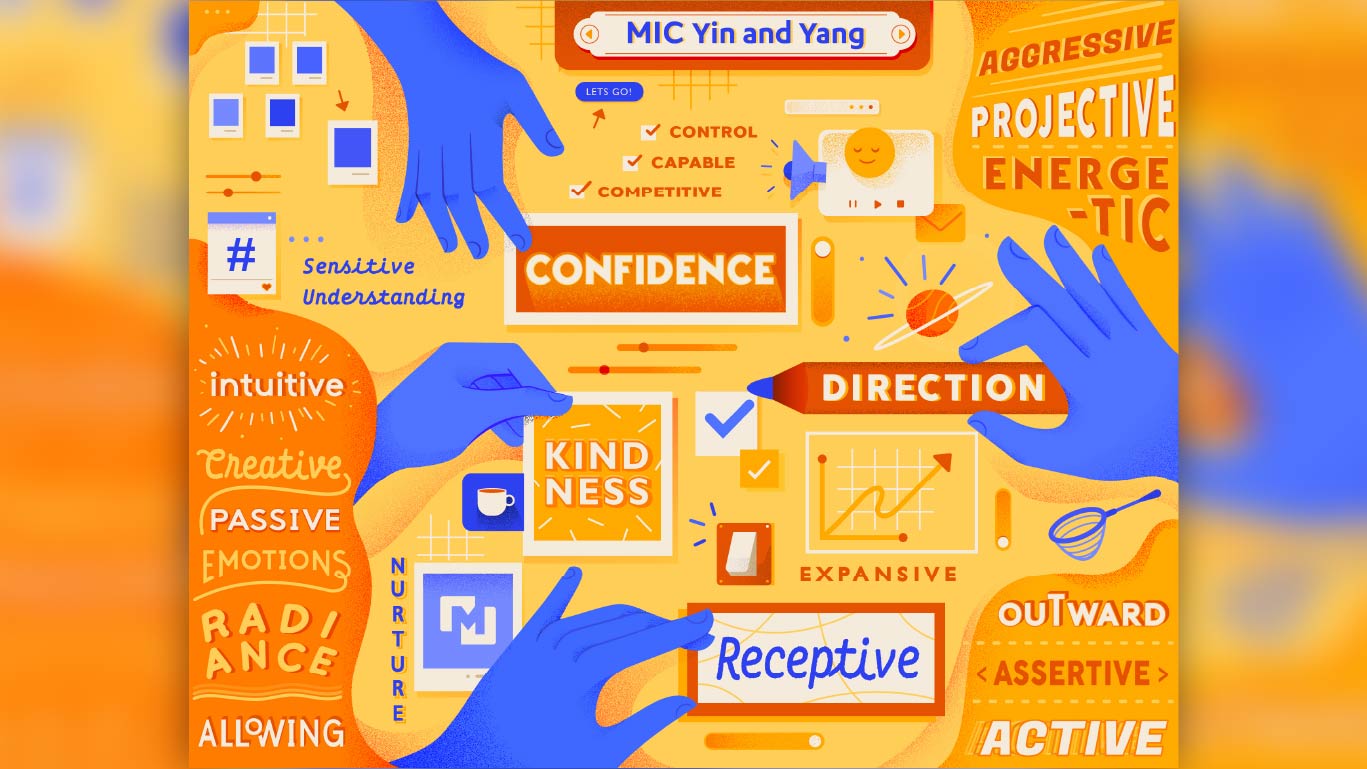
We understand that the micro leads to the macro. It’s also the reason why we have a mix of the Yin and the Yang on our team; the big-picture thinkers and ideators who are planning 5 years ahead; and the strategists and process implementers who are figuring out the daily steps needed to get there.

The micro is about laying down bricks everyday in order to build a strong foundation for the future.

Think about it this way: let’s say you go to the gym today, and you workout and you come back and you look in the mirror. What do you see? NOTHING. If you go to the gym again tomorrow and you come back, and you look in the mirror, you will still see nothing. At this point, some people will think, “well clearly there’s no results because it can’t be measured and thus, it must not be effective.” And so they quit.

However, It’s not about the exercises, and it’s not about the intensity… it’s about consistency.

It’s the consistency of these actions that yields results.

That’s why we search for people to join our team who are disciplined. It’s not enough to be motivated because most people don’t wake up motivated every single day. It’s about discipline and remembering the vision we’re working towards. Being able to put our heads down and get it done even on the days we really don’t feel like it.

We know our current life is the result of our previous choices, just as our future reality will be the result of the decisions we make today.

So that’s why we focus on the Micro.

We know that creating micro insurance policies that our customers actually want and need is making a massive impact – it’s providing millions of people with access to a safety net they need. We also know that it’s our daily micro achievements as a team that continues to push us towards our ultimate vision.

For all these reasons and more, you could say we’re a little obsessed with the micro.

Let’s Grow Together

Explore Our Demo

In The Press

Not Your Average Corporate Statement About Values

04.13.2021
Insurance Industry
blog values

At MIC Global, we believe in a workplace where people don’t have to water down who they are. The diversity of our team is what gives us the capacity to challenge the norm and push past the boundaries of groupthink. Diversity to us is the differences of individuals – different races, genders, ages, backgrounds, cultures, and ethnicities.

We provide a space where the women and men who work at MIC are encouraged to share both their masculine and feminine sides. We believe both vulnerability and assertiveness are important qualities in the workplace. We dispel the stereotypes that women being aggressive are bossy or that men showing emotion are weak. It takes strength and courage for a person of any gender to speak up and show emotion.

We know that success requires the Yin and Yang – a combination of both the right and left-brained… the creatives and the number crunchers… the introverts and the extroverts. It’s a delicate balance – but always tilted towards resolution and moving forward.

The reason we’re able to create great insurance products for people living in Accra, Ghana is the same reason we’re able to create effective insurance products for gig workers living in New York City – because we have members of our team who live in both places. We have people from MIC who are physically on the ground in 5 continents, immersed in the everyday life of the regions. They understand people’s needs and the risks they face.

We share our values with you in hopes that you can understand a little bit more about who we are and what we stand for. We are working hard to build a global safety net so that we can expand our whole-hearted belief in inclusion for everyone. Diversity is magic.

Let’s Grow Together

Explore Our Demo